Hot water problems
Heat Interface Unit Not Working: No Heating or Hot Water in Your Flat
Published
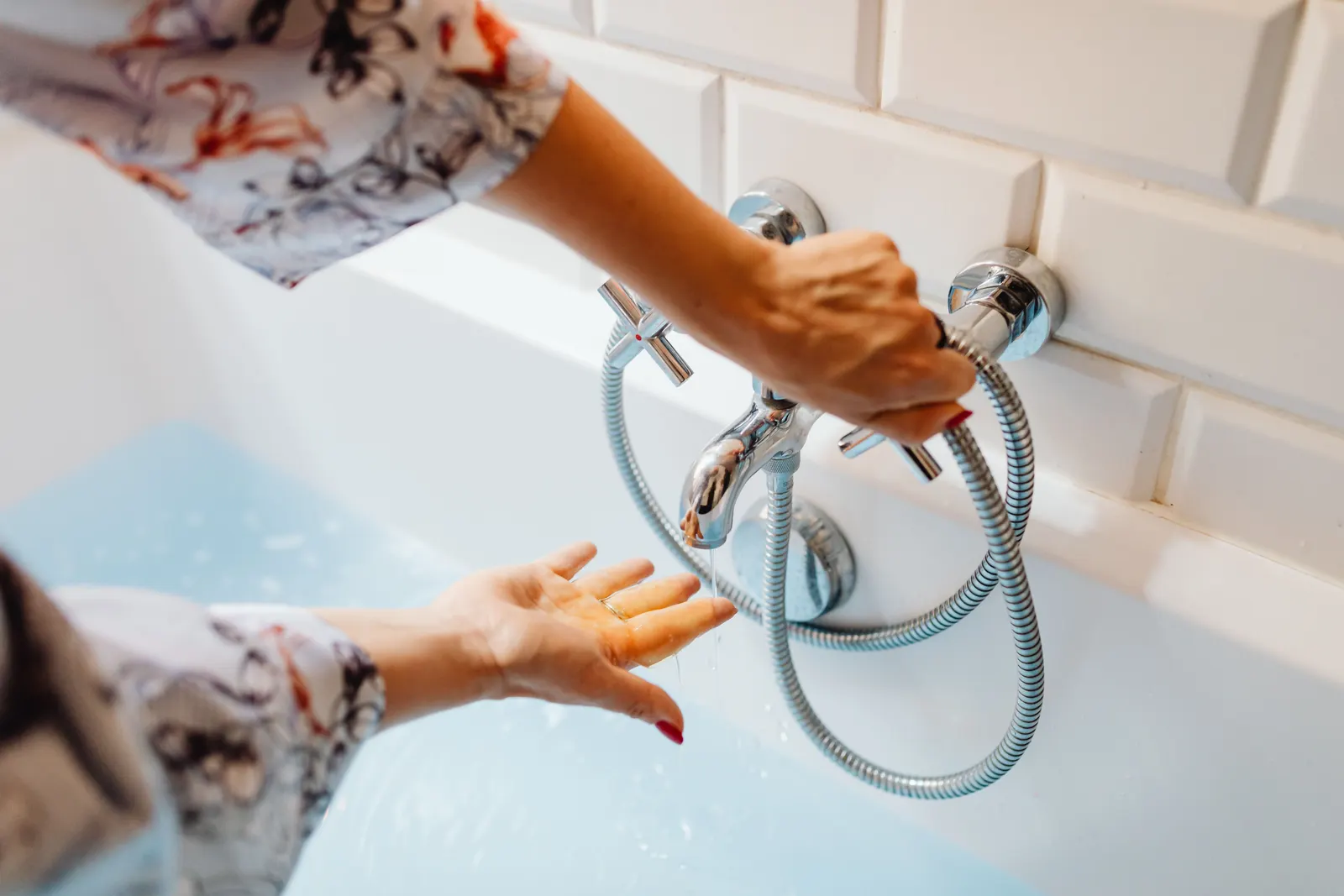
If your flat has a heat interface unit instead of a boiler and the heating or hot water stops, check three things first: your prepay credit, the room controller settings and whether neighbours are off too. If those are fine, ring the heat network operator or managing agent. They normally own and repair the unit. A plumber only helps with leaks and fittings on your side.
How do I know my flat has a heat interface unit?
A heat interface unit, or HIU, is the box that connects your flat to a heat network: a central plant room, or a district scheme, that heats water for the whole building and pumps it round. Inside the unit a plate heat exchanger passes that heat to your radiators and your hot taps. Nothing burns in your flat, so there is no flame, no flue and nothing to service for gas safety.
Signs that you have one rather than a boiler:
- A white or grey metal box in a hall or utility cupboard, with several thick insulated pipes going into the bottom, and no flue pipe going through a wall or ceiling
- No gas meter for your flat, and often no gas at all, with an electric hob in the kitchen
- A heat meter next to the unit or built into it, measuring what you use in kWh, and a heat bill from a company that is not your electricity supplier
- A wall controller or app that shows your heat credit, or a pay-as-you-go card or key you top up
- A sticker on the casing with a brand name such as Evinox, SAV or Danfoss and a service or emergency number
If you do have a gas boiler and can smell gas, open windows, turn off your gas valve if safe, avoid switches, then leave the flat and call the National Gas Emergency Service on 0800 111 999. An HIU on its own has no gas supply, so a gas smell in a flat that has one points to a hob or to something outside the flat, and the same number applies.
Heat interface unit not working: the checks you can make safely
Everything below is outside the casing. The unit belongs to a pressurised network that also serves your neighbours, so do not remove the cover, turn the valves on the thick network pipes or touch the heat meter seals. Work through the list in this order, because the first two answers settle most calls.
- Ask the neighbours, or check the building noticeboard, app or the operator’s website. If other flats have lost heat too, the fault is in the plant room or the network, and nothing in your flat will fix it. Report it anyway, because some compensation schemes count from the first report.
- Check your credit. On a pay-as-you-go system the unit shuts off heating and hot water together when credit runs out. Evinox says its units restart on their own once enough credit is added, with no reconnection fee. Look for a low-credit warning on the controller, and for emergency credit you have not yet accepted.
- Check the power. The unit needs electricity for its controls and valves, usually from a switched fused spur in the same cupboard. If the controller screen is blank, check that switch and the flat’s consumer unit. Reset a tripped breaker once only.
- Check the controller mode. OFF, holiday and frost or anti-freeze modes all stop normal heating. A timed schedule usually only runs when the controller is in AUTO. On Evinox’s ViewSmart controller the heating stays off if the set temperature is below the current room temperature, so turn it up by a few degrees.
- Look for an alarm. Many controllers show a warning symbol or a red light when the unit has a fault. Photograph the screen and write down any code. The operator will ask for it, and it can save a wasted visit.
- Hot water slow rather than absent? Most HIUs heat water as it flows, keeping the heat exchanger warm between uses. On an economy or keep-warm-off setting, water can take noticeably longer to arrive at the tap, which is not a fault.
- If there is a pressure gauge on the front, note the reading. Some units have a sealed heating circuit for the flat with its own gauge. Only top it up if the unit’s resident guide tells you how; otherwise report the reading.
Who fixes it: the operator, your landlord or a plumber?
On most London heat networks the operator, sometimes called the heat supplier or energy services company, owns and maintains the HIU and the heat meter, and the managing agent deals with the plant room on the freeholder’s behalf. Your heat bill, welcome pack or the sticker on the unit gives the fault number. SAV, one of the main HIU makers, tells residents that their building service or maintenance provider should always be the first call.
That matters for cost as well as for access. Where the operator owns the HIU, it is normally liable for repairing or replacing it; the Heat Trust rules say exactly that for sites registered with it. Paying someone else to open the unit can mean paying for work the operator would have done anyway, and may break the terms of your heat supply agreement.
Here is how the jobs usually divide:
- The operator or managing agent: the network pipes, the plant room, anything inside the HIU casing, the heat meter, pay-as-you-go faults and outages affecting more than one flat
- Your landlord, if you rent: making sure the operator fixes it, and any repair to the heating and hot water system in your flat
- A plumber: a leak from pipework or fittings on your side of the unit, radiators and radiator valves, taps, showers, toilets and waste pipes. These fail on a heat network just as they do anywhere else.
- Grey areas: a single cold radiator while the rest are hot is often a valve in your flat, but on some systems the operator wants its own contractor to touch anything on the heating circuit. Ask them first, and get the answer in writing.
Is the £60 call-out worth it for an HIU problem?
Be honest with yourself about which side of the unit the problem is on. If the heating and hot water have both stopped and nothing is leaking, a plumber cannot restart a network, top up your credit or repair a unit that belongs to someone else. Save the £60 call-out and ring the operator.
It is worth calling us when the problem is plumbing in your flat. That includes a leak from a pipe, joint or radiator valve after the unit, a tap or mixer that has stopped delivering hot water while the others are fine, a shower that runs cold on its own (see no hot water to the shower only), or a toilet or waste that is overflowing. For a leak, our leak repairs visit finds the source and makes it safe first. If the hot water from the unit is fine and a single outlet is the problem, a no hot water repair visit covers the tap, valve or shower. The repair price is agreed with you on site before any work starts.
If water is coming out of the HIU itself, treat it as a leak and stop the damage, then call the operator’s emergency line. Close your flat’s stopcock, which stops the cold feed into the unit, switch the unit off at its fused spur if the spur is dry, and put a tray and towels underneath. The first 10 minutes of a water leak covers protecting the flat below. If it is still leaking and you can reach them without touching hot water, slowly close the isolation valves at the top of the unit, as makers such as Evinox advise, then tell the operator.
What to do while the heat network is down
Outages on a network can run from a few hours to several days if a plant room part has to be ordered. Keep your flat safe and keep a record while you wait.
- Report the outage and write down the date, time and reference number of every call. Compensation schemes count from the first report.
- Tell the operator if anyone in the flat is elderly, disabled, seriously ill, pregnant or has a young baby, and ask to be put on its priority services register. Ofgem’s guidance says operators should prioritise temporary heat, and that providing alternative heating and hot water within 24 hours for priority consumers during a longer outage may be reasonable.
- Use portable electric heaters, kept clear of curtains and bedding and never in the bathroom. Oil-filled radiators are the safer choice overnight.
- Never use a gas oven or hob, a camping stove, a barbecue or a paraffin heater to heat a room. They produce carbon monoxide.
- Heat water in a kettle for washing, and ask the operator whether the building has a temporary supply or shower facility.
- If you are going away during a cold spell, leave the controller on frost or anti-freeze rather than OFF. Evinox notes that its OFF mode gives no frost protection.
If someone vulnerable is cold and the operator has not arranged heat, a plumbing emergency with a vulnerable person at home covers the priority services registers kept by energy and water companies, which are worth joining as well.
Your rights: Ofgem regulation and the Heat Trust
Ofgem became the regulator for heat networks in England, Scotland and Wales on 27 January 2026. Some of its rules took effect on that date and others are being phased in. They cover how you are billed, customer service, complaints and support for vulnerable customers. Every heat network in Great Britain now has to belong to the Energy Ombudsman’s redress scheme, so unresolved complaints have somewhere to go. Ofgem’s guidance also says operators must offer emergency and friendly-hours credit to prepay customers unless that is technically impossible.
What Ofgem does not yet have is automatic compensation for outages. Its guaranteed standards of performance are still being consulted on. Until they arrive, fixed payments come from the Heat Trust, a voluntary scheme whose rules apply only on networks registered with it. On a Heat Trust site, an unplanned outage that is not restored within 24 hours of the first report earns a payment for each full day after that. The rules set a base of £30 a day, uprated each year, capped at £500 uprated. There is also an extra payment if a vulnerable household is left without alternative heating after 12 hours, and prepay customers get at least £5 of emergency credit. Your heat bill or customer pack says whether your site is registered, and you may need to claim the payment.
To complain, go to the operator first and give it the chance to fix the problem. If it has not resolved your complaint after eight weeks, or it sends a final deadlock letter sooner, you can take it to the Energy Ombudsman free of charge.
Renting or owning a leasehold flat on a heat network
If you rent, report the fault to the operator and to your landlord, in writing, the same day. Under section 11 of the Landlord and Tenant Act 1985 your landlord must keep the installations for space heating and heating water in repair, and that duty normally still applies when the heat comes from a network. Your landlord is the one who can chase the operator or the managing agent. Timescales and what to do if nothing happens are in tenant rights with no hot water. Running out of prepay credit is not a repair, so top up first.
If you own the flat on a lease, read your lease and the heat supply agreement together. They say who owns the HIU, who pays for its servicing and whether plant room costs come through the service charge or the heat bill. Keep your own records of outages and repairs; a pattern of failures is evidence for a complaint to the operator, the managing agent or the Ombudsman. For leaks and other emergencies in the building, a plumbing emergency in a block of flats covers who controls which pipes.
If you let the flat out, give your tenants the operator’s fault number, show them where the HIU and its fused spur are, and explain how credit works if the meter is prepay.
Questions people ask
Who do I call when my heat interface unit stops working?
The heat network operator or managing agent, on the fault number on your heat bill, welcome pack or the sticker on the unit. Tenants should also tell their landlord in writing. A plumber is the right call only for leaks, taps, showers and pipework on your side of the unit.
Can a normal plumber fix a heat interface unit?
Usually not. The unit and the heat meter normally belong to the operator, which is responsible for repairing them and may use trained engineers only. A plumber can fix leaks, radiators, taps and showers in your flat.
Why do I have no heating or hot water when the rest of the building has?
The usual causes are no prepay credit, a tripped fused spur, a controller in OFF, holiday or anti-freeze mode, or a set temperature below the room temperature. If those are fine, report it as a fault on your unit.
Do I get compensation when the heat network goes down?
Only on a Heat Trust registered site for now, where an unplanned outage not restored within 24 hours of the first report earns a daily payment. Ofgem’s automatic compensation standards are still being developed.