Boiler fault codes
Vaillant F22 Fault Code: Not Enough Water Pressure
Published
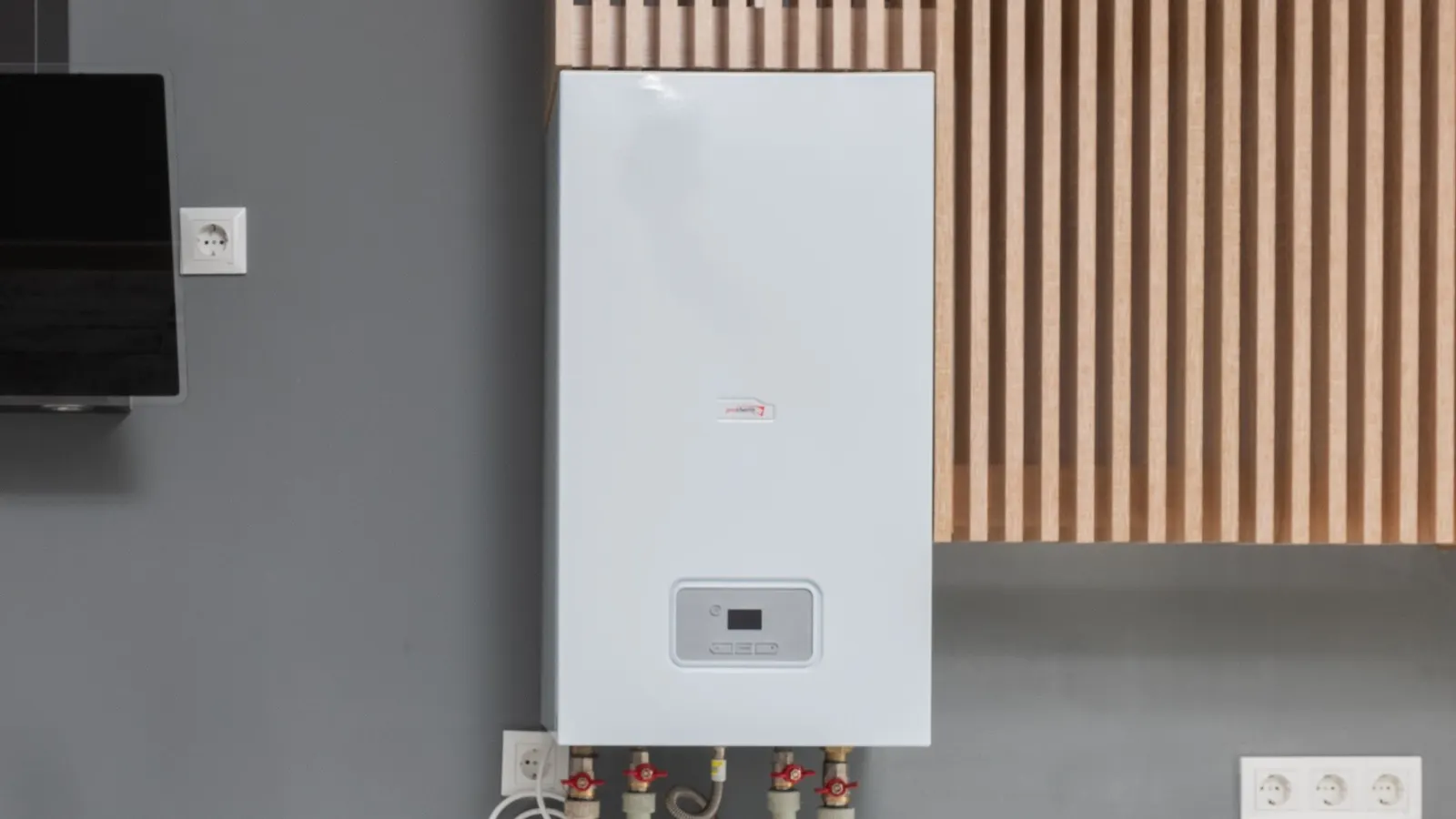
Vaillant display
F22
What it means
The boiler has switched itself off because there is not enough water, or not enough water pressure, in the heating circuit. Vaillant calls it a safety switch-off for low water pressure.
Safe to check yourself
- Read the pressure on the display or gauge with the heating cold
- If it is below 1 bar, top up through the filling loop to between 1 and 1.5 bar, following your user manual
- Look for drips under the boiler, at radiator valves and at the small copper pipe that runs outside from the boiler
- Press reset once after topping up
Call an engineer if
- The display shows F22 while the gauge reads 1 bar or more
- You have to top up more than once in a week
- Water is dripping from inside the boiler casing
- You smell gas: ventilate, shut the meter valve if you can reach it safely, avoid switches, and call 0800 111 999 from outside
F22 on a Vaillant boiler means low water pressure. The boiler has switched off to protect itself because the heating circuit is short of water. In most cases you can top it up yourself through the filling loop and reset it, but if the pressure keeps dropping, water is leaking somewhere.
Why has my Vaillant shut down with F22?
A sealed heating system holds its water under pressure, and the boiler reads that pressure through a sensor. On ecoTEC plus models, Vaillant's installation manual says the pressure figure starts flashing on the display once it falls below 0.8 bar. The point where the boiler switches off and shows F22 depends on the generation: below 0.5 bar in the manuals up to 2021, and at 0.3 bar or less in the 2023 edition for the newest models.
So if you catch the flashing number before F22 appears, a top-up now saves you a cold evening later.
Older ecoTEC plus installer manuals list three causes behind the code: the system genuinely has too little water, the water pressure sensor has failed, or the plug and cable to the pump or pressure sensor have worked loose. The newest manual adds a faulty internal expansion vessel and, on boilers that have one, a faulty automatic filling valve. Too little water is by far the most common, and it is the only one you can deal with yourself.
How do I top up the pressure and clear F22?
Vaillant's own advice is that F22 with a gauge under 1 bar can be solved without an engineer if you are competent to do it. Turn the heating off and let the radiators cool, because a hot system reads higher than a cold one.
- Find the filling loop under the boiler. On many ecoTEC plus combis it is built in; older boilers use a braided hose between two small taps.
- Open the valves slowly and watch the pressure rise. Stop between 1 and 1.5 bar.
- Close both valves fully. On an external hose loop, the manual says to disconnect it afterwards.
- Press reset once and let the boiler run through its start-up.
Do not overfill. Pressure rises as the water heats up, and at 3 bar the pressure relief valve opens and dumps water through the pipe outside. Fill a cold system well past 1.5 bar and the first hot evening can take it there, and you are back where you started. See lowering boiler pressure if you overshoot.
Why does F22 keep coming back?
Water does not leave a sealed system by itself. If you are topping up every few days, it is escaping somewhere, and the usual places are the pressure relief valve (check the copper pipe outside for a drip or a damp patch below it), a weeping radiator valve, a leak under the floor, or an expansion vessel that has lost its charge and makes the relief valve lift every time the heating warms up.
Bleeding radiators also lowers the pressure, so a top-up after bleeding is normal. Needing one every week is not. Our guide to pressure that keeps dropping goes through the order to check them in.
If the gauge reads 1 bar or more and the boiler still shows F22, the water is fine and the reading is not. That points to the pressure sensor or its wiring, which is inside the casing.
What will an engineer check, and what does it cost?
Vaillant's fault table tells the engineer to check the plugs and cables to the pump and pressure sensor, the sensor itself and the pump, then run check programme P.0 to purge air from the boiler. A leak search comes first if the system keeps emptying.
The water pressure sensor used on many ecoTEC models (part 0020059717, though check it against your boiler) is an inexpensive part, typically well under £50 from parts suppliers, so most of the bill is labour. Finding and fixing a hidden leak costs more, and a failed expansion vessel inside the boiler is a bigger job again.
Our visit starts with the £60 call-out, and the repair price is agreed with you on site before any work starts. If you want someone to find where the water is going, book a Vaillant boiler repair.
Questions people ask
Is it safe to keep using my Vaillant after topping it up?
Yes, if the pressure holds and the boiler runs normally. Low pressure makes the boiler stop, not run dangerously. Keep an eye on the gauge for a few days; if it drops again, have the leak found before it damages a ceiling.
What is the difference between F22 and F23 or F24 on a Vaillant?
F22 is about pressure. F23 and F24 are about water not circulating properly, which the boiler spots through its temperature sensors. Low pressure can cause all three, which is why checking the gauge comes first.
My Vaillant has no filling loop. How do I top it up?
Some systems have a separate filling point on the pipework near the boiler or cylinder, and some older loops were removed after installation. Check the user manual for your model. If you cannot find one, an engineer can fit one while they are there.