Leaks & burst pipes
Water Leak at Home: The First 10 Minutes
Published
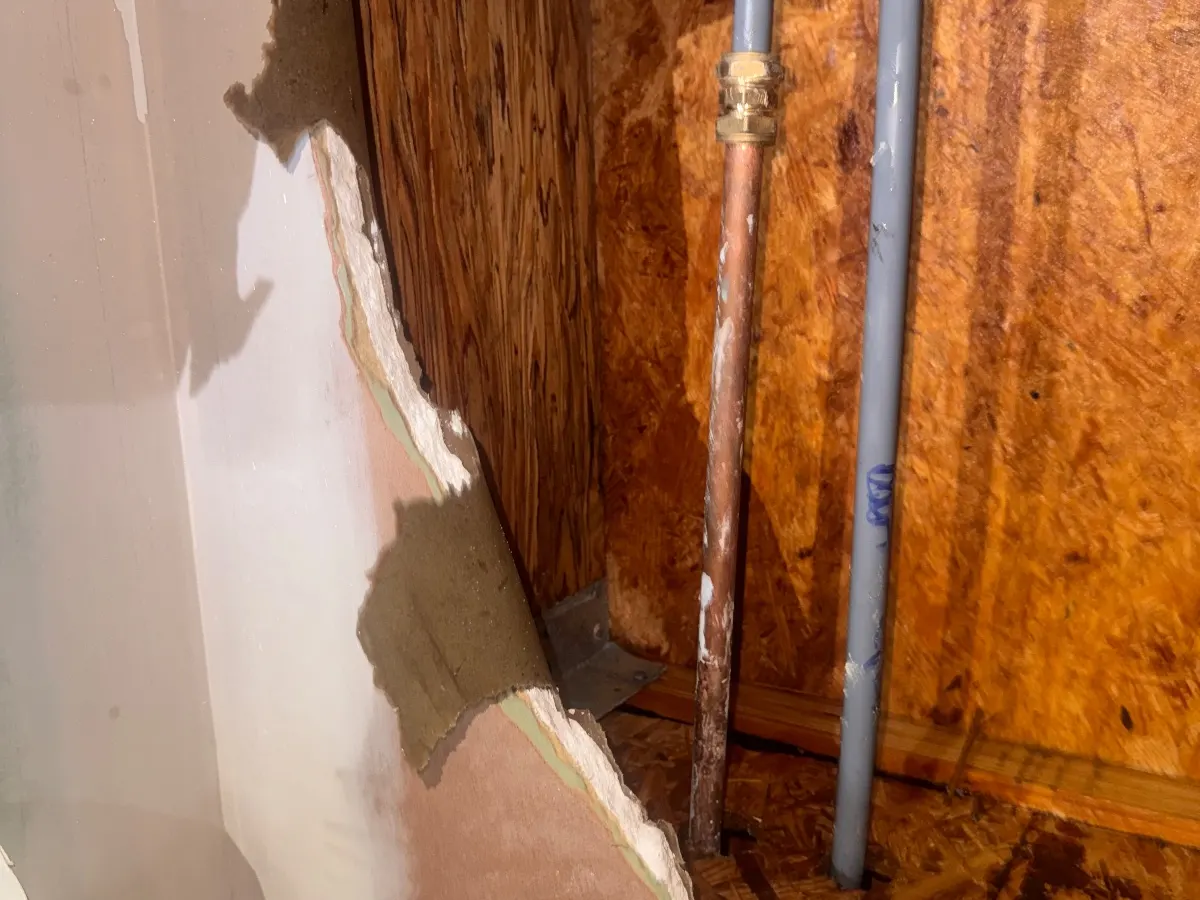
For a water leak at home, close the main stopcock first, then switch off power to any circuit the water is reaching, as long as you can get to the consumer unit on dry ground. Open the hot and cold taps to drain the pipes, catch what is still dripping and photograph everything before you tidy up.
Minute one: stop the water getting in
Most leaks in a house are fed by the mains, so the stopcock is the first control to reach for. In most London houses and flats it sits under the kitchen sink, low down on the pipe that comes up through the floor. In older terraces it can be under the stairs, in a cellar or just inside the front door under a floorboard. In a flat it may be in a riser cupboard, a bathroom boxing or the airing cupboard. Our guide on where to find your stopcock covers the awkward places.
Turn it clockwise until it stops. Some newer ones are a lever that you turn a quarter so it sits across the pipe. If it is stiff, use steady pressure with a cloth for grip rather than a hammer or a long wrench: an old brass stopcock can snap at the spindle and turn a leak into a flood. If it will not move at all, a stopcock that won’t turn explains the next step, which is usually the outside stop tap in the pavement.
Water coming through a ceiling light or near sockets: do not touch those switches. Turn the power off at the consumer unit only if you can reach it without standing in water. If you cannot, keep everyone out of that room.
Minutes two to four: take the pressure out of the pipes
Closing the stopcock stops new water arriving, but the pipes are still full. Open every cold and hot tap, starting with the kitchen sink, and flush the toilets. On a combi boiler system that empties most of the pipework within a minute or two and the leak slows to a dribble.
Older houses with a tank in the loft are different, and this catches people out. The loft tank feeds the hot water cylinder and often the bath and toilets, and the stopcock does nothing to it. Water will keep running to a leak on that side until the tank empties. Look for a valve on the pipe leaving the bottom of the tank, often a brass gate valve with a wheel handle, and close it. If you cannot reach the loft, run the bath cold tap and the basin taps to empty the tank faster.
If the water looks rusty or is warm and the heating is on, the leak may be on the central heating side, which the stopcock will not stop either. Switch the boiler off. On a sealed system, the kind with a pressure gauge on the boiler, the leak slows sharply once the pressure falls to zero, though radiators higher than the leak can keep draining into it for a while. On an older open-vented system, a small feed and expansion tank in the loft keeps topping the heating up, so close the valve on the pipe feeding that tank too. Our page on a radiator that is leaking goes through that case.
Minutes five to seven: find where it is actually coming from
Water travels along pipes, joists and the back of plasterboard before it shows, so the wet patch is rarely directly under the fault. Start at the highest point where you can see water and work up and back. Dry kitchen roll wrapped around a joint shows a slow weep far better than looking at it.
Check the fittings you can see and reach before you start lifting boards or opening boxing:
- Flexible tap connectors and isolating valves under sinks, basins and toilets
- Washing machine and dishwasher hoses and the valve they connect to, a common cause of water under a washing machine
- Toilet cisterns, including the overflow and the seal where the cistern meets the pan
- Bath and shower waste and seals, which only leak when that fitting is in use
- Pipes in the loft, under floors or boxed in, especially after a cold night
- The hot water cylinder and its valves, if you have one
Minutes eight to ten: protect the house and record it
Move rugs, furniture and electrical items off wet floors and lift anything off the carpet that could stain. If a ceiling is bulging with water, and there is no light fitting in or near it, put a bucket underneath and make a small hole at the lowest point of the bulge with a screwdriver. That lets the water out in one place instead of bringing down a large section of plaster. Stand to the side while you do it, and read our page on emergency ceiling leak repair if it has already started to sag.
Photograph the source, the water on the floor and any damage before you mop up. Insurers ask for this on an escape of water claim and it is much harder to show afterwards. Note the time you found it.
If you live in a flat, knock on the door below. A leak you can see as a damp patch may already be running through their ceiling, and they may need to switch their power off too. If the water is coming from above, see a leak from the upstairs flat. If you rent, tell your landlord or agent in writing with the photos straight away.
Can it wait until morning, or does someone need to come tonight?
Once the stopcock is off and you have found the source, you can decide calmly. It can often wait if the leak is from something you can isolate on its own: a toilet or basin with a working isolating valve, an appliance you can unplug and shut off, or a slow drip you can catch in a bowl. Close that valve, turn the stopcock back on, and the rest of the house has water.
It cannot wait if you cannot find the source, the water is running inside a wall or under a floor, water has reached the electrics, a ceiling is sagging, the stopcock will not close fully, or turning off the water leaves vulnerable people without a supply overnight. The same applies to a split pipe rather than a weeping joint. The emergency leak repair visit is built for those.
The £60 call-out gets an engineer to you at any hour, and the repair price is agreed with you on site before any work starts.
If you cannot see a leak but you think there is one
Some leaks show up as a bill, a damp smell or a patch that keeps coming back rather than as running water. If you have a water meter, turn off every tap and appliance, take a photo of the dial, wait 30 minutes without using water and look again. Any movement means water is going somewhere. If the meter is in the pavement and it keeps turning with the stopcock closed, suspect the underground supply pipe between the meter and the house.
Other signs are a hissing sound in a quiet house, a boiler that keeps losing pressure, warm spots on a floor, and mould or bubbling paint low on a wall. Hidden leak signs goes through each one and what it usually means.
In the Thames Water area, the supply pipe from your property boundary into your home is yours to maintain, even the part under the front garden. A leak on that section is normally yours to get repaired. Water coming up through the pavement or road before the boundary is theirs to fix and should be reported to them. Who pays when Thames Water pipes burst explains how to tell which side it is on.
Questions people ask
Which way do I turn the stopcock to turn the water off?
Clockwise, as you look at the handle, until it stops. A lever-type valve is off when the lever sits across the pipe. Once the leak is fixed, turn it back fully and then a quarter turn back so it does not seize.
Should I turn off the electricity if there is a water leak?
Only if water is reaching sockets, light fittings or appliances, and only if you can get to the consumer unit without standing in water. If you cannot reach it safely, stay out of the wet area and get help.
Why is water still coming out after I turned off the stopcock?
The pipes are still full, so open the kitchen cold tap to drain them. If it keeps running for more than a few minutes, the leak is probably fed by a loft tank or the heating system, and the stopcock controls neither.
Is a water leak an emergency?
It is if you cannot stop it, cannot find it, or it is reaching electrics or a ceiling. A drip you can isolate at a single valve can usually wait for a daytime appointment.