Leaks & burst pipes
Radiator Leaking: What to Do Now
Published
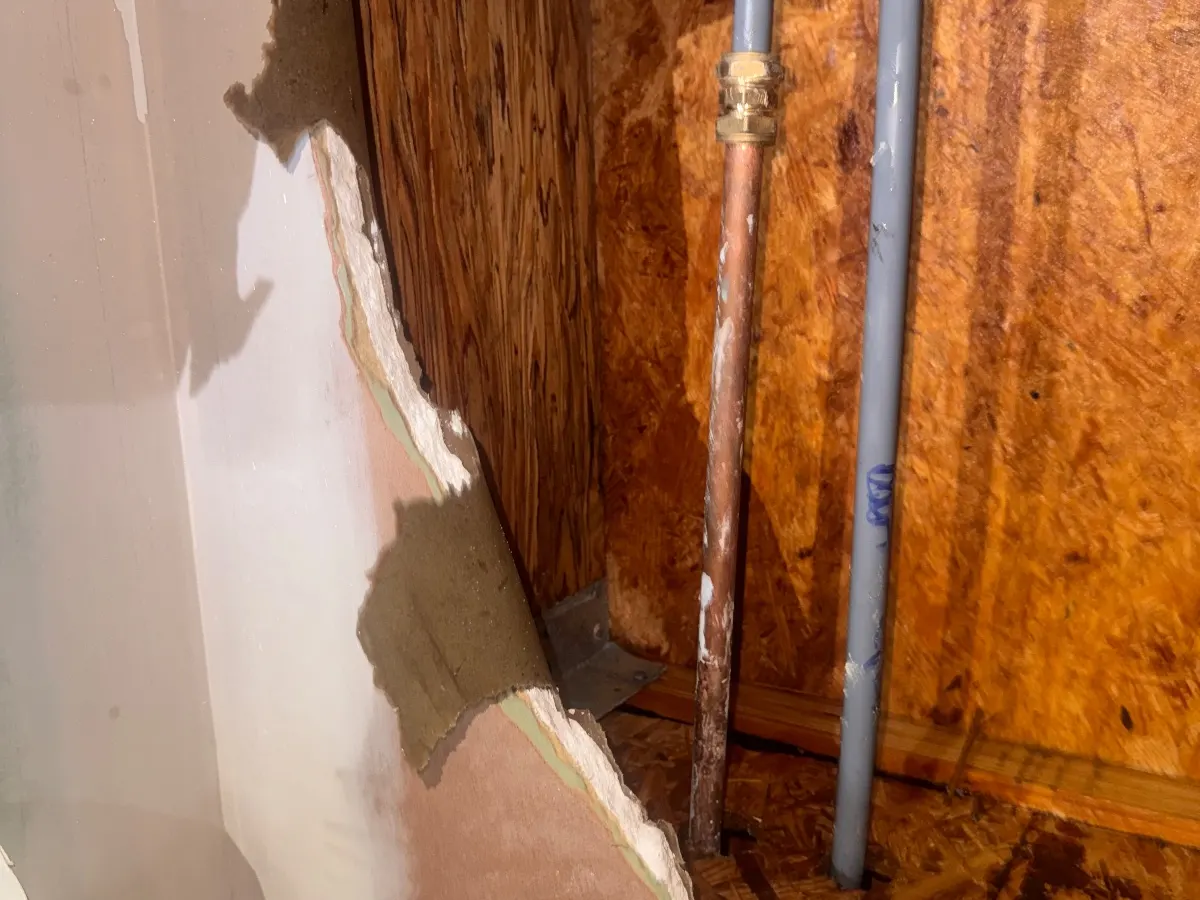
If a radiator is leaking, put a tray and towels under it, dry the pipework and find where the water starts. Then close both radiator valves to isolate it and check the boiler pressure. A leak from a valve nut can often be stopped tonight; one from the panel itself means the radiator is corroding and needs replacing.
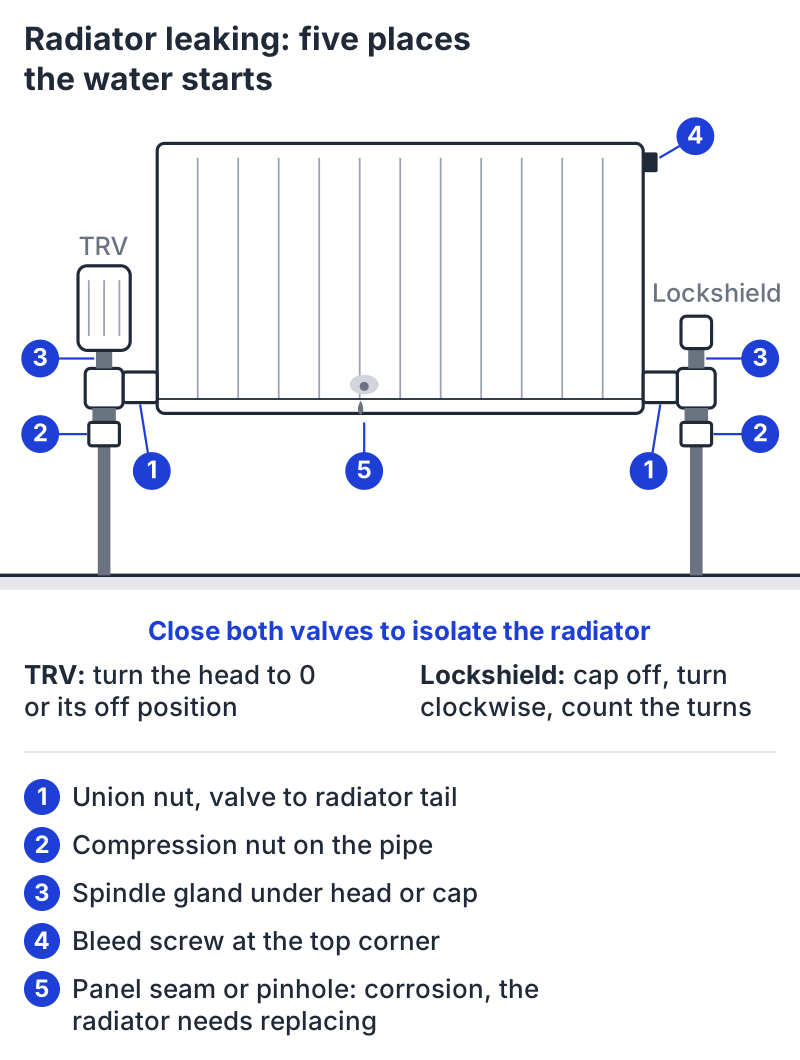
The first five minutes
Catch the water first. A roasting tin, washing-up bowl or a folded towel under the drip protects the floor while you work. On a laminate or engineered wood floor, move quickly: they swell where water sits at the joints.
Turn the heating off at the programmer or thermostat. You do not need to turn the boiler off at the mains, but stopping the pump and letting the water cool takes some of the pressure off the leak, and cooler pipes are safer to handle when you reach for the valves.
Then dry the radiator, its valves and the pipes with kitchen roll, and watch. Water runs downhill and along pipes, so a puddle at one end is not proof the leak is at that end. The first joint to go wet again is the source.
If the leak is dripping onto a socket, a floor-level spur or a cable, switch that circuit off at the consumer unit before you do anything else, provided you are not standing in water to do it.
Where exactly is it leaking from?
Where the water starts decides whether this is a quick fix or a replacement.
- The union nut joining the valve to the radiator (the radiator tail): the most common leak, often a slightly loose nut or a worn seal on the tail thread
- The nut where the valve grips the pipe below: a compression joint whose brass olive has moved or been disturbed
- The spindle under the valve head or cap: the gland packing around the spindle has worn, often after the valve has been turned for the first time in years
- The bleed screw at the top corner: not tightened fully after bleeding, or a worn bleed valve
- The radiator panel, usually along a bottom seam or as a pinhole with a rusty stain: internal corrosion has eaten through the steel
Isolate the radiator and protect the boiler
Close the valve at each end of the radiator. On the thermostatic valve, turn the head to 0 or its off position; on some older heads the frost symbol still lets water through, so if it has no off position, the head can be unscrewed and replaced with the plastic decorator cap turned clockwise. At the other end, pull off the cap on the lockshield valve and turn the spindle clockwise with a spanner or grips, counting the turns so it can be set back to the same position later.
With both valves shut, the radiator holds only the water already inside it. If the leak was on the radiator side of the valves, it will slow and stop. If it was on the pipe side, it will carry on, because the pipe is still connected to the system.
Now look at the boiler pressure gauge. Most combi and system boilers run on a sealed system at about 1 to 1.5 bar when cold. A leak lets that drop, and once it falls much below 1 bar many boilers show a low-pressure fault or lock out, depending on the model. If the pressure has fallen, top it up with the filling loop only once the leak is stopped, or you are feeding the leak. See boiler pressure that keeps dropping if you are not sure how. An older open-vented system, fed from a small tank in the loft, has no pressure gauge: its tank refills itself, so a leak there can run on unnoticed until the radiator is isolated.
Fixes you can try tonight, and ones to leave
For a weep at a union nut or compression nut, hold the valve body still with one spanner and tighten the nut a quarter turn with another. Holding the body stops you twisting the pipe or cracking the joint behind it. If a quarter turn does not stop it, do not keep going; the olive or tail seal needs remaking with the radiator drained.
For a spindle leak, the small gland nut just under the head can often be nipped up a fraction of a turn with the valve open. For a bleed screw, close it firmly with the radiator key once the radiator has cooled.
Leave anything that needs the radiator removed, drained or the pipe cut. Leave a panel leak alone completely: tape and epoxy will not hold pressure on a corroding panel, and leak sealer added to the heating system can block the boiler heat exchanger if it is the wrong product or dose. A radiator that is weeping rusty water from the panel has usually thinned in more than one place.
Never loosen a union nut to see if the leak is inside it. On a system still under pressure it lets the whole radiator empty onto the floor.
Can it wait until the morning?
A slow drip from a valve nut, with the radiator isolated and a tray under it, can usually wait for a daytime visit. Keep an eye on the boiler pressure. The rest of the heating can run as long as the pressure holds.
It cannot wait if the pressure keeps falling with the radiator isolated, which means a leak on the pipework, if water is reaching a ceiling below, or if the radiator valves will not close. In that case the boiler has to stay off until the leak is fixed. What the water looks like can also tell you more; leaking radiator fluid explains what black, brown or clear water means.
What the engineer does and what it typically costs
For a valve or tail leak, the engineer isolates the radiator, drains it into a tray through the union, remakes the tail with fresh sealant or replaces the valve, then refills, bleeds and repressurises the system. For a panel leak, the radiator is replaced; a matching size can often go straight onto the existing tails. Where the system has to be drained, inhibitor is topped up afterwards to protect the rest of it.
Typical market ranges in London, as a guide rather than our price: remaking a leaking radiator tail or valve joint, around £90 to £180; replacing a pair of radiator valves, around £150 to £250; supplying and fitting a like-for-like replacement radiator, from about £250 depending on size. Our radiator repair visit starts with the £60 call-out at any hour, and the repair price is agreed with you on site before any work starts. For a longer look at each repair method, see how to fix a leaking radiator.
Questions people ask
Is a leaking radiator an emergency?
A small drip at a valve nut is not, once the radiator is isolated and the water is caught. It becomes urgent if the boiler pressure keeps falling, water is getting into a ceiling or near electrics, or the valves will not shut.
Can I still use my heating with a leaking radiator?
Yes, if the leaking radiator is isolated with both valves closed and the boiler pressure stays steady. If the pressure drops again, turn the heating off; the leak is not on the radiator side of the valves.
Why has my radiator started leaking after bleeding it?
Either the bleed screw is not fully closed, or turning the valves disturbed old gland packing. Close the bleed screw firmly when the radiator is cool, and nip up the gland nut under the valve head if it weeps there.
Is water leaking from a radiator dangerous?
Heating water is dirty and contains inhibitor chemicals, so keep children and pets away from it and wash your hands after contact. The real risks are electrics near the leak and the boiler losing pressure.