Burst pipes · 24/7
Burst Pipe Repair London
For a burst pipe repair at any hour, close the main stopcock first, then, if the consumer unit is dry and safe to reach, switch off electrics anywhere the water is reaching. We send an engineer day or night to cut out the split section, fit a permanent joint and get your water back on. The £60 call-out gets someone to you, and the repair price is agreed before work starts.
What the visit covers
- Tracing the split, including pipes hidden behind boxing or under floors
- Cutting out the damaged length and fitting a permanent copper, plastic or push-fit repair
- Isolating a failed section so the rest of the house has water tonight
- Checking nearby joints and pipework that took the same frost or strain
- Refilling, bleeding air out and repressurising a heating system if a heating pipe burst
Why did my water pipe burst?
A burst almost always comes down to one of four things. Frost is the obvious one: water expands by about a tenth as it freezes, and a pipe in a loft, under a suspended floor or on an outside wall splits along its length. The split often only leaks once the ice thaws, so the burst shows up the morning after a cold night, not during it.
The second cause is a joint giving way rather than the pipe itself. Compression fittings loosen with vibration, old soldered joints corrode, and a push-fit fitting on plastic pipe can blow off if the pipe was not cut square or the insert was left out. The third is damage: a nail or screw through a pipe behind plasterboard, which can seep for weeks and then open up. The fourth is pressure. Water hammer, a failing pressure-reducing valve or a sealed heating system running far above its normal pressure all strain old pipework.
Knowing which one it was matters, because a frost split in an unlagged loft pipe will happen again next winter unless the run is insulated or rerouted.
If water is coming through a ceiling light or into sockets, switch the power off at the consumer unit before touching anything, if you can reach it on a dry floor. If the water is on or near the consumer unit itself, keep away from it and call an electrician. Do not use a switch that is wet.
How is a burst pipe repaired?
First the engineer confirms the supply is isolated. If your internal stopcock is seized or does not shut off fully, the engineer can shut the outside stop tap in the boundary box with a stop tap key. The Water Supply (Water Fittings) Regulations 1999 require a stop valve that can shut off your supply, and WRAS guidance puts it inside the building near where the pipe enters, so if yours is missing or unusable we will say so.
Next comes the repair itself. On copper the damaged length is cut out and replaced with new 15mm or 22mm pipe on compression or soldered joints. A slip coupling is used where there is no room to spring the pipe apart. On plastic, a new length goes in with push-fit fittings and pipe inserts. We do not leave a clamp or tape as the finished job unless you ask for a temporary fix to get you through the night.
If the burst is on a heating pipe, the system is refilled, air is bled from the radiators and a combi or sealed system is brought back to its normal cold pressure, usually about 1 to 1.5 bar. We check the pipework either side of the split, because frost rarely damages only one spot. For the full first-hour checklist, see what to do when a pipe bursts.
What does a burst pipe repair usually cost?
Across the UK market, a straightforward repair to a pipe you can see and reach is usually in the low hundreds of pounds. The price climbs when the pipe is under a tiled floor, inside a wall or needs a longer run replacing, because access and making good take most of the time.
With us you pay the £60 call-out to get an engineer there, and the repair price is agreed with you on site before any work starts. Damage to ceilings, flooring and belongings is separate and is usually an escape-of-water matter for your insurer. Our burst pipe repair cost guide breaks down what pushes the figure up or down.
Is it on your side or the water company’s?
The water company is responsible for the pipe from the main in the street up to the boundary stop tap, usually a small cover in the pavement or at the edge of your front garden. From that point into the house, including the stretch under the garden or front path, the supply pipe belongs to the property owner. Most of London is supplied by Thames Water, with parts of the outer boroughs on Affinity, SES or Essex & Suffolk Water. Some companies repair a leaking supply pipe free or at a reduced rate, so ring yours first if the leak is outside. Water gushing up through the pavement or road is the water company’s to fix. If you are unsure, our guide to a burst water main in the street explains how to tell the difference.
When a burst pipe cannot wait
Any burst on the mains side cannot wait, because it runs at full supply pressure and will keep flowing until the stopcock is shut. The same goes for water reaching electrics, a ceiling that is bulging, or a burst you cannot isolate because the stopcock will not turn. A split on a heating pipe is slower but will empty a sealed system and shut the boiler down.
A small weep from a joint that stops when you close a local isolation valve can usually wait until morning. Keep a bowl under it and check it before bed.
How the visit works
Stop the water
Close the main stopcock and switch off power to anywhere the water is reaching, if you can do it from a dry floor, before the engineer arrives.
Find the break
The engineer exposes the pipe, finds the split and checks what caused it.
Price agreed, then the repair
You approve the figure for the repair before any cutting or fitting starts.
Test and hand back
Water back on, joints checked under pressure, and advice on drying out.
Questions people ask
What should I do first when a water pipe bursts?
Close the main stopcock, usually under the kitchen sink or where the supply comes in. Then, if the consumer unit is dry, switch off the power to any area the water is reaching, open the hot and cold taps to drain the pipes, and turn off the boiler or immersion heater.
Can I fix a burst pipe myself?
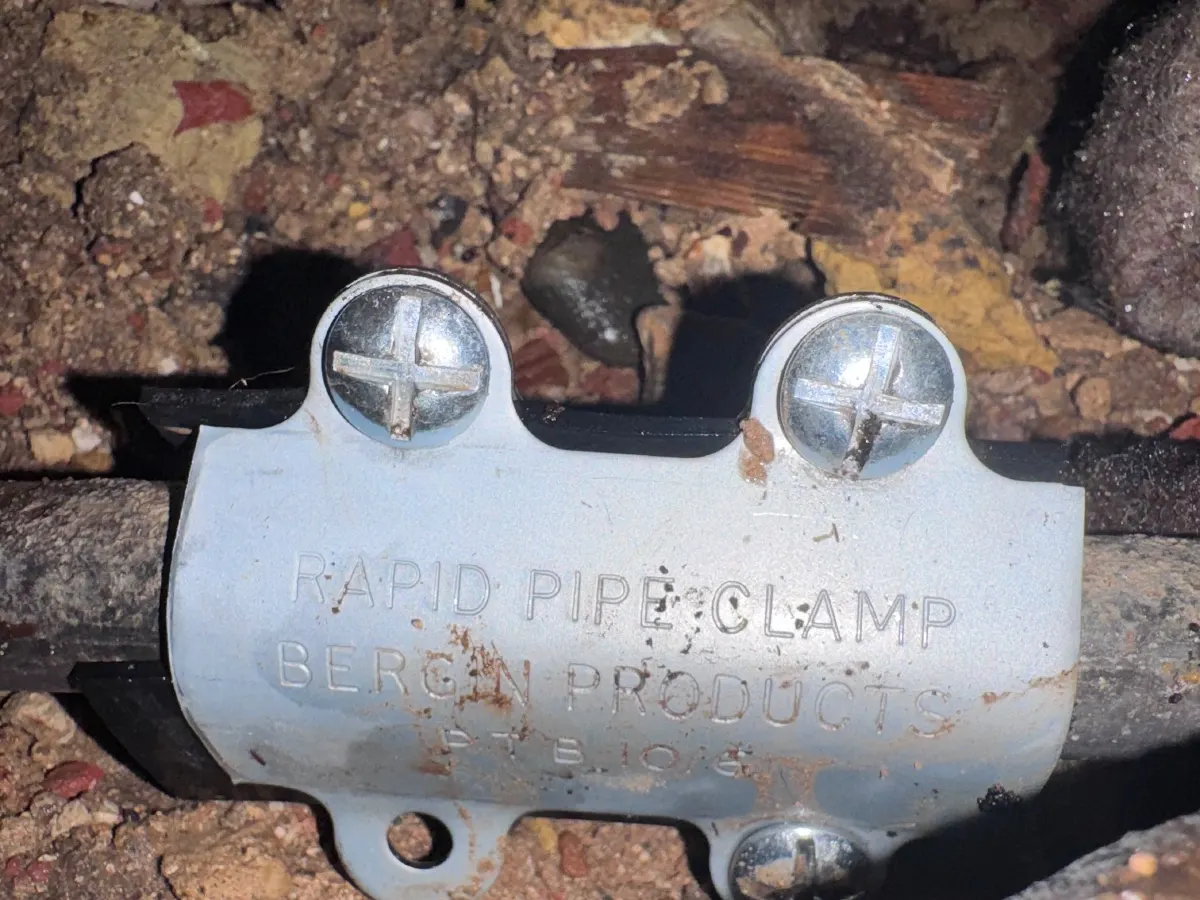
A repair clamp or self-amalgamating tape can slow a leak on exposed pipe until someone arrives. A lasting repair means cutting the pipe and fitting new joints, which needs the right fittings and tools and a pressure test afterwards.
How do I know which pipe has burst if I cannot see it?
Look for where the damp is spreading fastest, listen for hissing with everything else off, and check your water meter with all taps closed. If the meter still moves, water is escaping somewhere after it; close the inside stopcock and check again to tell a supply pipe leak from one indoors.
Will my insurance pay for a burst pipe?
Most home policies cover damage caused by escape of water, and many cover tracing the leak. The failed pipe itself is often excluded. Photograph everything before the repair and keep the invoice.
Should I turn the heating off if a pipe has burst?
If the burst is on a heating pipe, yes: turn the boiler off so it does not run dry. If it is a cold mains pipe in winter, keeping the rest of the house warm helps stop other pipes freezing.