Boiler & heating breakdowns
Boiler Leaking Water: What to Do in the Next 10 Minutes
Published
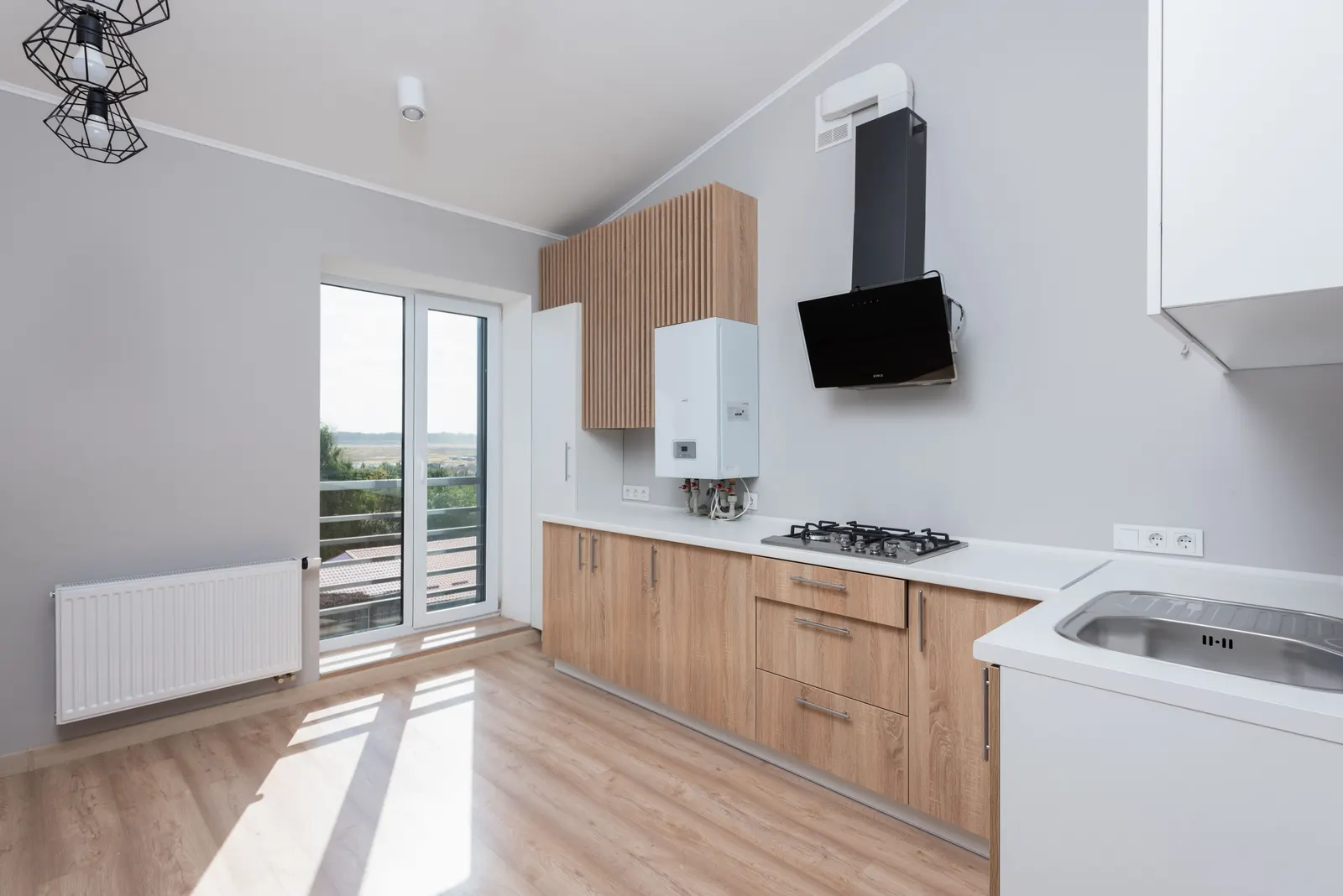
If water is leaking from your boiler, switch the boiler off at its fused spur if the spur is dry, put a tray or towels underneath, and close the cold mains isolating valve if you can reach it. Note the pressure gauge. Then find where the water is coming from: that decides whether it can wait until morning.
The first two minutes: stop the water reaching the electrics
Water and a live boiler together are what makes a leaking boiler dangerous, not the water itself. The boiler has a pump, a fan and a printed circuit board a few centimetres above the pipes, and a drip that lands on a connector can trip the electrics or kill the board. So the first job is power.
Most boilers are wired to a fused spur: a switch plate on the wall near the boiler, sometimes labelled "boiler" or "CH". Turn it off. If you cannot find it, switch the boiler off with its own power button. If water is on or near the spur, the wiring or any socket, do not touch them: switch off at the consumer unit instead, with dry hands and standing on a dry floor, as long as the unit itself is not wet.
Then put something under the drip. A roasting tin, a washing-up bowl or a folded towel is enough. If the boiler sits inside a kitchen cupboard, take out anything stored underneath it so you can see the pipes and so nothing soaks up the water unnoticed.
If you can smell gas at any point, open doors and windows, turn the gas off at the meter if you can reach it safely, do not operate switches, and call the National Gas Emergency Service on 0800 111 999 once you are outside. A water leak and a gas smell together is not something to investigate yourself.
Minutes three to five: close the right valve
Under most combi boilers there is a row of four or five valves. From one side to the other they are usually heating flow, hot water out, gas, cold mains in and heating return, though the order varies by make. The cold mains valve is the one that matters most tonight. It usually has a slotted head you turn a quarter turn with a flat screwdriver, or a small lever. When the slot or lever sits across the pipe, it is closed.
Leave the gas valve alone. It is often the one with a yellow handle, or the larger pipe, and there is no reason to touch it for a water leak.
If you cannot tell which valve is which, turn off the main stopcock instead. It is usually under the kitchen sink or where the water main enters the property. That stops fresh water feeding the leak on a combi. If it is seized or drips when you turn it, see stopcock repair.
Closing the water will not always stop the drip. The heating side of a modern boiler is a sealed loop that can hold several tens of litres, more in a larger house. If the leak is on that loop, it will slowly drain until the pressure gauge falls towards zero. If radiators sit above the boiler, gravity can keep it dripping after that, so keep the tray under it. It is rarely a flood, but it will not stop just because you closed the mains.
Minutes five to ten: find where the water is coming from
Once power and water are off, use a torch and dry kitchen roll. Wipe every pipe joint under the boiler dry, then watch which one wets the paper first. Water runs along pipes before it drips, so the drip point is rarely the source.
Here is the order to check, from most to least common:
- The thin copper pipe that goes out through the wall: that is the pressure relief valve discharge. Water from here means the pressure is too high or the valve no longer seals, not that a pipe has split
- Compression nuts on the valves under the boiler, which weep after a knock or a cold snap
- The white plastic condensate pipe and its trap, which leak if the pipe is blocked or cracked
- A magnetic system filter under the boiler, whose O-ring can seep after it has been cleaned
- Water dripping from inside the casing itself, which points to a pump seal, a valve seal or the heat exchanger
Do not take the front casing off. The inside of the boiler is gas work, and on a room-sealed boiler the casing forms part of the flue seal.
Read the pressure gauge before you do anything else
The pressure gauge on the front of the boiler, or its digital readout, tells you a lot. With the heating cold it should read roughly 1 to 1.5 bar. Heated, it will usually rise a little, typically staying below about 2 bar.
If it reads close to 3 bar and the leak is from the copper pipe outside, the boiler is not broken in the usual sense. The relief valve is doing its job and dumping water because the pressure is too high. That points at a filling loop left open or letting by, or an expansion vessel that has lost its charge. Our guide to a pressure relief valve that keeps leaking goes through it.
If the gauge is falling, and especially if it is below 1 bar, water is leaving the sealed system somewhere. A slow fall over days is typical of a weeping joint; a fall you can watch is a leak that needs someone out. The boiler pressure repair service covers both.
Do not keep topping the pressure up to get the heating back. Each refill pushes fresh oxygen-rich water into the system, which speeds up corrosion, and the new water simply leaves by the same route.
Can it wait until morning?
A lot of boiler leaks can safely wait a few hours once the boiler is off and the water is caught. Some cannot. Use this as a rough guide.
It can usually wait if the drip is slow, you have caught it, the boiler is off, and the water is not reaching anything electrical or soaking into a floor. A weeping relief valve, a condensate pipe or a single damp compression nut usually fall into this group.
It cannot wait if water is coming through a ceiling below, running into sockets or the boiler electrics, the pressure is dropping fast, or you have vulnerable people at home with no heating in cold weather. The same goes for any water that looks rusty or black, which can mean the heat exchanger or a pipe inside the boiler has corroded through. For a leak coming through a ceiling, see emergency ceiling leak repair.
If you rent, report it to your landlord or agent now in writing, with a photo. In most tenancies they are responsible for keeping the heating and hot water in repair, and a written timestamp helps if the leak causes damage later.
What an engineer does when they arrive
A boiler leak repair usually starts the same way. The engineer isolates the boiler, dries everything, and pressurises the system again to watch where the water appears. They will then remove the casing, check the flue seal and look at the internal pipework, the pump and the heat exchanger.
The fix is often a single part. Typical market prices for the most common repairs, parts and labour together, run roughly: a new pressure relief valve £100 to £200, an expansion vessel recharge or replacement £150 to £450, and a heat exchanger commonly £400 to £1,200, more on some models. A weeping compression joint outside the casing is usually a few minutes of work.
With us you pay the £60 call-out at any hour, and the repair price is agreed with you on site before any work starts. Gas work is carried out by Gas Safe registered engineers. Our boiler leak repair page explains the visit in more detail, and our full pricing is on one page.
Questions people ask
Should I turn my boiler off if it is leaking water?
Yes. Switch it off at the fused spur on the wall, if the spur is dry, so there is no power to the pump, fan or circuit board while water is around them. Leave it off until the source is found, even if the heating is needed.
Why is my boiler leaking water only when the heating is on?
Hot water expands, so pressure rises when the heating runs. A joint that holds when cold can weep once it heats up, and a system with a flat expansion vessel can push the pressure to 3 bar, which opens the relief valve.
Will turning off the stopcock stop a boiler leak?
It stops fresh mains water feeding the hot water side of a combi and stops a filling loop letting by. It will not stop a leak on the sealed heating circuit, which keeps dripping until the pressure falls to zero, and longer if radiators sit above the boiler.
Can I use a leak sealer on a leaking boiler?
Not as a fix for a visible leak from the boiler. Sealers are made for tiny, hidden weeps in the heating system, not for a joint or part you can see dripping. A joint or a part that is dripping needs repairing or replacing.