Hot water problems
Combi Boiler Hot Water Not Working
Published
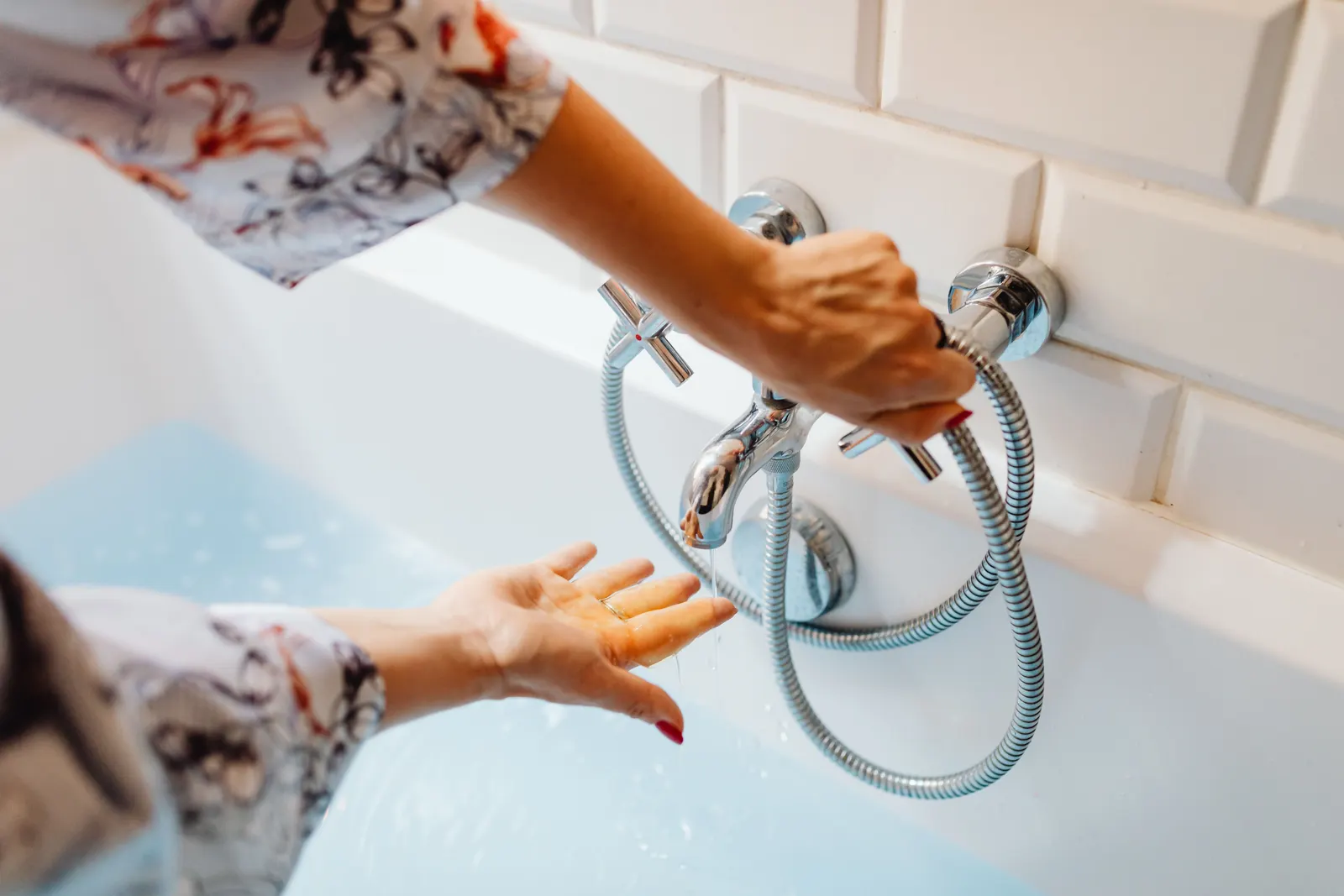
When a combi stops giving hot water, read the display and pressure gauge first: a lockout, low pressure, no gas or a frozen condensate pipe stops everything and is often fixable at home. If the boiler looks healthy but never fires when you open a hot tap, the fault is usually the flow sensor, diverter valve or plate heat exchanger.
What is the boiler doing when you open a hot tap?
A combi has no stored hot water, so there is nothing to run out. It heats mains water only while a tap is open, which means the fault shows itself the moment you ask for hot water. Open the kitchen hot tap fully, stand by the boiler and watch for thirty seconds. What you see narrows the fault to one or two parts.
Nothing happens at all: no flame symbol, no fan noise, no change on the display. Either the boiler is locked out or has no power, gas or pressure, or it never noticed the tap opening. The fan starts and the boiler tries to light, then stops and shows a code: that is an ignition or flue fault, and the code tells you which. The boiler fires but the water stays cold or lukewarm while the radiators start warming up: the heat is going to the wrong place, which points at the diverter valve. The water gets hot for a minute and then goes cold again: the boiler is overheating on the hot side and cutting out, usually because the plate heat exchanger is scaled.
Write down any code on the display before you touch anything. It saves the engineer time and tells you whether a reset is worth trying. Codes such as Vaillant F28 or Worcester EA 227 mean the boiler could not light, which is a different problem from a combi that simply ignores the tap.
Checks you can safely do tonight
Work down this list in order. Each one is outside the boiler casing and each one catches a cause that needs no parts at all.
- Power: is the display lit? If not, check the fused spur switch next to the boiler and the consumer unit. A blown fuse in the spur points to an electrical fault inside, so switch the spur off before changing the fuse, and if the new one blows too, stop there.
- Pressure: the gauge should read roughly 1 to 1.5 bar when the system is cold. Most combis lock out on both heating and hot water when it falls below somewhere around 0.3 to 0.5 bar, depending on the model. Topping up is covered in our combi pressure guide.
- Gas: light a hob ring if you have a gas hob. If that is dead too, check the meter and, on a prepayment meter, the credit. A gas supply problem is not a boiler fault.
- Condensate pipe: in a hard frost, the white or grey plastic pipe running outside from the boiler can freeze and block. Many combis then lock out and show a fault. Pour warm (not boiling) water along the outside section, then reset.
- Flow: open the hot tap fully. A combi needs a minimum flow, roughly 1.5 to 2 litres a minute depending on the model, before its flow sensor tells it to fire. A half-open mixer tap or a blocked aerator can sit below that.
- Cold mains: run the kitchen cold tap. If cold flow is weak everywhere, the supply is the problem, and the combi is just not getting enough water to switch on.
- Reset: once you have cleared anything above, press reset once. If the same code comes straight back, leave it.
If you smell gas, open windows, turn off the gas at the meter if you can do it safely, avoid switches, then leave the property and call the National Gas Emergency Service on 0800 111 999. Do not operate switches. Never remove the boiler casing: everything behind it is gas work.
The combi fires for heating but ignores the hot tap
This is the most common pattern when the pressure is right and the display is clean. The radiators work, so the burner, fan, gas valve and pump are all fine. The boiler simply does not know a tap is open.
Combis sense demand through a flow sensor on the cold inlet. On most modern models it is a small plastic turbine with a magnet that spins as water passes, read by a hall-effect sensor; older boilers use a paddle-type flow switch. Limescale and bits of debris from the mains jam the turbine, and London water is hard enough to do that within a few years. A related cause is a blocked inlet filter, a small mesh just inside the cold connection that clogs after mains work in the street.
The tell-tale sign is that nothing changes on the display when you open a tap, even though everything else looks normal. Cleaning or replacing the sensor is usually one of the cheaper combi repairs, and the part is easy to get for common boilers, including the flow turbine behind many cases of a Worcester giving no hot water.
Hot water turns lukewarm or cuts out after a minute
If your hot water faded over weeks rather than stopping overnight, the plate heat exchanger is the prime suspect. It is the small block of stacked steel plates where hot boiler water warms the mains water on its way to your tap. Scale builds up between the plates, so heat cannot get across. The boiler water overheats, the boiler shuts the burner off to protect itself, and the tap runs cold until it cools and tries again.
A scaled plate heat exchanger can sometimes be descaled, but on most boilers replacing it is quicker and more reliable. Across the wider market that job typically lands somewhere around £300 to £600 fitted, depending on the boiler. A water softener or a scale reducer on the cold feed slows the problem down, which is why many engineers fit one at the same time. If your symptom is specifically water that goes hot then cold, our guide to hot water that runs cold after a minute goes into more detail.
Radiators warm up when you run a hot tap
Feel the radiators after running the hot tap for a couple of minutes with the heating off. If they get warm while the tap stays cold, the diverter valve is stuck in the heating position. This valve decides whether boiler heat goes to the radiators or to the plate heat exchanger. Its spindle seizes or its motor fails, and all the heat keeps going round the radiators.
On some boilers only the motor head has failed and can be swapped on its own; on others the valve body has to come out too, which means draining the boiler. As a guide, market prices for a full diverter valve replacement are often somewhere around £200 to £400, and more on boilers where the valve is hard to reach. The radiators-hot, taps-cold symptom is covered from every angle in boiler heating radiators but not water.
When it cannot wait, and what the engineer does
A combi with no hot water is rarely dangerous in itself, but some situations should not wait until morning: a gas smell, a boiler that keeps locking out with a flue or overheat code, water dripping from inside the casing, or a household with a baby, someone elderly or someone who relies on hot water for medical reasons. If there is also no heating in cold weather, treat it as urgent.
On the visit, the engineer reads the fault history, checks the gas pressure at the valve, tests the flow sensor with a tap open, checks which way the diverter is sending heat and measures the hot water temperature at the tap. That order separates a sensor fault from a valve fault from a heat exchanger fault without guessing. Our no hot water repair visit starts with the £60 call-out at any hour, and the repair price is agreed with you on site before any work starts. Gas work is carried out by Gas Safe registered engineers.
If the boiler will not do anything at all, heating included, see emergency boiler repair instead.
Questions people ask
Why is my combi boiler heating working but not the hot water?
Because the heating and hot water share the burner but not the controls. If the radiators work, the fault is in the parts that only serve hot water: the flow sensor that detects the tap, the diverter valve that switches heat to the taps, or the plate heat exchanger that warms the mains water.
Can low pressure stop hot water on a combi?
Yes. Most combis lock out on hot water as well as heating when pressure drops below roughly 0.3 to 0.5 bar. Top it back up to around 1 to 1.5 bar cold, reset once, and if it drops again within days you have a leak or a failing expansion vessel to find.
Should I keep pressing reset if the hot water will not come on?
No. Press it once after clearing the obvious causes. Repeated resets on an ignition or overheat lockout can make a fault worse. If one reset does not clear it, the boiler needs an engineer.
Is a combi with no hot water worth repairing?
Usually. Flow sensors, diverter valves and plate heat exchangers are replaceable parts, and a single repair costs a fraction of a new boiler. Replacement starts to make sense when the boiler is old, parts are discontinued or the main heat exchanger is also failing.