Boiler fault codes
Baxi E1 Fault Code: The First Half of a Three-Digit Code
Published
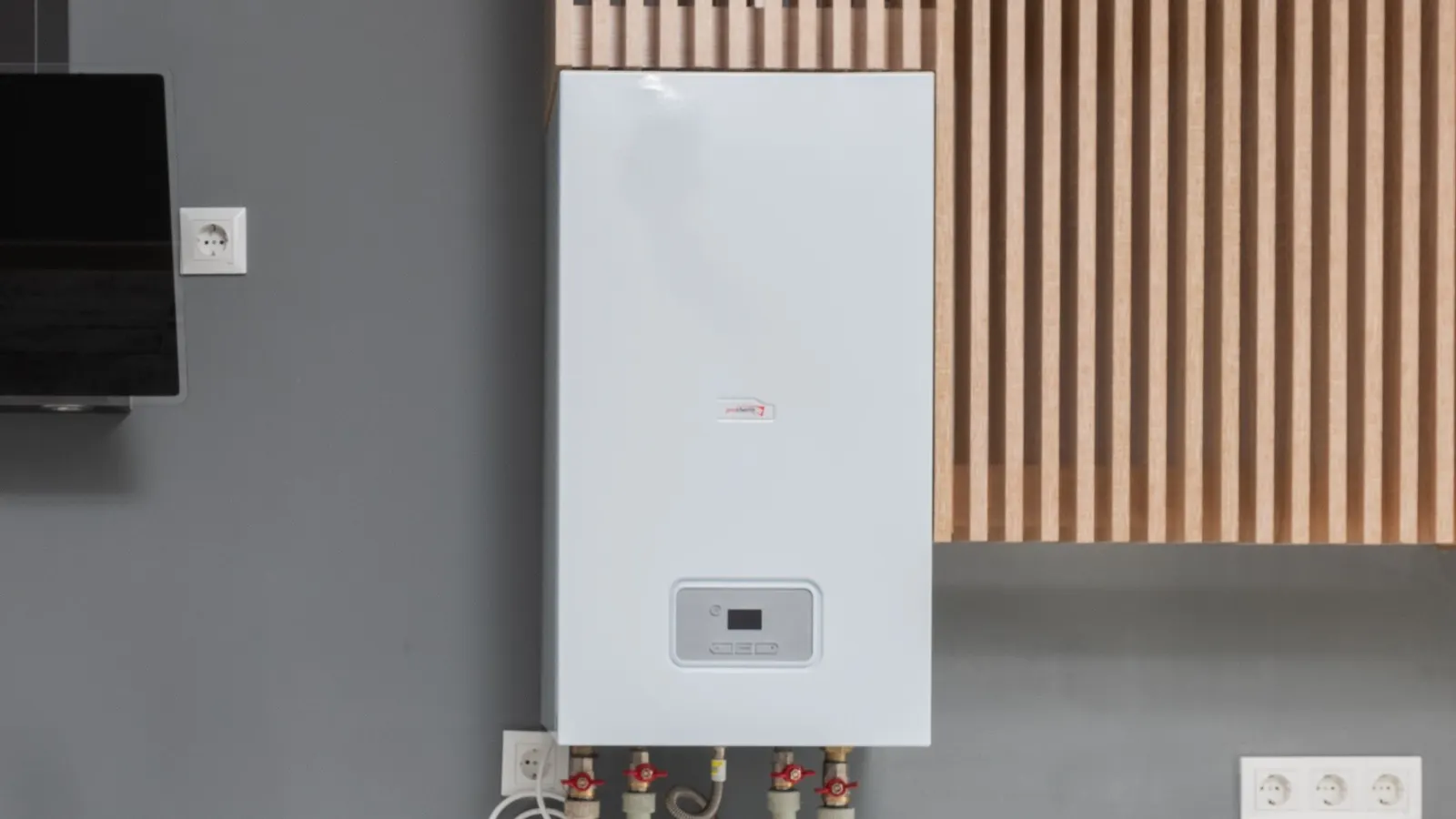
Baxi display
E1
What it means
On most Baxi boilers with a two-digit display, E1 is not a fault on its own: it is the first half of a three-digit code, shown as E1 then two more digits. The digits that follow tell you the real fault.
Safe to check yourself
- Watch the display for ten seconds and write down the digits that alternate with E1
- Read the pressure gauge: below 0.5 bar points to E119
- Check the gas is on and a prepayment meter has credit (points to E133)
- In freezing weather, look at the white plastic condensate pipe outside for ice
- Hold the selector or reset control for five seconds, once only
Call an engineer if
- The code comes back after one reset or one top-up
- The digits after E1 are 25, 60 or 93, which point to a failed part or a circulation fault
- You see water under the boiler or dripping from the copper pipe outside
- You smell gas: open windows, turn the meter off if safe, avoid switches, leave, and call the National Gas Emergency Service on 0800 111 999 first
E1 on a Baxi boiler is almost always the first half of a three-digit code. On a two-character display, E133 shows as E1 then 33, and E119 as E1 then 19. Watch the display, note the two digits that follow, and you will know whether it is low pressure, a lockout or a failed part.
Why does my Baxi boiler just say E1?
Older Baxi boilers such as the Duo-tec have a small display that can only show two characters at a time. Three-digit codes are split in half: the display shows E1, then the remaining two digits, then E1 again. Most people glance at it once, see E1 and search for that. The Potterton Promax, built by the same company, splits its codes the same way.
Plenty of websites say E1 on a Baxi means low water pressure. That is right more often than not, because E119 is the most common Baxi code, but it is a guess. The same E1 also begins an ignition lockout, an overheat and several component faults. Read the second half before you do anything.
What the digits after E1 mean
These are the common E1 codes on the Duo-tec and Promax generation. Newer boilers can differ, so check your own user guide where you have it.
- E1 then 10 (E110): safety thermostat has tripped because the heating water overheated. Resettable once.
- E1 then 19 (E119): water pressure too low, below about 0.5 bar. Top up, do not reset. See the Baxi E119 page.
- E1 then 25 (E125): no circulation in the heating circuit, often a seized pump or a closed valve. Engineer job.
- E1 then 30 (E130): the flue sensor has seen too high a temperature. Resettable once.
- E1 then 33 (E133): the boiler tried to light and saw no flame, or the gas supply dropped out. Resettable once.
- E1 then 60 (E160): fan or fan wiring fault. Engineer job.
- E1 then 93 (E193): pre-circulation fault, meaning the boiler could not prove water flow before firing. Engineer job.
Only E110, E130 and E133 are listed by Baxi as codes the reset can clear. Pressing reset for any other code will not fix it and can hide a fault that is getting worse.
What you can safely do tonight
If the second half is 19, check the gauge on the front or underside. Most Baxi boilers want 1 to 1.5 bar when cold. Most models use a filling loop with two taps under the boiler; some have a built-in filling link instead, and the user guide shows where it sits. Fill slowly and stop at 1 to 1.5 bar. Our Baxi boiler pressure guide walks through both.
If it is 33, check that other gas appliances work and that the meter has credit. In a cold snap, a frozen condensate pipe is a common cause of E133: pour warm (not boiling) water over the white plastic pipe where it leaves the wall, then reset. The reset steps are the same on most models: hold the selector or reset button for about five seconds.
If it is 10 or 30, let the boiler cool for twenty minutes, make sure radiator valves are open, and reset once. Nothing inside the casing is a householder check. Leave the front panel on.
What if my Baxi shows a different code format?
Not every Baxi uses the split E1 display. The EcoBlue range uses E118 for low pressure and E117 for pressure that is too high. The current 800 range shows a letter followed by numbers: E codes need a manual reset, while H and A codes usually clear once the condition goes away. If your display shows more than two characters at once, the E1 split does not apply and the full code on screen is the one to look up on our Baxi fault codes list.
What an engineer does and what it costs
An engineer reads the full code, checks the fault history and tests the part the code points to. For E125 and E193 that is usually the pump or a blocked heat exchanger; for E160 the fan and its wiring; for a returning E133 the gas pressure, ignition electrode and flame sensing. Typical market ranges for fitted parts are around £150 to £350 for a pump and around £200 to £300 for a fan, depending on the model. These are industry ranges, not our prices.
Our visit starts with the £60 call-out at any hour, and the repair price is agreed with you on site before any work starts. Gas work is carried out by Gas Safe registered engineers. Book through the Baxi boiler repair page.
Questions people ask
Is E1 on a Baxi boiler dangerous?
The code itself is the boiler protecting itself by shutting down. It becomes urgent if you smell gas, see water leaking or the second half points to overheating that keeps returning. For gas, open windows, shut the meter valve if safe, get out and call 0800 111 999.
How do I clear E1 on my Baxi boiler?
Find out which E1 code it is first. E119 clears itself once pressure is restored. E110, E130 and E133 can be reset once by holding the selector or reset button for about five seconds. Anything else needs an engineer.
My Baxi shows E1 and the pressure is fine. What now?
Then it is probably not E119. Look for the digits after E1. If it is 33, check the gas and the condensate pipe. If it is 25, 60 or 93, a part has failed and resetting will not help.