Leaks & burst pipes
Signs of a Hidden Water Leak
Published
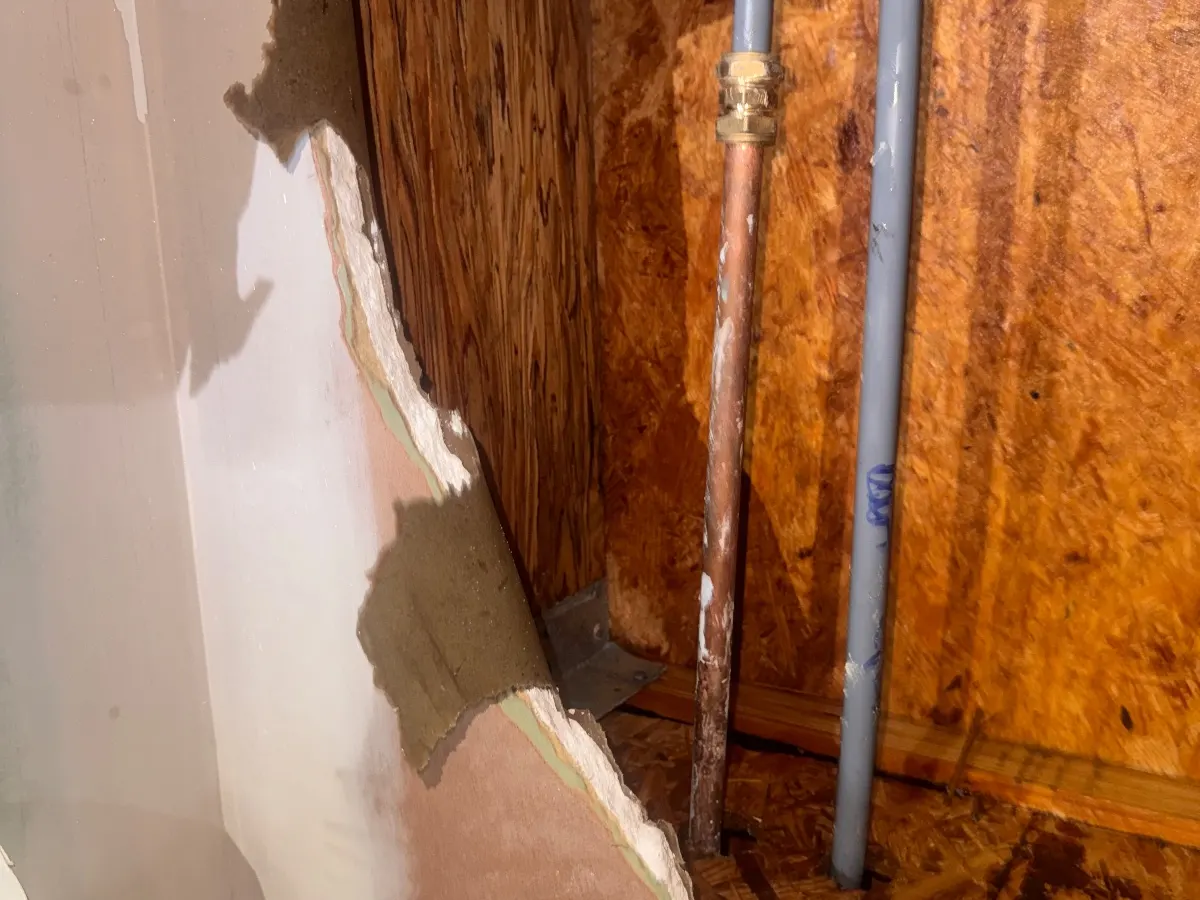
To detect a water leak you cannot see, turn off every tap and water-using appliance and read your water meter twice, an hour apart. Any movement means water is escaping. Then shut the stopcock: if your meter is outside and it still moves, the leak is usually on the underground supply pipe; if it stops, the leak is inside the house.
The signs that point to a hidden leak
Hidden leaks give themselves away slowly. Any one of these on its own can have another cause, but two or more together are worth testing for:
- A water bill that jumps with no change in how you use water.
- The sound of running or hissing water when every tap is off, clearest at night near the stopcock or under the kitchen sink.
- Boiler pressure that keeps dropping and needs topping up every few days. That points at the heating circuit, not the mains.
- A patch of floor that feels warm underfoot, which suggests a hot water or heating pipe leaking under a solid floor.
- Damp, stained or bubbling plaster low down on a wall, or a tide mark that keeps growing when it has not rained.
- Laminate or floorboards lifting, cupping or feeling soft, and a musty smell with no obvious source.
- Mains pressure at the taps weaker than it used to be.
- A patch of lawn or garden that stays green, soggy or sunken in dry weather along the line of the pipe to the house.
Test one: the water meter
If you have a meter, this is the most reliable test you can do at home. Find it: in London it is usually in a small chamber in the pavement outside, near the boundary, or sometimes inside under the kitchen sink. Lift the lid with a screwdriver and clear any water from the dial. How to read a water meter explains the black and red figures.
Turn off every tap, and make sure nothing is filling: the washing machine, dishwasher, a toilet cistern, a water softener or a cold water tank in the loft. Write down the full reading, including the red digits. Use no water for an hour, then read it again. Many meters also have a small star or triangle that spins with even a tiny flow; if it is turning with everything off, water is going somewhere.
If the reading has moved, there is a leak between the meter and the taps. A water meter running with no taps on covers the less obvious causes, such as a softener regenerating.
In a loft tank system, the tank refills through a float valve after you stop using water. Wait until it has stopped filling, usually a few minutes, before taking the first reading.
Test two: shut the stopcock to split the problem in half
With the meter showing a leak, close your internal stopcock and watch the meter again. This one step tells you which side of the house the leak is on, and that decides who pays and who you call, whether that means reporting the leak to Thames Water or booking a plumber.
If the meter stops, the leak is inside the house, on something after the stopcock. If it keeps moving with the stopcock fully shut, and your meter is outside at the boundary, the leak is usually on the underground supply pipe between the meter and the house. Old stopcocks do not always seal fully, so check the kitchen cold tap has stopped completely before trusting the result. The supply pipe from the boundary stop tap to the house is normally the owner’s responsibility; an underground water leak goes through what you can do yourself.
No meter? Put the tip of a long screwdriver against the stopcock and the handle to your ear, with everything off. A steady hiss or whoosh through the pipe is water moving. It is a rough test, but it often finds a supply pipe leak.
Narrowing down a leak inside the house
Once you know it is indoors, work through the usual suspects in this order. Most are quick and need nothing more than a torch.
- Toilets. A cistern that constantly trickles into the pan wastes water silently. Put a few drops of food colouring in the cistern and do not flush for an hour; colour in the pan means a leaking flush valve.
- Loft tanks and the hot water cylinder. A dripping overflow pipe outside shows a tank float valve that will not shut off. On an unvented cylinder, water trickling through the tundish near the cylinder means a relief valve is letting by.
- Under the kitchen sink, behind the washing machine and dishwasher, and under the bath panel: look for damp chipboard, rust stains and swollen skirting.
- The heating system. If the boiler pressure falls, but the meter test showed no mains leak, the leak is on the sealed heating circuit: radiator valves, pipes under floors, or the boiler’s own pressure relief valve.
- The pipe runs you cannot see. A damp line on a wall that follows where a pipe would run, or a warm patch on a floor, is where an engineer will look first.
When a hidden leak cannot wait
Some hidden leaks can wait for a weekday appointment. These cannot: water coming through a ceiling, a damp patch next to sockets or a light fitting, a ceiling that is bulging or sagging, or a meter spinning quickly with everything turned off. Shut the stopcock, switch off the electrics at the consumer unit if water is near them and it is safe to reach, and call someone out.
Our leak repairs visit starts with the £60 call-out at any hour. The engineer confirms the leak, finds where it is, and the repair price is agreed with you on site before any work starts. If water is coming through a ceiling right now, go to what to do in the first few minutes of a water leak.
A ceiling that sags or bulges with water can come down. Keep people out of the room below, and do not stand under it to pierce it.
What the engineer does to find and fix it
Finding a hidden leak is a process of elimination, not guesswork. An engineer will typically repeat the meter and stopcock tests, then isolate sections of pipework one at a time using isolation valves, or cap off runs, to see which one is losing water. On the heating circuit they pressure-test the system with the boiler isolated.
Where a leak sits under a floor or behind a wall, a moisture meter traces the wet area, and thermal imaging shows hot pipes clearly on a heating or hot water leak. Some jobs need a specialist acoustic or tracer gas survey, especially on long underground runs. The aim is to open up one small section of floor or wall rather than a whole room.
The repair itself is usually simple once the leak is found: a new compression fitting, a short length of new pipe or a push-fit coupler. As a typical market range, the repair part is often the smaller cost; the time taken to find the leak and make good the floor or plaster is what drives the bill. If you are claiming on insurance, photograph everything before it is opened up and keep the old section of pipe.
Questions people ask
How can I tell if I have a water leak without a meter?
Listen at the stopcock with a screwdriver held to your ear while everything is off, watch for boiler pressure dropping, and check for damp, warm floor patches and lifting flooring. A plumber can confirm it by isolating sections of pipe.
Can a hidden leak make my boiler lose pressure?
Yes, if the leak is on the heating circuit. A mains leak does not affect boiler pressure on a sealed system. If pressure drops but the water meter is still, look at radiators, heating pipes and the pressure relief valve.
Does home insurance cover finding a hidden leak?
Many buildings policies include trace and access cover, which pays for finding the leak and opening up floors or walls. It usually does not pay for the failed pipe itself. Check your policy before any work starts.
Is a small hidden leak worth fixing straight away?
Yes. A slow leak under a floor or inside a wall causes rot, mould and damaged plaster long before you see water, and the longer it runs the bigger the repair.