Radiators · 24/7
Leaking Radiator Repair
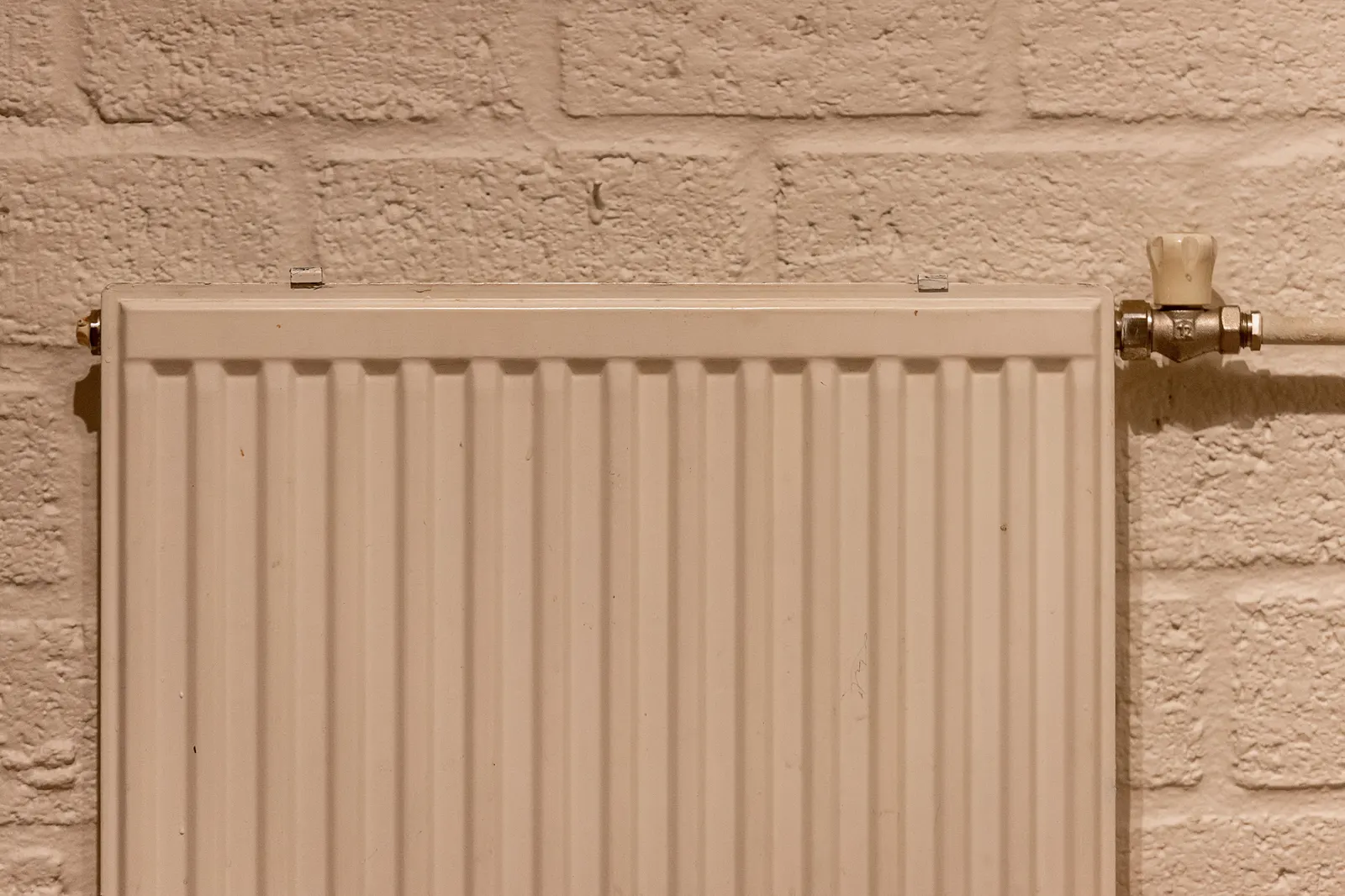
A radiator leaking at the valve is usually one of three joints: the spindle gland, the union nut into the radiator or the compression nut on the pipe. Put a towel down and note the boiler pressure. We send an engineer day or night to reseal or replace the valve. The £60 call-out gets someone out; price agreed first.
What the visit covers
- Resealing or repacking a leaking valve spindle
- Remaking union and radiator tail joints
- Replacing TRVs and lockshield valves, with or without draining the system
- Replacing a radiator with a pinhole or corroded seam
- Refilling and repressurising the heating afterwards
Which part of the radiator valve is leaking?
Dry the whole valve with kitchen roll, then wrap a dry piece of tissue around each part in turn and see which one gets wet first. Where it gets wet tells you almost everything.
- Top of the valve, under the TRV head or cap: the spindle gland. The packing or O-ring around the spindle has worn. This is the most common leak on older valves.
- The large nut between the valve and the radiator: the union joint on the radiator tail. The tail’s thread seal or the union face has failed.
- The nut at the bottom, where the valve meets the pipe: the compression joint. The olive is no longer sealing, often after the radiator was taken off for decorating.
- Wet on the radiator itself, not the valve: a pinhole or seam leak in the panel, which means the radiator is corroding from inside.
Only tighten a nut if you can hold the valve body still with a second spanner. Twisting the valve can split the pipe below the floor. Never open a bleed screw to relieve a leak.
Why radiator valves and TRVs start leaking
The pin on a thermostatic valve moves every time the room warms and cools, so its seal wears faster than anything else on the radiator. Leaks often appear when the heating first comes on in autumn after months of the pin sitting still. A TRV with a stuck pin, covered in our guide to a thermostatic radiator valve that is stuck, is often the same valve that later starts weeping.
Union and compression leaks usually follow disturbance: a radiator lifted off its brackets, a valve knocked by a hoover, or pipes moving as the system heats and cools. High system pressure makes every weak joint worse. If the boiler gauge climbs towards 3 bar when the heating is hot, the expansion vessel may need attention, and valves will keep weeping until it is fixed. Pinholes in the radiator itself come from sludge and corrosion, which usually shows as black water when you bleed it.
How is a leaking radiator valve fixed?
For a gland leak, the engineer may be able to tighten or repack the gland nut, or replace the spindle O-ring on valves where it is serviceable. Many TRV bodies are cheap enough that replacing the whole valve is the better fix. On a sealed system that means either draining down or using a pipe freezing kit to form an ice plug either side, so the rest of the heating does not have to be emptied.
For a union leak, the radiator is isolated, the union is undone and the tail is resealed with PTFE or jointing compound. For a compression leak, the olive is replaced. A radiator with a pinhole is replaced, not patched. Afterwards the system is topped up, radiators are bled and a combi or sealed system is brought back to its usual cold pressure, around 1 to 1.5 bar. If you want to try an easier fix first, see how to fix a leaking radiator.
What does a leaking radiator valve repair cost?
In market terms, tightening a gland or remaking a single joint is a short job and one of the cheaper heating repairs. Replacing a pair of valves costs more because of the draining or freezing, and a new radiator is the dearest, as the panel price depends on its size and output. With us you pay the £60 call-out, and the repair price is agreed on site before any work starts.
When a leaking radiator cannot wait
Call now if the boiler pressure keeps dropping and the boiler locks out, if water is soaking into floorboards over a ceiling, or if the leak is a steady stream, not a drip. Heating water can be very hot and is often dark with sludge that stains carpets. A slow weep into a cup that the boiler can live with can wait for a daytime visit. Our guide to a radiator leaking and what to do covers the first hour.
How the visit works
Tell us which joint is wet
Dry the valve and tell us where the water reappears first, and what the boiler gauge reads.
Isolate the radiator
The engineer closes both valves, or freezes the pipe, so the system stays full.
Price agreed, then the repair
You approve the figure before the valve is opened up.
Refill and check
Air bled out, pressure restored and the valve watched with the heating hot.
Questions people ask
Can I fix a leaking TRV myself?
You can try a quarter turn on the gland nut under the head with the head removed, holding the valve body still. If that does not stop it, the valve needs isolating or replacing, which on a sealed system means draining down or freezing the pipe.
Is a leaking radiator valve dangerous?
The water is not dangerous in itself, though it can be hot. The risks are water getting into ceilings or electrics below, and the boiler losing pressure and shutting down.
Can I turn off one radiator that is leaking?
Turn the TRV to 0, past the snowflake, or swap the head for its manual cap, then close the lockshield with a spanner, counting the turns so it can be reset. That stops flow through the radiator but will not stop a leak on the pipe side of the valve.
Why is my radiator leaking black water?
Black water is sludge, mostly magnetite from corrosion inside the system. Its presence suggests the system needs cleaning and an inhibitor added, and that the radiator may be thinning from inside.
Will leak sealer stop a leaking radiator valve?
System leak sealers are aimed at tiny weeps inside the system, not a failed valve seal or joint. They are no substitute for fixing a leak you can see.