Stopcocks · 24/7
Leaking Stopcock Repair & Replacement
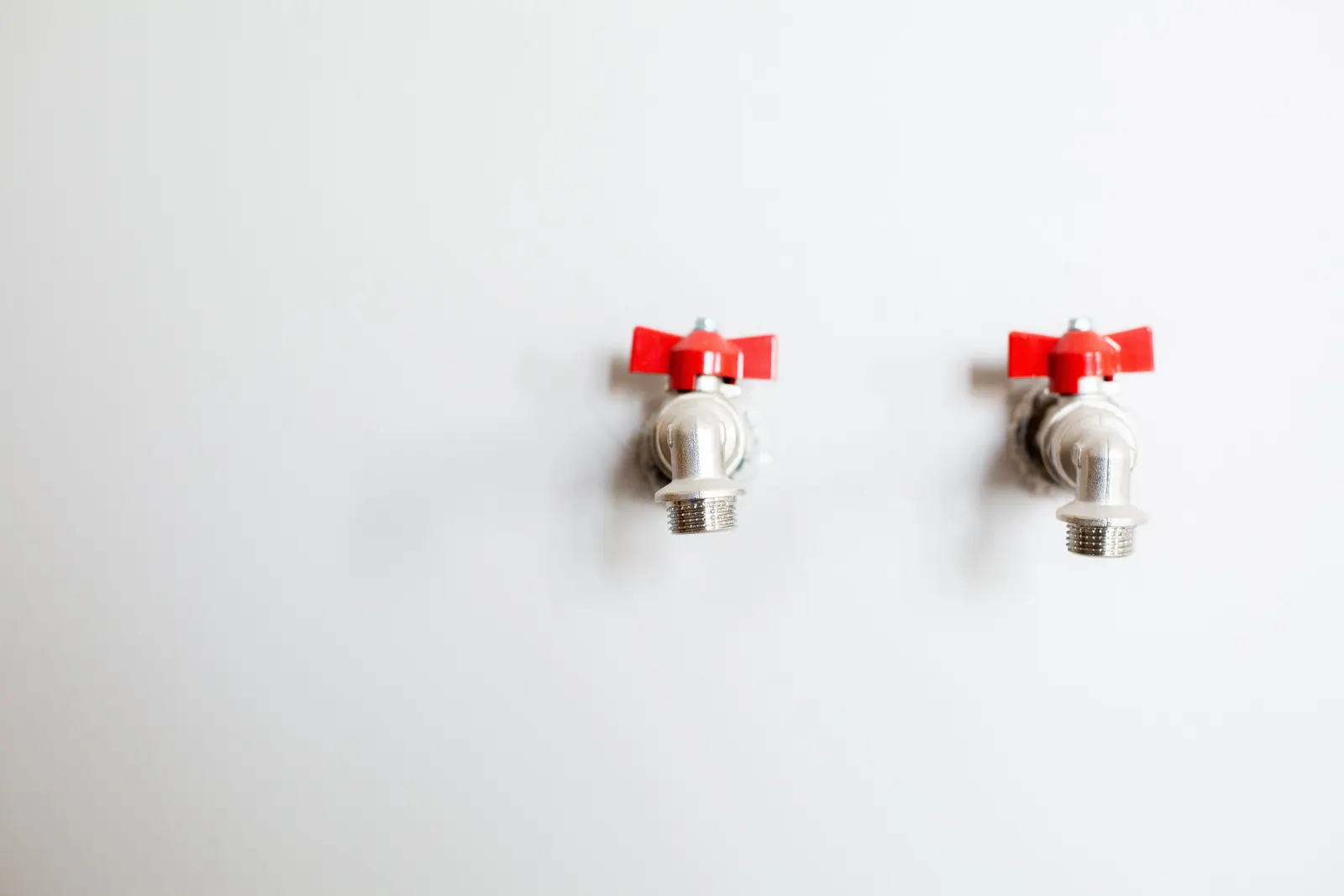
A leaking stopcock usually drips from the spindle gland under the handle or from one of the pipe nuts. A gentle turn of the gland nut often stops a gland leak. A leaking valve body, or a stopcock that will not shut, needs replacing. We come out 24/7 for the £60 call-out and agree the price before work starts.
What the visit covers
- Gland and spindle leaks on brass stopcocks
- Weeping compression nuts where the pipe enters the valve
- Replacing a corroded or seized stopcock with a quarter-turn valve
- Shutting the supply at the outside stop tap so the work can be done
- Stopcocks that turn but no longer stop the water
- Adding a drain-off valve so the house can be drained in future
Where exactly is your stopcock leaking?
Dry the valve with a tissue and watch where the first bead of water forms. The spot tells you the fault and how urgent it is.
- Around the spindle, just under the handle: the gland packing has worn or dried out. This is the most common stopcock drip, and it often starts straight after the valve has been turned for the first time in years.
- At a nut where the pipe goes in: the compression olive has moved or the joint was never fully tight. Common after someone has knocked the pipe or tried to force a seized handle.
- From the body itself, with green or white crust: the brass is corroding. On older valves made of ordinary brass, the zinc can leach out and leave the metal porous. That valve needs replacing, not tightening.
- Water running on even with the handle fully shut: the washer on the jumper has worn. This is not a drip you can see, but it means the valve no longer does its job.
Never force a seized stopcock with a wrench or a hammer. Old spindles snap, and a broken stopcock can leave you with a leak you cannot turn off from inside the house.
What you can safely try tonight
For a spindle drip, find the gland nut. It is the small hexagon nut directly below the handle, not the big nuts on the pipes. With the valve open, give it an eighth to a quarter of a turn clockwise with a spanner and wait a minute. That often compresses the packing enough to stop the drip. Do not keep tightening: too much makes the handle stiff and can crack an old nut.
For a nut on the pipe, a quarter turn with a second spanner holding the valve body still can close a small weep. If the drip gets worse, stop and put a bowl under it. Our step-by-step on how to fix a leaky stopcock has more detail. If the handle will not move at all, our guide to a stopcock that won’t turn explains why.
What the engineer does
First the water is shut off at the outside stop tap in the pavement box. In the Thames Water area that tap belongs to the water company, and your supply pipe starts from it. If it cannot be operated, the water company may have to attend before any stopcock work can happen, and we will tell you that up front.
A gland leak on a sound valve is repacked with fresh PTFE gland packing, and a worn jumper washer can be swapped. If the body is corroded, the spindle is bent or the valve has been fitted upside down against the flow arrow, it is replaced. Most replacements are a quarter-turn full-bore lever valve on 15mm copper, or on 25mm blue MDPE with an adaptor, and the valve should be WRAS approved. They open fully, shut with one movement and are far less likely to seize than a screw-down stopcock.
The Water Supply (Water Fittings) Regulations 1999 require a stop valve conveniently located so the supply to your home can be shut off, and the guidance that goes with them recommends one inside, close to where the supply pipe enters. If yours sits under a floor or behind a kitchen unit where you cannot reach it quickly, this is the time to fit one where you can. A drain-off valve just above it is worth adding too, so the house can be drained without cutting a pipe.
What does it cost to replace a stopcock?
Across the UK market, replacing an internal stopcock is usually quoted somewhere between about £100 and £250 including the valve and labour. An external valve costs more, and so does one boxed in or under a floor. Repacking a gland is a shorter job and usually costs less than a full replacement.
With us you pay the £60 call-out to get an engineer there, and the repair price is agreed with you on site before any work starts. See how replacing a stopcock works for what the job involves and the call-out cost for how charging works.
When a leaking stopcock cannot wait
A slow gland drip into a bowl can usually wait until morning. Call straight away if water is spraying rather than dripping, if the leak is from a cracked body, or if it is soaking into floorboards or a ceiling below. A stopcock that will not shut is also urgent if you already have a leak elsewhere in the house. In that case, the outside stop tap is your fallback: see where the external stopcock is.
How the visit works
Contain the drip
We tell you what is safe to try with the valve while the engineer is on the way, and when to leave it alone.
Isolate the supply
The engineer shuts the water at the outside stop tap, so the stopcock can be worked on without pressure behind it.
Price agreed, then the repair
Repack, remake the joints or replace the valve: you approve the figure before any work starts.
Test under full pressure
The supply is restored slowly, the joints are checked dry and the new valve is opened and closed in front of you.
Questions people ask
Why is my stopcock dripping after I turned it?
Turning a valve that has not moved in years disturbs the dried-out gland packing around the spindle. A small turn on the gland nut under the handle often stops it. If not, the packing needs renewing.
Can a leaking stopcock be repaired, or does it need replacing?
A gland leak or worn washer on a sound valve can be repaired. A corroded body, bent spindle or a valve that seizes again should be replaced, usually with a quarter-turn valve.
How do I turn the water off to change a stopcock?
At the outside stop tap, usually under a small cover in the pavement or front path. It needs a long stop tap key. If it will not turn, the water company may need to shut it.
Is a leaking stopcock my responsibility or Thames Water’s?
The stopcock inside your home is yours. The outside stop tap at the boundary, and the pipe from the main to it, belong to the water company.
How long does a stopcock replacement take?
An accessible internal stopcock is often done within an hour or two, including draining down and testing. Awkward access or corroded pipework either side takes longer.