Leaks & burst pipes
Thames Water: How to Report a Leak (and What Happens Next)
Published
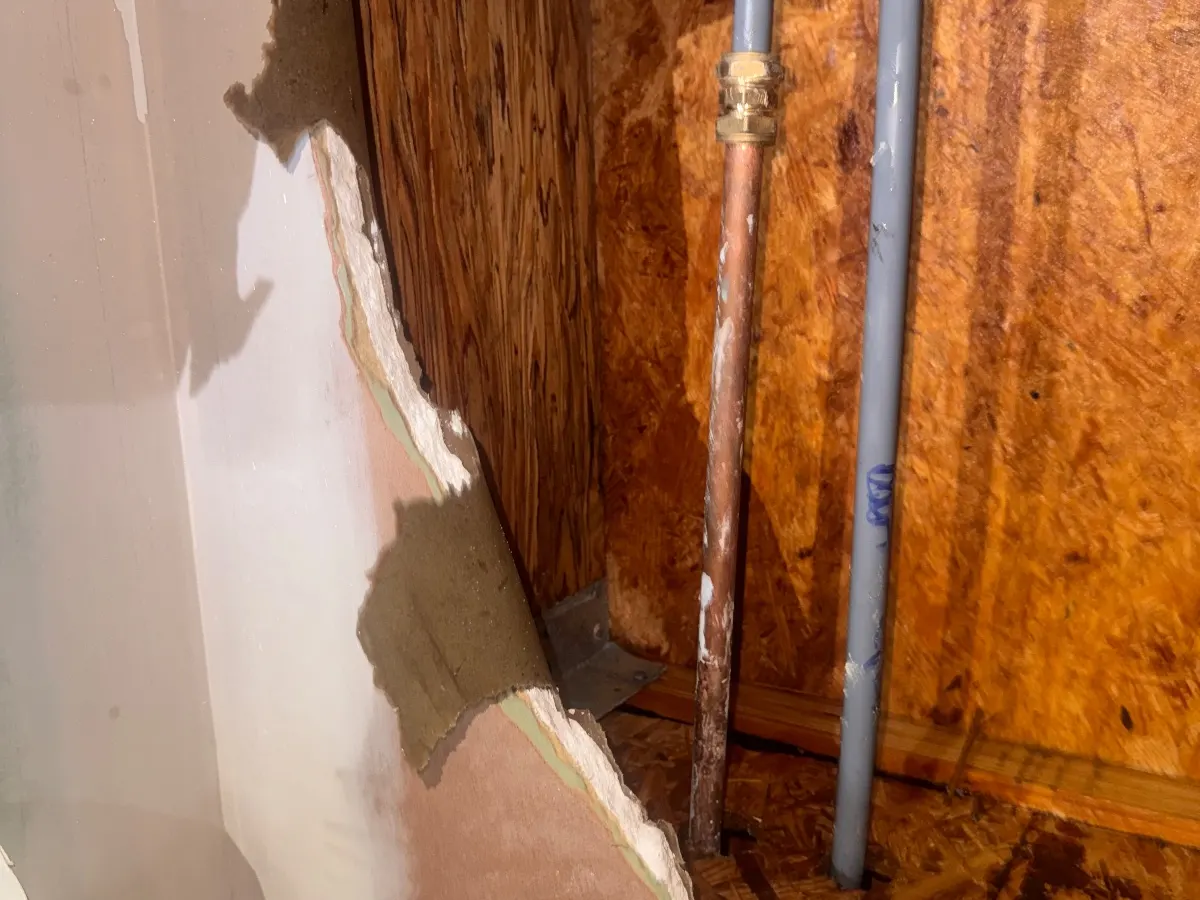
Report a street leak to Thames Water at thameswater.co.uk/leak or on its 24/7 WhatsApp service; for your own supply pipe, call 0800 316 9800. A leakage team checks it and ranks it by water lost and who is affected. If the leak turns out to be on your side of the boundary, you have four weeks to fix it.
Which leaks Thames Water fixes, and which are yours
Before you report anything, work out whose pipe it is, because that decides whether you wait for Thames Water or book a plumber. Thames Water owns the mains under roads and pavements and the short communication pipe that joins the main to your supply. It also owns the external stop tap, which is usually under a small cover in the pavement, sometimes in a front garden or drive.
From your property boundary inwards, the supply pipe is yours, along with every pipe and fitting inside the house. A meter does not change that. Thames Water’s own code of practice says the position of the meter does not decide who owns the pipe, so a leak on the house side of a meter in the pavement is still likely to be your repair if it sits inside your boundary. Our guide to who owns the mains water pipe goes through the terraced-street and shared-supply cases.
- Water rising through the road, the pavement or a cover in the footway: report it to Thames Water
- A wet patch in your front garden in dry weather, or a meter that keeps turning with every tap shut: likely your supply pipe
- Water inside the house, under a floor or through a ceiling: yours, or your landlord’s if you rent
The three ways to report it, and what to have ready
The quickest route for a street leak is the online form at thameswater.co.uk/leak. It drops you onto a map, so you pin the exact spot rather than describing it. The same map shows problems Thames Water already knows about, so check it first: if your leak is already marked, you will see its status there. The WhatsApp service is staffed 24/7 and is easier if you want to send photos from the pavement. For a suspected leak on your own supply pipe, the code of practice gives 0800 316 9800, open 24 hours.
Whichever route you use, give them what a leakage inspector needs to find it quickly: the nearest house number or landmark, which side of the road, whether water is running along the gutter or bubbling up from one point, and whether it has got worse since you first saw it. Mention it if water is getting into a building, or if the road surface has sunk or cracked, because the effect on people and the location are part of how the job is ranked.
If a road surface has collapsed, or flooding is putting drivers or pedestrians in danger right now, call 999 first. A water company cannot close a road for you in the next few minutes.
After you report it: why the street leak is still there days later
This is the part that frustrates most people. Thames Water says it ranks repairs on four things: how much water is being lost, the effect on customers’ supply, how complex the job is and where it is. A burst main flooding a junction is dealt with as an emergency. A steady trickle along a gutter on a side street can sit for days or weeks, because a leakage team first has to confirm where the leak actually is, and the water appearing at the surface is often some distance from the break.
Once it is booked, a dig in the road usually needs a street works permit, and a road closure means working with the council or highways authority. Thames Water sometimes closes roads at night to avoid daytime traffic and supply cuts, and it writes to nearby customers when it does. You can see planned and live permits for your street on the One Network website, which is often the only sign that a repair date has been set.
If a burst interrupts your supply without warning, the Guaranteed Standards Scheme applies. In England the water company has 12 hours to restore supply after an unplanned interruption, a limit that since July 2025 also covers bursts on large strategic mains. If it misses that, you are due £50, plus £50 for each further full 12 hours. Those amounts were raised in 2025, and the rules only uprate them in April once inflation has added up to 10% or more since the last change. Planned shutdowns of more than four hours need at least 48 hours’ written notice.
When the leak turns out to be on your pipe
Sometimes the report comes back the other way: Thames Water’s team finds the leak on your supply pipe, or writes to you because its own detection work has picked one up at your address. From that point you have four weeks to get it repaired. If you do not, Thames Water can serve notice under Section 75 of the Water Industry Act 1991, send its own contractors after the date in that notice and recover the cost, including administration charges. In an emergency it can also turn your supply off until the leak is fixed.
Check your home insurance first, since some policies cover supply pipe leaks or trace-and-access work. Otherwise you arrange the repair yourself. Thames Water suggests getting several quotes and keeps a list of recommended plumbers at thameswater.co.uk/approvedplumbers. Keep the invoice, because you will need it for the leak allowance below.
Thames Water will sometimes repair a supply pipe itself, at its discretion. That applies to households on its Priority Services Register or on the WaterHelp or WaterSure schemes, and to leaks that put life or its network at risk. It stops where the pipe enters the building, so in a block of flats it will not follow the pipe up to your flat. Where it replaces the pipe it prefers moling, a trenchless method that pulls new pipe through the ground, and it guarantees the work for two years.
When the leak is inside the house or somewhere you cannot see, the repair starts with finding it. Our leak repair service traces and fixes leaks on supply pipes and internal pipework. The £60 call-out gets an engineer to you at any hour, and the repair price is agreed with you on site before any work starts.
Getting the lost water taken off your bill
On a meter, every litre that leaked went through the meter and onto your bill. Thames Water offers a leak allowance to cover that, as long as you get the leak repaired promptly once it is confirmed. It works out what you would normally have used from your past readings, or from a similar household if there is no history, and credits the difference for the period of abnormal use.
There are limits. An allowance for internal pipework is normally given once, while supply pipe leaks can be claimed as often as they happen. Leaks beyond your internal stopcock, such as a running toilet, are usually excluded unless you could not reasonably have known about them. No allowance is made if you ignored a leak you knew about, or if you were told the supply pipe needed replacing and it was not done. Claims go through thameswater.co.uk/leakallowance, with the plumber’s invoice or insurance paperwork as proof of repair. Our guide to a leak and your water bill covers the meter side in more detail.
How to check it really is fixed
After any repair, do the meter test Thames Water describes. Shut the internal stop valve, usually under the kitchen sink, make sure no cistern is filling, read the meter, wait half an hour and read it again. The two readings should match. If the meter has moved, water is still escaping between the meter and the stop valve, which points to the supply pipe. Reading a water meter shows which dials to use.
If the readings match but the bill stays high, the leak is on the house side of the stop valve: a toilet passing water into the pan, a dripping overflow, or a pipe under a floor. For the difference between a job for the water company and one for a plumber, see water company leak or plumber?.
Questions people ask
How long does Thames Water take to fix a reported leak?
There is no fixed time. Bursts that flood roads or cut supply are treated as emergencies, and if an unplanned interruption lasts more than 12 hours you are owed a payment under the Guaranteed Standards Scheme, raised to £50 in 2025. Smaller leaks are ranked by water lost, impact, complexity and location, and may also wait for a street works permit or a night-time road closure.
Does Thames Water charge to fix a leak outside my house?
Not if it is on its main or communication pipe under the road or pavement. If it is on your supply pipe inside your boundary, the repair is yours to arrange and pay for, unless you qualify for its discretionary help through the Priority Services Register, WaterHelp or WaterSure.
Can Thames Water make me fix a leak?
Yes. Once a leak on your property is confirmed you have four weeks to get it repaired. After that it can serve notice under Section 75 of the Water Industry Act 1991, carry out the repair and charge you, and it can turn the supply off in an emergency.
How do I check whether Thames Water already knows about a leak?
Use the reporting map at thameswater.co.uk/leak. It shows problems already reported near you and where each one has got to. Street works permits for the same spot appear on the One Network website, which shows when a dig is planned.