Hot water problems
Hot Water Runs Cold After a Minute
Published
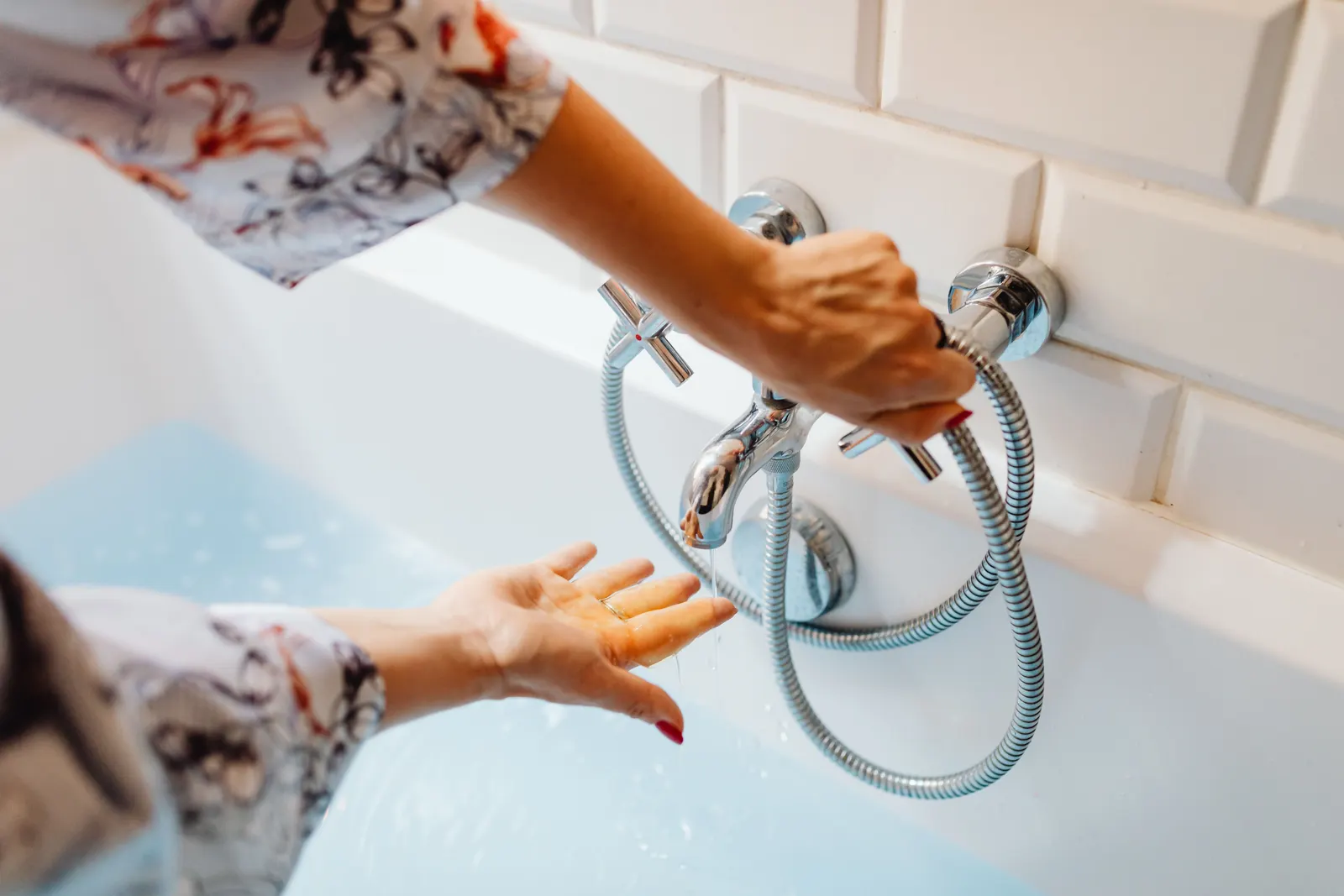
Hot water that goes cold after a minute means the heat source is giving up, not the pipes. On a combi, the burner is usually locking out or overheating on a scaled heat exchanger. With a cylinder, only the top few litres are being heated. A leaking mixer valve letting cold into the hot pipe is the third common cause.
Does it go cold and stay cold, or come and go?
Before anything else, run a hot tap fully open for three or four minutes and watch what the water does. The pattern points you at the cause faster than any single check.
Hot for a minute, then cold for good: on a combi this usually means the burner lit, then went out and did not relight. Look at the boiler display while the tap is still running. A fault code, a flashing light or a flame symbol that disappears tells you the boiler has locked out rather than simply stopped.
Hot, cold, hot, cold in cycles of a minute or two: that is the boiler overheating on hot water, cutting the burner to protect itself, cooling, then lighting again. It nearly always means scale or a restriction on the hot water side.
Hot for a minute at every tap, and it came on gradually over days or weeks: if you have a hot water cylinder, you are probably only getting the water that sits at the top of the tank and in the pipes. The tank is not being heated properly.
Only one tap or shower goes cold: the heat source is fine and the fault is at that outlet, usually a thermostatic shower valve or a mixer tap.
What you can safely check yourself
These checks stay outside the boiler casing and cylinder covers. They rule out the causes that cost nothing to fix.
- Open the hot tap fully. A combi only fires for hot water above a minimum flow, and if flow drops back below it, for example on a half-open basin tap, the burner goes out and the water runs cold.
- Make sure no other hot tap is running. Two outlets at once can drop the flow at each below what the boiler can heat, especially on a smaller combi.
- Check the boiler pressure gauge. Most combis want between 1 and 1.5 bar when cold. Low pressure can cause lockouts on hot water as well as heating.
- In freezing weather, check the plastic condensate pipe where it leaves the house. A frozen condensate pipe makes many condensing boilers light, run briefly and lock out. Pour warm, not boiling, water over it.
- Check the gas hob lights normally, and on a prepayment meter that there is credit left. If the hob is also weak or will not light, the fault is the gas supply and not the boiler.
- Cylinder: check the programmer hot water channel is on, and feel the top and middle of the tank. Hot at the top and cold halfway down means it is not being reheated.
- Shower only: take the shower head off and descale it, and try the bath tap. If the bath stays hot, the shower valve is the fault.
Press the boiler reset button once only. If it locks out again on the next hot tap, stop resetting it and leave it off. A lockout is the boiler shutting itself down for a reason, and resetting it over and over hides the fault rather than clearing it. If you smell gas, open windows, turn off the gas at the meter if you can safely reach it, leave switches alone, then get out and call the National Gas Emergency Service on 0800 111 999.
Why a combi runs hot, then cold
Work through these in order. The first two cover most calls.
Scale in the plate heat exchanger. London water is hard, and limescale builds up in the small plate heat exchanger that warms the mains water for your taps. Heat cannot get out fast enough, the water inside the boiler overheats and the boiler cuts the burner. That is the hot, cold, hot pattern. It usually builds up over months, and the hot water often gets weaker and hotter at the same time before it starts cycling.
The burner loses its flame. If the flame lights but the boiler cannot prove it is still burning, it shuts the gas valve and locks out, usually with a code. Causes include a worn flame sensing electrode, a partly blocked condensate trap, a flue or air intake problem, and a gas supply that drops when the boiler asks for full power. Hot water is the highest load most combis see, so a weak gas supply often shows up there first while the heating still works.
The flow sensor stops registering. Combis sense tap flow with a small turbine or flow switch on the cold inlet. A sticky or partly blocked sensor can register flow at first, then drop out as pressure settles, and the boiler switches back to standby while the tap is still running.
A failing hot water temperature sensor. If the thermistor on the hot water outlet reads too high, the boiler thinks the water is already hot and turns the burner down or off within seconds.
The detailed diagnosis for a combi that will not make hot water at all is in our guide to combi boiler hot water not working.
Why a cylinder runs out after a minute
A cylinder holds its hot water in layers, hottest at the top. When a tap is opened, hot water leaves from the top and cold mains or tank water comes in at the bottom. If only the top layer was heated, you get a minute of hot water and then the cold that was sitting below it.
The usual reasons the tank is only partly heated are a cylinder thermostat turned right down or failed, a motorised zone valve that is not opening fully, a programmer set for too short a period, or, on an electric-only cylinder, the lower immersion element having failed so only the short top element works. Our guide to an immersion heater that has stopped working covers the electric side.
A cylinder that is old or has been undersized for the household can also run out quickly, but that tends to show as hot water running out after a bath or two showers, not after one minute.
When one tap or shower is the only one going cold
If every other hot tap stays hot, the boiler and cylinder are fine. The two usual culprits are at the outlet.
A thermostatic shower valve has a wax or bimetal cartridge that mixes hot and cold to a set temperature. When scale jams it, the valve can swing towards cold after the first minute, or shut off the hot side entirely when the hot water gets up to temperature. A replacement cartridge is the normal repair.
A mixer tap or shower valve fed with mains cold and lower-pressure hot can let cold water push through into the hot pipe if its check valves have failed. The first water out is the hot that was already in the pipe, then the cold that has back-filled it. The same fault can make a combi think no tap is open. Mixers fed from unequal pressures should have check valves on their inlets, and fitting or replacing them is a small job.
What the engineer checks, and what the repair usually costs
On a combi, the engineer runs a hot tap and watches the boiler through its cycle, reads any stored fault codes and checks the working gas pressure at the meter and the boiler inlet with the boiler at full rate. If the gas pressure holds and the flame is lost, they check the electrode, condensate trap and flue. If the boiler is overheating, they measure the temperature rise across the plate heat exchanger and the hot water flow rate to confirm scale before recommending a replacement. Gas work is carried out by Gas Safe registered engineers.
On a cylinder, they check the thermostat, the zone valve and the immersion elements in that order, since that is roughly how often each turns out to be the fault.
Getting an engineer out is the £60 call-out, and the repair price is agreed with you on site before any work starts. Our no hot water repair visit covers combis and cylinders. For planning, these are typical UK market ranges, parts and labour together, not our prices.
- Flow sensor or turbine cleaned or replaced: typically about £100 to £250
- Hot water thermistor replaced: typically about £80 to £180
- Flame sensing electrode or condensate trap cleared: usually one of the smaller jobs
- Plate heat exchanger replaced: typically about £300 to £600, depending on the make
- Thermostatic shower cartridge or mixer check valves: typically about £80 to £200
If the boiler is locking out on hot water and you can also smell fumes, see black marks around the casing or feel unwell, open windows, turn it off, get outside and call 0800 111 999, then get medical advice if anyone feels ill. Our page on carbon monoxide warning signs lists what to look for.
Questions people ask
Why does my shower go cold after a minute but the taps stay hot?
The boiler or cylinder is fine, so the fault is in the shower. A thermostatic cartridge jammed with scale, or a failed check valve letting cold water into the hot side, are the usual causes. Test the bath tap to confirm before calling anyone.
Can a combi boiler run out of hot water?
Not in the way a cylinder does. A working combi heats water as it flows, so it should stay hot for as long as the tap is open. If it goes cold after a minute, the burner has gone out or the boiler is overheating and protecting itself.
Is it dangerous if my boiler keeps locking out on hot water?
A lockout is the boiler making itself safe, so the lockout itself is not the danger. Repeatedly resetting it is not a fix, though. Reset once, and if it happens again, leave it off and have it checked. Any smell of gas means opening windows, shutting the meter valve if safe, leaving and calling 0800 111 999.
Will descaling fix hot water that keeps going cold?
Sometimes. A mildly scaled plate heat exchanger can be flushed by an engineer, but a heavily scaled one rarely recovers fully, so replacing it is often the more reliable repair. It sits inside the casing, so this is not a DIY job. A scale reducer on the cold inlet afterwards slows it happening again in hard water.