Boiler & heating breakdowns
Is a Leaking Boiler Dangerous? When to Switch It Off
Published
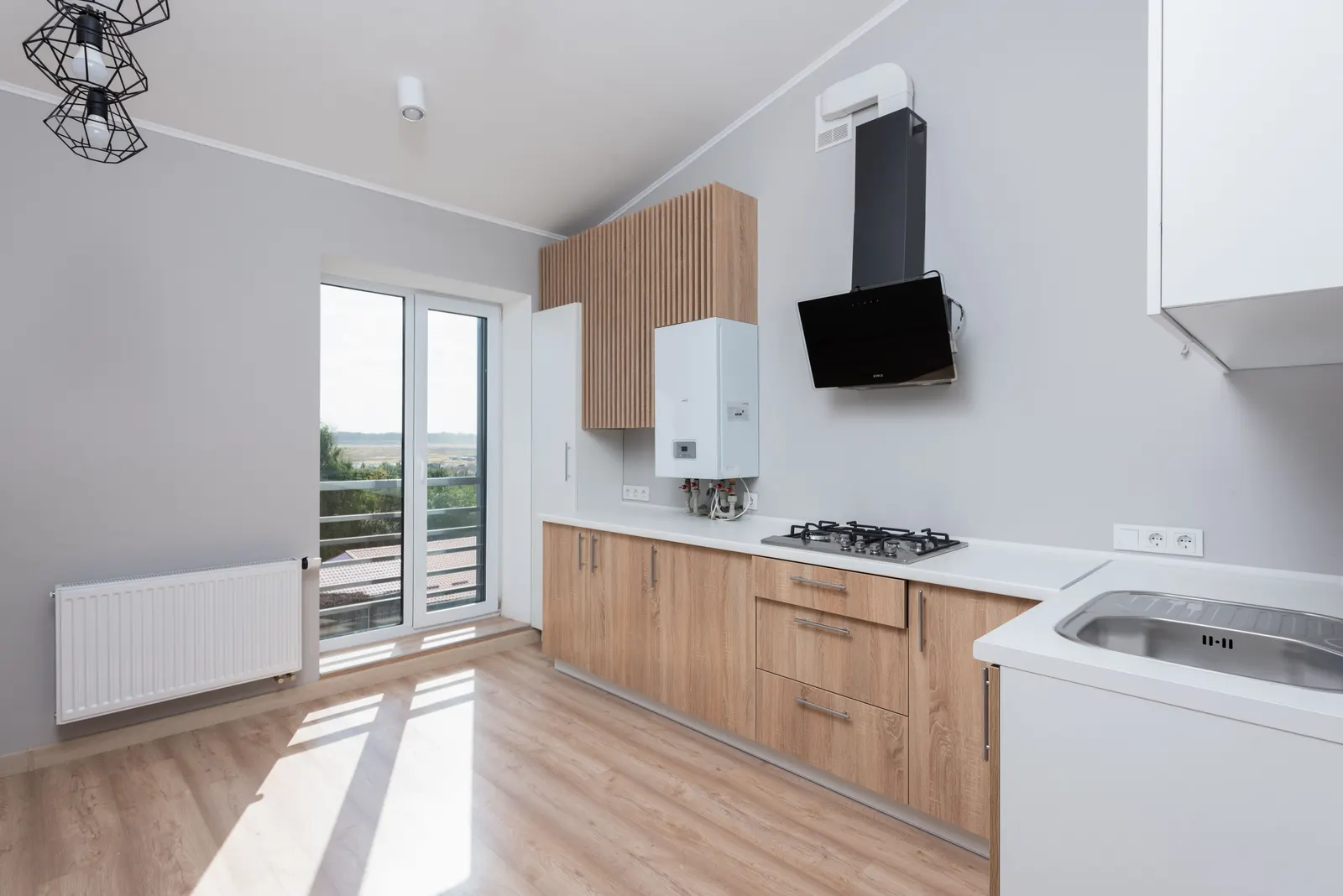
Leaking water on its own is not usually dangerous: the water in a boiler is not gas, and a slow drip will not make it explode. The risk comes from what the water reaches. Water on the electrics, a leak through a ceiling, and a leak alongside soot, a gas smell or carbon monoxide symptoms all need action now.
Why a boiler leak is not the same as a gas leak
A gas boiler has two completely separate systems. Gas goes in, is burned in a sealed combustion chamber, and the fumes go out of the flue. Water flows through a heat exchanger that sits next to the flame and never mixes with the gas. When water drips from the boiler, it is water from the heating circuit, the hot water side or the condensate drain. It is not gas, and it is not a sign of a gas leak.
Modern sealed boilers also have a pressure relief valve that opens at about 3 bar and an overheat thermostat that shuts the burner down if the water gets too hot. These are why a leaking boiler does not explode. When the water level or pressure drops too far, the boiler simply locks out and shows a low-pressure fault.
So the honest answer to whether a leaking boiler is dangerous is: usually not in itself, but it can become dangerous through what the water does next.
Switch the boiler off straight away if you see any of these
These are the signs that turn a nuisance into a hazard. Switch the boiler off at the fused spur on the wall if the spur and the wall around it are dry. If water has reached the spur or wiring, turn the power off at the consumer unit instead, standing on a dry floor, and keep it off.
- Water running onto the circuit board, the wiring or a plug socket below the boiler
- A burning or electrical smell, the fuse in the spur blowing or the consumer unit tripping
- Water coming through the ceiling of the room below, or a ceiling that bulges or sags
- Black soot, brown staining or scorch marks on or around the casing
- A yellow or orange flame visible through a viewing window, on boilers that have one, where it would normally be blue
- Rust-coloured water from inside the casing, which can mean corrosion near the combustion chamber
If you smell gas, open the windows, then turn off the gas at the meter if you can reach it safely; skip that if it is down in a cellar. Do not switch anything on or off. Leave the property and call the National Gas Emergency Service on 0800 111 999.
Can a leaking boiler cause carbon monoxide?
Water itself does not make carbon monoxide. But a leak inside the casing can, over months, corrode the seals and the metal around the combustion chamber and flue. On a room-sealed boiler, the casing and its seals are what keep fumes out of the room. If they are damaged, fumes can escape.
That is why soot marks, staining or a lazy yellow flame on a boiler that has also been leaking are taken seriously. Carbon monoxide has no smell, so the warning signs are in people: headaches, dizziness, nausea, breathlessness and tiredness that ease when you leave the house. If anyone has these symptoms, and especially if more than one person or a pet does, open windows, turn the boiler off, get everyone outside, call 0800 111 999 and seek medical advice. Our guide to carbon monoxide signs from a boiler lists them in full.
Every home with a gas boiler should have an audible carbon monoxide alarm. In England, private and social landlords must fit one in any room used as living accommodation that has a fixed combustion appliance other than a gas cooker, under the Smoke and Carbon Monoxide Alarm (England) Regulations as amended in 2022.
The slower risks: damage, not danger
Most boiler leaks fall into this group. They will not hurt anyone, but ignoring them costs money.
A leak that drips into a cupboard or onto a floor soaks chipboard, rots skirting and can damage the ceiling below a first-floor boiler. In a flat, the leak can reach the neighbour below before you notice anything, which turns a boiler repair into an insurance claim. For water already coming through, see emergency ceiling leak repair.
A slow leak on the heating side also means the boiler keeps losing pressure. If you keep refilling it, fresh water carries oxygen into the system, which speeds up corrosion in radiators and the heat exchanger. The leak becomes a sludge problem, and a small repair becomes a much larger one.
Finally, water on electrical parts shortens their life even when nothing trips. Circuit boards are one of the dearer parts on a boiler, often a few hundred pounds fitted.
Is it an emergency tonight, or can it wait?
Use the boiler’s state and your household to decide.
Treat it as an emergency tonight if any of the warning signs above apply, if water is spreading faster than you can catch it, if it is cold and someone at home is elderly, very young or unwell, or if the property is let and you cannot reach anyone to act on it. The emergency boiler repair service is for exactly this.
It can usually wait until the next day if the boiler is off, the drip is slow and caught in a tray, and it is not near anything electrical. Examples are a relief valve weeping from the copper pipe outside, or a single damp nut under the boiler. Our boiler leak repair visit covers these.
If you are unsure, follow the steps in what to do when your boiler starts leaking first. Once the power and water are off, most leaks stop being urgent.
What the engineer checks for safety, not just the leak
Because the risks are electrical and combustion ones, a proper leak repair is not just a new washer. After finding and fixing the source, the engineer should check that the case seals are intact, look for corrosion around the combustion chamber and flue, test the electrics that got wet, and run a flue gas analysis to confirm the boiler is burning cleanly. If the boiler is unsafe, they will ask your permission to turn it off or disconnect it and attach a warning label under the Gas Industry Unsafe Situations Procedure. Do not use it again until it has been repaired.
With us the call-out is £60 at any hour, and the repair price is agreed with you on site before any work starts. Gas work is carried out by Gas Safe registered engineers.
Questions people ask
Can a leaking boiler explode?
Not from a water leak. A sealed boiler has a pressure relief valve that opens at about 3 bar and an overheat thermostat that shuts the burner down if the water gets too hot. A heating-side leak makes the pressure fall, so the boiler locks out; if pressure climbs instead, the relief valve lets water out rather than letting the boiler burst.
Is it safe to leave a leaking boiler on overnight?
It is safer to switch it off. Leaving it on keeps power to the pump and board while water is around them, and a heating-side leak will drain the system and lock the boiler out anyway.
Is a gas boiler leaking water a gas leak?
No. The water and gas sides are separate. Water under the boiler is from the heating, hot water or condensate. If you can also smell gas, treat that separately: open windows, turn off at the meter if safe, avoid switches and call 0800 111 999 from outside.
Who is responsible for a leaking boiler in a rented flat?
The landlord is responsible for repairing and maintaining the boiler. Report it in writing with a photo, switch it off, and keep the water caught to limit damage while they arrange the repair.