Boiler & heating breakdowns
Why Is My Boiler Leaking Water From Underneath?
Published
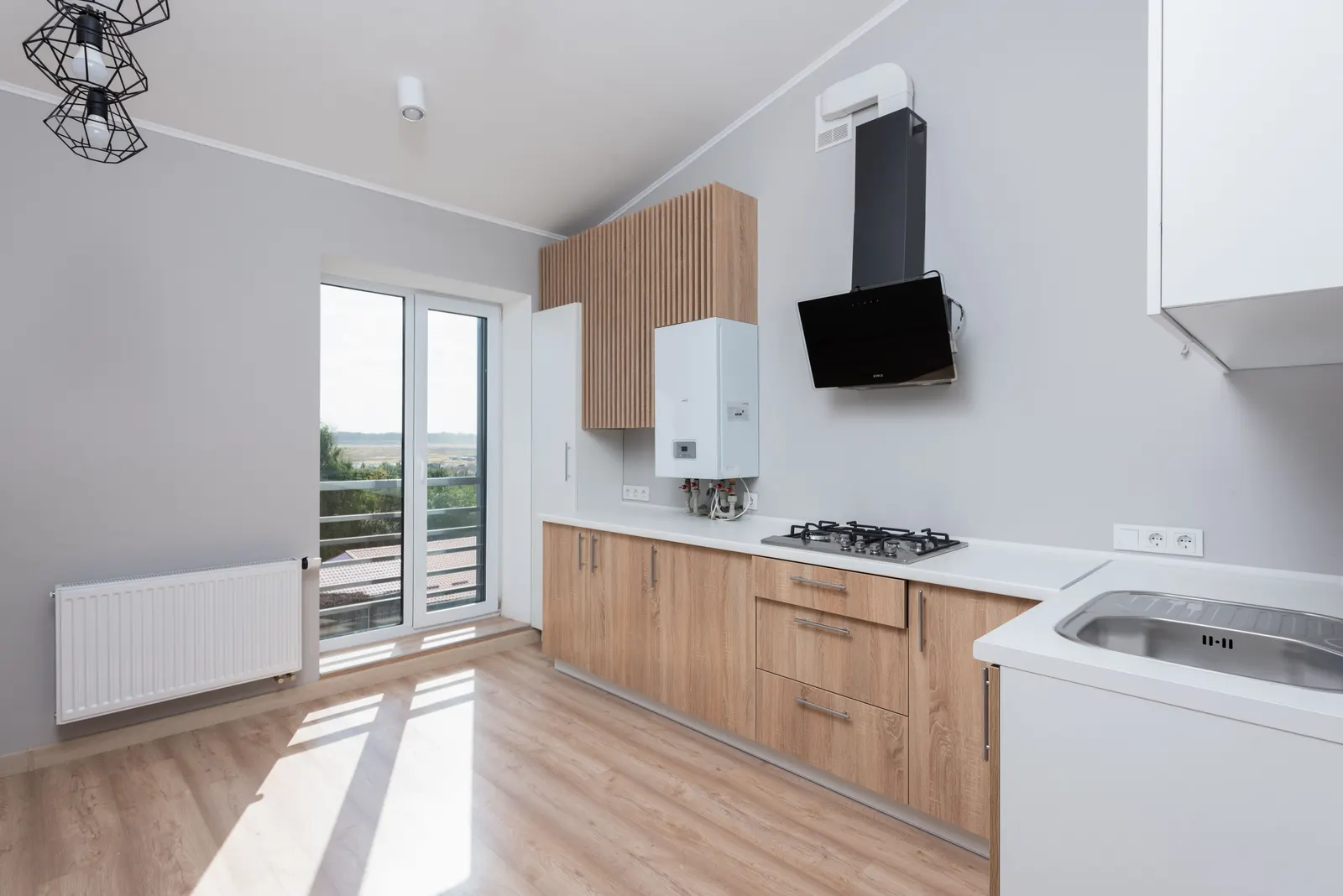
If your boiler is leaking water from underneath, it is usually coming from one of five places: a compression joint on the valves below it, the pressure relief valve, the condensate trap, a magnetic filter seal, or a part inside the casing such as the pump. When the drip happens, and what the water looks like, tells you which one.
What sits underneath a boiler, and what can leak
The bottom of a boiler is where every pipe connects, so it is where nearly every leak shows up, even when the fault is higher inside. On a typical wall-hung combi you will usually see, in an order that varies by make: the heating flow, the hot water outlet, the gas pipe, the cold mains inlet and the heating return. Most have a small isolating valve. Off to one side there is usually a thin copper pipe heading for the outside wall, and a white plastic condensate pipe, usually around 21.5 to 22 mm, running to a drain. Many homes also have a magnetic filter on the return pipe.
Each of those has a seal that can fail. Because water runs along the underside of pipes before it drops, the puddle is often a hand-width away from the real source. Dry every joint with kitchen roll and watch which one wets first before you decide.
Switch the boiler off at its fused spur before you put your hands near it, but only if the spur is dry; if it is wet, leave it and switch off at the consumer unit from a dry floor. Never remove the front casing; everything inside it is for a Gas Safe registered engineer.
Match the leak to the moment it happens
Timing is the quickest way to narrow it down. Pay attention to what the boiler was doing when the water appeared.
- Drips only when the heating is running: expansion is opening up a tired joint, or the relief valve is lifting because pressure is too high
- Drips only when a hot tap is on: a seal on the hot water side of a combi, often around the diverter valve or plate heat exchanger
- Drips all the time, hot or cold: a weeping compression nut, the filter O-ring, or the filling loop connection
- Drips mostly on cold mornings from the plastic pipe: the condensate pipe outside is partly frozen or blocked and water is backing up into the trap
- A small amount after each heating cycle, clear and slightly acidic: condensate, not system water, which points at the trap or its seal
Colour and smell tell you more than you would think
Clear water that smells of nothing is often fresh mains water, although a well-dosed heating system can run clear too. If it is mains water, the leak is on the cold inlet, the hot outlet or the filling loop, and closing the cold mains isolating valve should stop it. Our guide to what to do in the first few minutes of a boiler leak shows how to find that valve.
Grey, black or rust-brown water is from the sealed heating circuit. It carries magnetite, the black sludge that forms when steel radiators corrode from the inside. A leak of dark water under the boiler is a heating-side leak, and it will keep draining until the gauge reads zero no matter what you do with the stopcock.
Water that leaves white crust on the pipes has been there a long time. Limescale builds up where a slow weep evaporates, so a crusted joint has probably been leaking for weeks. That matters in London, where the water is hard and a small weep scales up quickly.
Condensate is mildly acidic and can mark paint or corrode metal fittings over time. If the water under the boiler is coming from the white plastic pipe or its trap, see boiler condensate pipe leaking.
Check the pressure gauge: rising or falling?
The gauge on the front of the boiler narrows it down further. Cold, a sealed system should sit at about 1 to 1.5 bar.
If the gauge creeps up towards 3 bar, especially when the heating is on, the relief valve will open to protect the boiler and water will come out of the copper pipe underneath or outside. The usual causes are a filling loop tap left slightly open, a filling loop that lets by, a combi plate heat exchanger that lets mains water into the heating side, or an expansion vessel that has lost its air charge. See a pressure relief valve that keeps leaking.
If the gauge keeps falling, water is escaping from the heating circuit. When the leak is visibly under the boiler, you have found where. When you cannot see any water, look at radiator valves and under floorboards before assuming the boiler.
The internal leaks you cannot see from outside
Sometimes the water drips from the bottom of the casing itself, not from any pipe. That means something inside is leaking and running down to the lowest point, or water is getting in through a badly sealed flue. The usual parts, in rough order, are:
- The circulating pump, whose seals and bleed screw weep with age
- The diverter valve on a combi, which has O-ring seals on its spindle
- The auto air vent on top of the pump, which can drip if debris stops it seating
- The plate heat exchanger connections on a combi
- The main heat exchanger, where corrosion or a failed seal is the most expensive outcome
A leak inside the casing can wet the circuit board and electrical connectors and, over time, corrode internal components. Keep the boiler off until it has been looked at.
What each fix usually costs
These are typical UK market ranges including labour, to help you judge a quote. The price for your job is agreed on site before any work starts.
Retightening or remaking a compression joint on an isolating valve is often a short job. A new pressure relief valve typically runs about £100 to £200. A new pump or diverter valve is usually in the low hundreds, depending on the make. An expansion vessel costs roughly £150 to £450, higher if the boiler has to come off the wall to reach it. A main heat exchanger is commonly £400 to £1,200, and more on some models, and on a boiler more than about 12 to 15 years old that is often the point where replacement is worth weighing up. Our leaking boiler repair cost guide goes through the numbers.
If you need someone out, our boiler leak repair service has the £60 call-out at any hour. Gas work is carried out by Gas Safe registered engineers.
Questions people ask
Is water under my boiler just condensation?
Rarely. Pipes can sweat on a humid day, but that leaves a light film, not a steady drip. If you can wipe a joint dry and it is wet again within minutes, it is a leak.
Why does my boiler only leak from underneath when the heating is on?
Heating the water raises the system pressure and makes joints expand. A worn seal that holds cold will weep when hot, and a flat expansion vessel can push the pressure high enough to open the relief valve.
Can I tighten a leaking nut under my boiler myself?
On a water pipe outside the casing, a gentle eighth to quarter turn on a weeping compression nut is a reasonable first step if you hold the valve body still with a second spanner. Do no more than that: overtightening crushes the olive. Never touch the gas pipe or its valve, and stop if the nut will not move.
My boiler is leaking from underneath but still working. Can I keep using it?
Switch it off until you know the source. A leak that reaches the electrics can kill the circuit board, and a heating-side leak will drop the pressure until the boiler locks out anyway.