Boiler fault codes
Glow-worm F9 Fault Code: Water Pressure Problem
Published
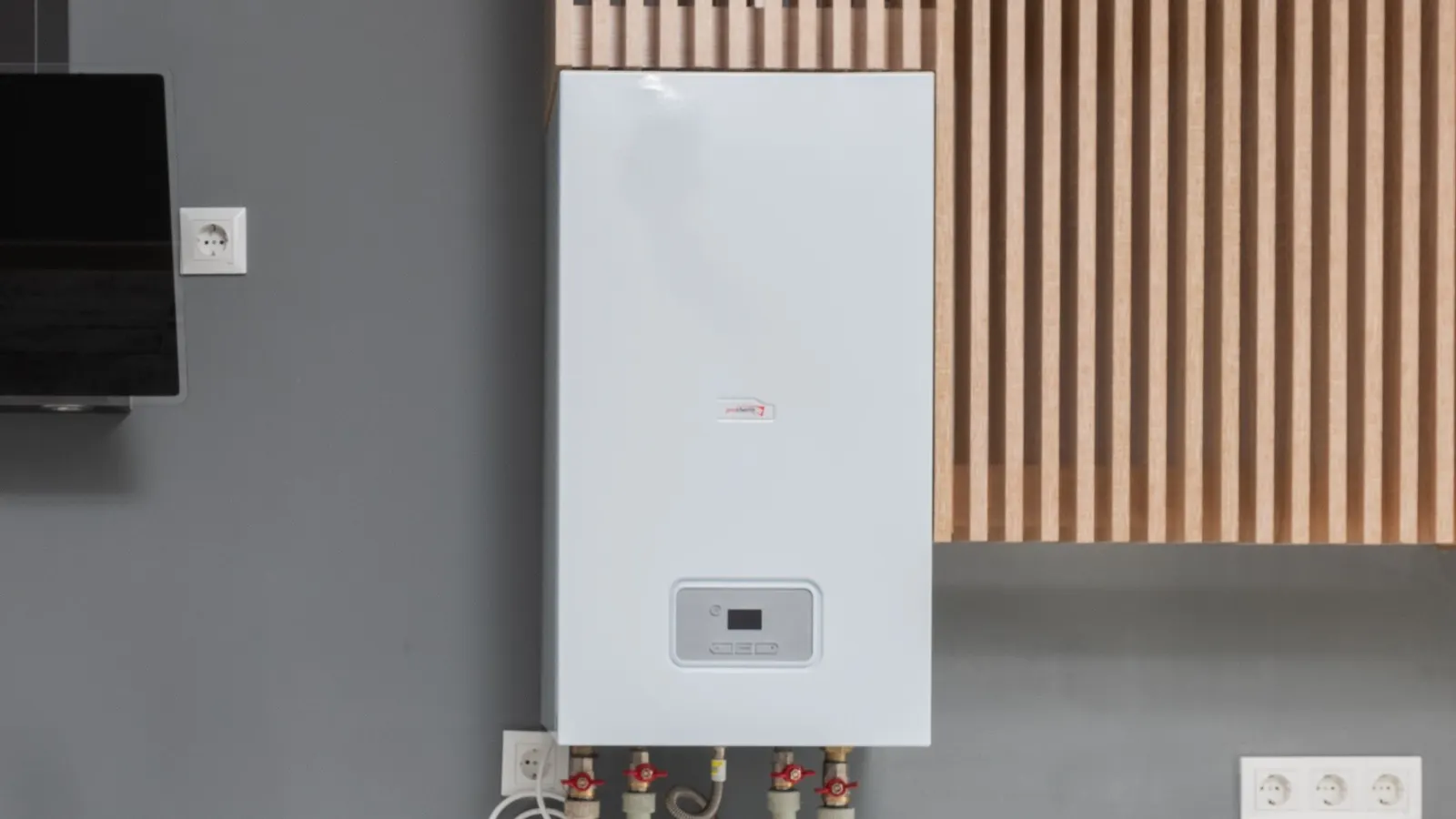
Glow-worm display
F9
What it means
On older Glow-worm boilers F9 is a water pressure fault. Most often the system simply needs repressurising, while Glow-worm’s engineer tables list a faulty water pressure sensor, a blocked flow filter or a pump fault.
Safe to check yourself
- Read the pressure gauge with the heating off: Glow-worm asks for 1 to 1.5 bar
- If it is below 1 bar, top up through the filling loop, turning the valves slowly
- Stop at 1.5 bar and close both filling loop valves fully
- Look for drips under the boiler, at radiator valves and from the pressure relief pipe outside
- Press reset once after topping up
Call an engineer if
- You smell gas: get windows open, shut the meter valve if you safely can, do not use switches, and call 0800 111 999 from outside
- The gauge reads 1 to 1.5 bar but F9 is still showing
- You have to top up again within a day or two
- The pressure climbs above 2.5 bar, or water runs from the relief pipe outside
- The boiler hums or the pipes near it stay cold while it tries to run
F9 on an older Glow-worm boiler means it has a problem with the heating system’s water pressure. Most often the pressure has simply dropped and topping up to 1 to 1.5 bar clears it. If the gauge already reads correctly, the pressure sensor, a blocked flow filter or the pump is the likely cause.
What does F9 mean on a Glow-worm boiler?
Glow-worm’s trade fault tables describe F9 as a pressure sensing fault, and the wording varies by range:
- Flexicom cx and the Ultracom cx, cxi, hxi and sxi: water pressure sensor fault, blocked flow filter or pump fault
- Flexicom hx and sx: low water pressure sensor
- CI, CI Plus, cxi, SI, sxi and Xtramax HE: water pressure sensor fault
- Xtrafast 96/120: F09, system pressure sensor fault
In practice the sensor is usually reporting a real drop, and topping up clears it. When the gauge already reads 1 to 1.5 bar, the boiler is reading the pressure wrongly or water is not moving, and that is the engineer’s list. On the hxi range F9 appears on earlier models only. Newer Glow-worm boilers with dot codes show low pressure as F.22 instead.
How do I clear F9 myself?
Read the gauge first, with the heating off and the boiler cool. Glow-worm’s repressurising guidance asks for 1 to 1.5 bar. Below that, find the filling loop, usually a braided hose or a pair of taps under the boiler, and open the valves slowly while watching the gauge. Stop at 1.5 bar, close both valves fully, then press reset once.
Do not overfill. The relief valve on a sealed system opens at 3 bar and, once it has lifted, it often drips afterwards. If you overshoot, bleeding a radiator lowers the pressure again. Give the boiler a minute after the reset: if F9 clears and the gauge holds steady through one heating cycle, the top-up was the fix. Our Glow-worm pressure guide has more on topping up.
Why does my Glow-worm keep going to F9?
A sealed heating system should hold its pressure for months. If you are topping up every few days, water is escaping. Check radiator valves, the joints under the boiler and the copper pipe on the outside wall that the pressure relief valve drains into. A pipe that is dripping, or leaves a damp patch below it, means the relief valve is letting by. A flat expansion vessel is the other common reason: the pressure rises sharply when the heating runs, the relief valve dumps water, then it falls when the system cools. The article on pressure that keeps dropping goes through that pattern.
If the gauge reads correctly and F9 stays, the boiler’s own pressure sensor may be faulty or its wiring loose, which is why Glow-worm lists it first for most ranges. On the Flexicom cx and Ultracom models the flow filter inside the boiler can block with sludge, and a seized pump gives the same result. None of these are inside-the-casing jobs for a householder.
What will the engineer do about F9?
The engineer compares the boiler’s gauge with the reading the control board sees in its diagnostic menu. If they disagree, the sensor or its plug is the fault. If the pressure is genuinely right and the sensor agrees, they check the pump runs and clean the flow filter, which on a sludged system may mean a power flush later. If the system keeps losing water, they pressure test it to find the leak, and check the expansion vessel charge and the relief valve.
Gas work is carried out by Gas Safe registered engineers. The visit starts with the £60 call-out and the repair price is agreed with you on site before any work starts. Book a Glow-worm boiler repair, or see boiler pressure repair if you cannot get the pressure to hold.
Questions people ask
Is F9 on a Glow-worm dangerous?
No. The boiler stops to protect itself when it cannot be sure there is enough water. It is not a gas fault. If you do smell gas, ventilate, turn off at the meter if safe, get out and call 0800 111 999.
Is F9 the same as F22 on a Glow-worm?
They cover the same ground on different generations. F9 on older boilers and F.22 on newer ones both mean the boiler is not happy with the system water pressure, and both usually clear with a top-up to 1 to 1.5 bar.
What if my Glow-worm shows F1 and F9 together?
Deal with the pressure first, then reset. If the boiler still will not light, the F1 ignition fault page covers the next checks.