Boiler fault codes
Ideal F3 Fault Code: The Fan Is Not Running Right
Published
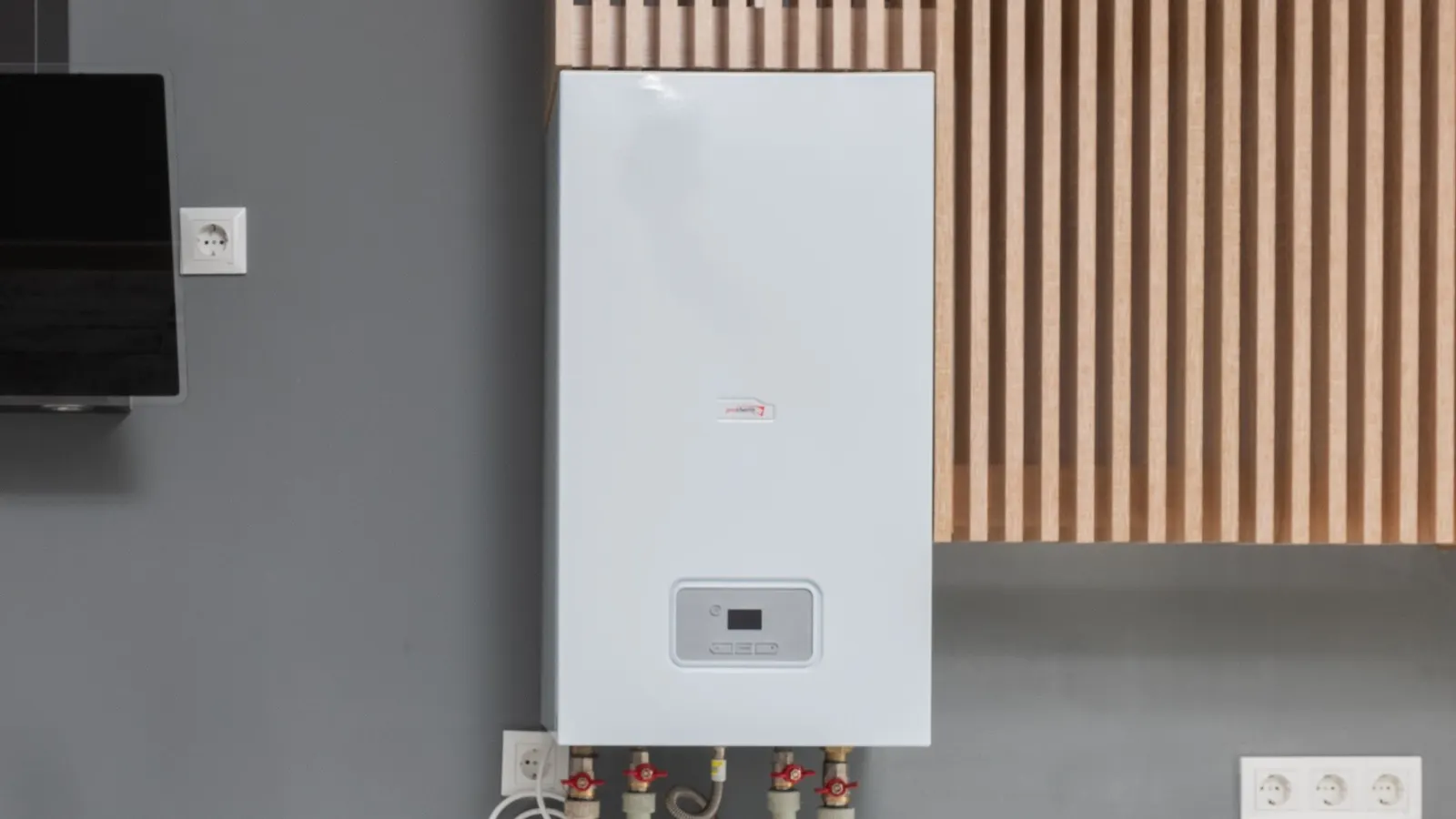
Ideal display
F3
What it means
F3 is a fan fault. The control board has not seen the combustion fan run as it should, so the boiler will not light, because it cannot prove the flue gases will be cleared.
Safe to check yourself
- Press restart once and listen for the fan spinning up before ignition
- If the boiler has no display at all, check the fused spur next to it has not been switched off
- Look at the flue terminal outside from the ground for an obvious blockage such as a nest or bag
Call an engineer if
- F3 returns after one restart
- You hear the fan grinding, screeching or rattling
- There is a burning smell from the boiler
- You smell gas: open doors and windows, turn the meter off if it is safe to reach, use no switches, get out and call the National Gas Emergency Service on 0800 111 999
An F3 boiler fault on an Ideal is a fan fault. The fan pulls air into the burner and pushes combustion gases out of the flue, and the boiler will not light unless the board sees it running. Restart once. If F3 comes back, the fan, its wiring or the control board needs an engineer.
Why a fan fault stops the whole boiler
A condensing boiler has a sealed combustion chamber. The fan is what moves air in and flue gases out, and the control board checks it is running at the right speed before it opens the gas valve. No proven fan, no flame. That is why an F3 means no heating and, on a combi, no hot water.
Ideal's advice for F3 is short: reset the boiler, and if that does not fix it, contact them or an engineer quoting F3, because it needs a visit. There is nothing inside the casing that a householder should touch.
With F3 showing, the boiler will not light, so the code itself is not a fumes risk. But if anyone in the house has headaches, dizziness or nausea that ease when they go outside, open windows, turn the boiler off, get out, call 0800 111 999 and get medical advice.
What the engineer tests
Ideal's fault-finding chart for the Logic Combi runs in a short, fixed order, which is useful to know when an engineer quotes you:
- Check the wiring from the fan to the control board is secure at both ends, undamaged and has continuity
- Check for 230 volts at the fan connector while the boiler calls for heat
- Voltage present but the fan does not run properly: replace the fan
- No voltage with good wiring: the fault is on the control board, which is replaced instead
How much does an F3 repair cost?
A replacement fan for a Logic boiler is a mid-priced part, dearer than a sensor but usually well below the cost of a control board. Fitting it means opening the sealed chamber, so it must be done by a Gas Safe registered engineer who then checks combustion before leaving. The board is only the answer if the fan is getting no power.
You pay the £60 call-out to get an engineer to you, and the repair price is agreed with you on site before any work starts. Gas work is carried out by Gas Safe registered engineers. If the part is not on the van, the boiler is left safe and the fitting is booked.
Is a noisy fan a warning sign?
Often, yes. Bearings wear before they seize, so a boiler that has started whirring, rattling or droning on start-up may be heading for an F3. A booked repair is cheaper and less disruptive than a breakdown on a cold night. Our guide to a boiler that sounds like an aeroplane covers fan and pump noise in more detail.
If F3 has already stopped your heating, book Ideal boiler repair or our emergency boiler repair service.
Questions people ask
Can I fix an Ideal F3 fault myself?
Only by restarting once and checking the flue terminal outside is clear. The fan sits inside the sealed boiler case and connects to the gas valve, so anything beyond that is Gas Safe engineer work.
Will a power cut cause F3?
A power cut on its own is not listed as a cause. If the boiler shows F3 once power returns, restart it once. If F3 comes straight back, Ideal's chart points to the fan, its wiring or the control board.
Does F3 mean I need a new boiler?
Rarely on its own. A fan is a replaceable part. Replacement is more worth considering on an old boiler that also has other faults, a leaking heat exchanger or parts no longer made.