Boiler & heating breakdowns
Boiler Display or Light Not On: Power, Fuse or Fault?
Published
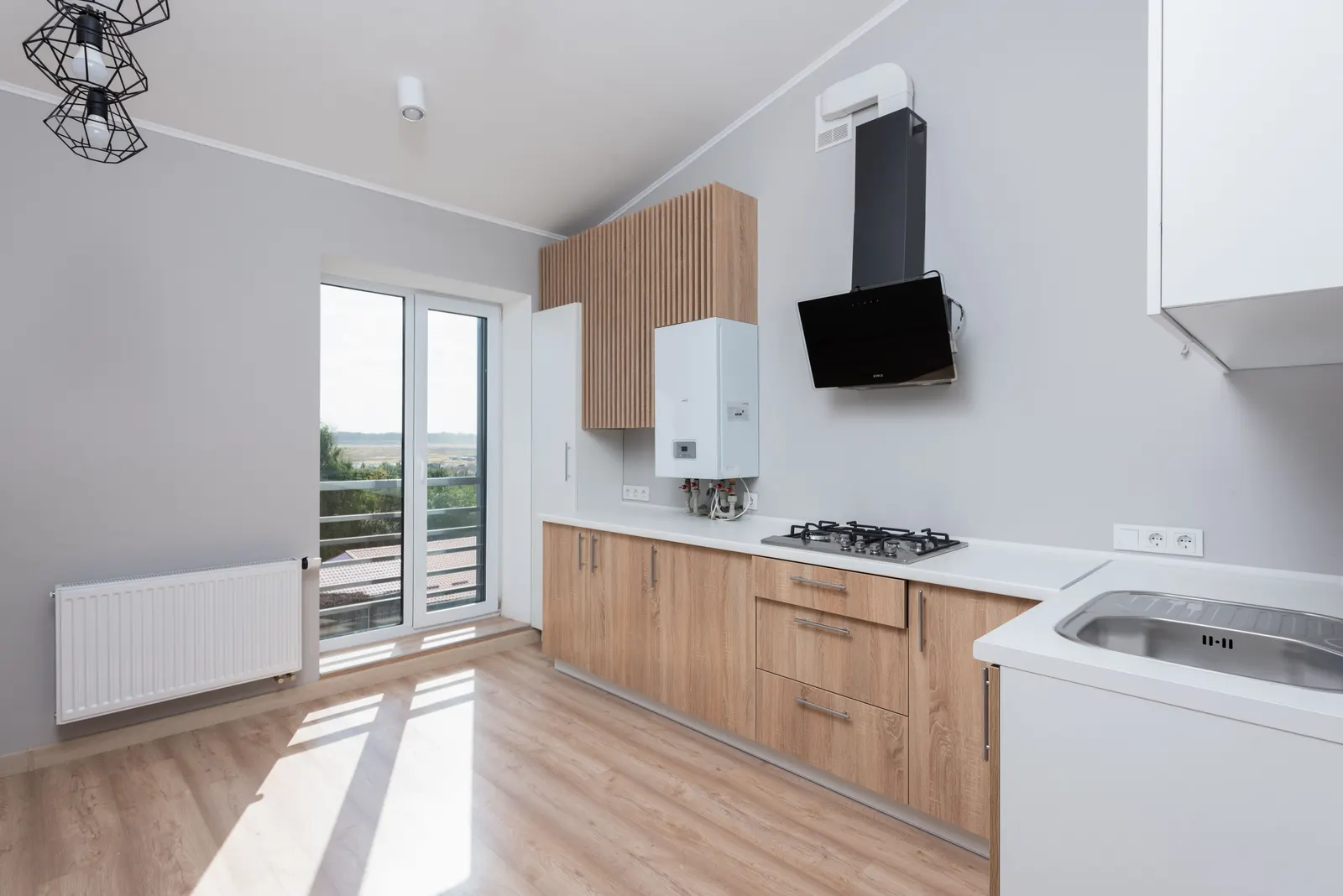
A boiler with no light and a blank display is usually getting no power. Check the consumer unit for a tripped switch, then the fused spur next to the boiler, then the 3A fuse in that spur. If all three are fine and it is still dead, the fault is inside the casing, usually the control board or its fuse.
Is the boiler actually off, or just asleep?
Rule out the simplest explanation first. Some boilers turn the display backlight off after a minute or two without a button being pressed, so the screen looks dead from across the kitchen while the boiler is powered and waiting. Press any button on the control panel, or turn a dial a click and back. If the screen lights up, there is nothing wrong.
Next, turn on a hot tap for a minute, or turn the room thermostat right up. A combi that fires for hot water or heating while the display stays dark has a display problem, not a power problem. That is an annoyance rather than an emergency, because the boiler is still working. A boiler that stays silent and cold, with no light, no fan and no click, is the one this page is about.
- Screen lights up when you press a button: display sleep, normal
- Screen dark but boiler fires and heats: display or backlight fault, book a repair
- No lights, no noise, no heat: a power supply problem, follow the checks below
- Light on but flashing, or showing a code: not a power problem, see the fault code guides
Checks you can safely do on a boiler with no lights
Work from the house supply towards the boiler. Every check here is outside the casing, and none needs tools beyond a screwdriver for a plug-style fuse carrier.
- Is anything else off? Try the kitchen lights and the kettle. If the whole street is dark, it is a power cut and the boiler will restart on its own when power returns.
- Open the consumer unit (fuse box). Look for a circuit breaker or RCD switched down. Push it firmly back up once. If it trips again straight away, leave it down and call an electrician or engineer, because something on that circuit has a fault.
- Find the fused spur. This is the switched plate on the wall near the boiler, often labelled "boiler" or "central heating", with a small red neon. Make sure the switch is on. Cleaners and decorators switch these off more often than you would think.
- Check the fuse in the spur. Switch the spur off, open the fuse carrier on the front of the plate and swap the fuse for a new 3A one. Most boiler makers specify a 3A fuse here (check your installation manual), so never fit a higher-rated fuse such as a 13A one from a plug.
- Check the programmer and room thermostat have power. If a wired programmer next to the boiler is also blank, that points back to the supply rather than the boiler itself.
Never take the boiler casing off to look for a fuse inside. The fuse on the main control board sits next to live terminals and gas components, and it is not a householder check.
Why would the boiler fuse keep blowing?
A 3A fuse that blows once can be a one-off, for example after a lightning surge or a power cut coming back on. A fuse that blows again within hours or days is telling you something on the boiler circuit is drawing too much current or shorting to earth. Do not keep feeding it fuses.
The usual culprits are a pump that has seized or has a failing winding, a fan motor near the end of its life, a motorised valve actuator with a burnt-out motor on a system or regular boiler, or water getting into the wiring. A leak dripping onto the control board or a wiring centre is a common reason for a boiler that trips the RCD every time it tries to start. If you can see water on or under the boiler, isolate the power at the spur, provided the spur itself is dry, and read our guide to a boiler leaking water before doing anything else.
Damp can do the same. A boiler in a cold loft, garage or outbuilding that trips the circuit after a frosty or wet night, then works again once it dries, has moisture getting at the electrics. Leave it isolated and have it looked at rather than resetting it every morning.
When the power is fine but the boiler is still dead
If the spur has power, the fuse is new and the consumer unit is fine, but the boiler shows no light at all, the fault is inside the appliance. At that point the useful thing you can do is switch the spur off, note the make and model from the label on the front or underside, and call someone out. Our emergency boiler repair visit covers a dead boiler at any hour.
A boiler with no power cannot run its frost protection either. If it is below freezing and the boiler is in a loft, garage or on an outside wall, keep the house as warm as you can by other means and open the loft hatch so some heat reaches the pipes. Our guide to a boiler breakdown at night covers keeping the house safe until the morning.
What the engineer checks inside the boiler
With the casing off, an engineer tests for mains voltage arriving at the boiler terminal strip first. No voltage at the terminals with power at the spur means a broken cable or loose connection between the two, which is a short job. Voltage at the terminals but a dead board moves the search inside.
Many control boards have a small glass or ceramic fuse of their own. If it has blown, the engineer replaces it and then finds out why, by testing the pump, fan and any valve actuators for a short circuit before the boiler is allowed to run. Replacing a board fuse without finding the reason usually means another blown fuse by the evening.
If the board fuse is intact and voltage is reaching the board, the board itself has usually failed. Damp, age and power surges all kill printed circuit boards. The engineer confirms it by ruling out the display ribbon cable and the transformer on the models that have one, because those are cheaper parts that can mimic a dead board. Gas work is carried out by Gas Safe registered engineers.
What a dead boiler usually costs to fix
The £60 call-out covers getting an engineer to you, and the repair price is agreed with you on site before any work starts. The full rate card sets out what we charge. The ranges below are typical UK market figures for the repairs behind a boiler with no power, parts and labour together.
- Fused spur or loose wiring put right: usually the smallest job, often settled on the first visit
- Board fuse replaced after the cause is found: small part cost, the time goes on testing
- Pump or fan that was blowing the fuse replaced: typically about £150 to £400
- Main control board (PCB) replaced: typically about £350 to £700, depending on the make and whether the part is in stock
On a boiler over about 12 to 15 years old, a new control board can cost a large share of a replacement boiler, and some older boards are no longer made. Ask for a repair-or-replace view before agreeing, and see our guide to whether to repair or replace a broken boiler.
Questions people ask
Why has my boiler got no power but the house has?
Usually the fused spur next to the boiler is switched off, or its 3A fuse has blown. If both are fine, the fault is inside the boiler, normally the control board fuse or the board itself, and that needs an engineer.
Can I reset a boiler that has no lights?
No. The reset button only works when the boiler has power and has locked out on a fault. A boiler with no lights needs its power supply sorted first, starting with the fused spur and its fuse.
What fuse does a boiler take?
The fused spur that feeds a domestic gas boiler normally takes a 3A fuse, as set out in the manufacturer installation instructions. Check the label or manual for your model, and never fit a higher rating to stop a fuse blowing.
Is a boiler with no lights dangerous?
A boiler with no power cannot fire, so the blank display is not a gas risk on its own. The risks are frozen pipes in cold weather and whatever blew the fuse. If you can smell gas at any point, get the windows open, shut off the gas at the meter if that is safe, keep your hands off switches, and ring the National Gas Emergency Service on 0800 111 999 from outside.