Boiler & heating breakdowns
Boiler Making a Loud Vibrating Noise: Is It Dangerous?
Published
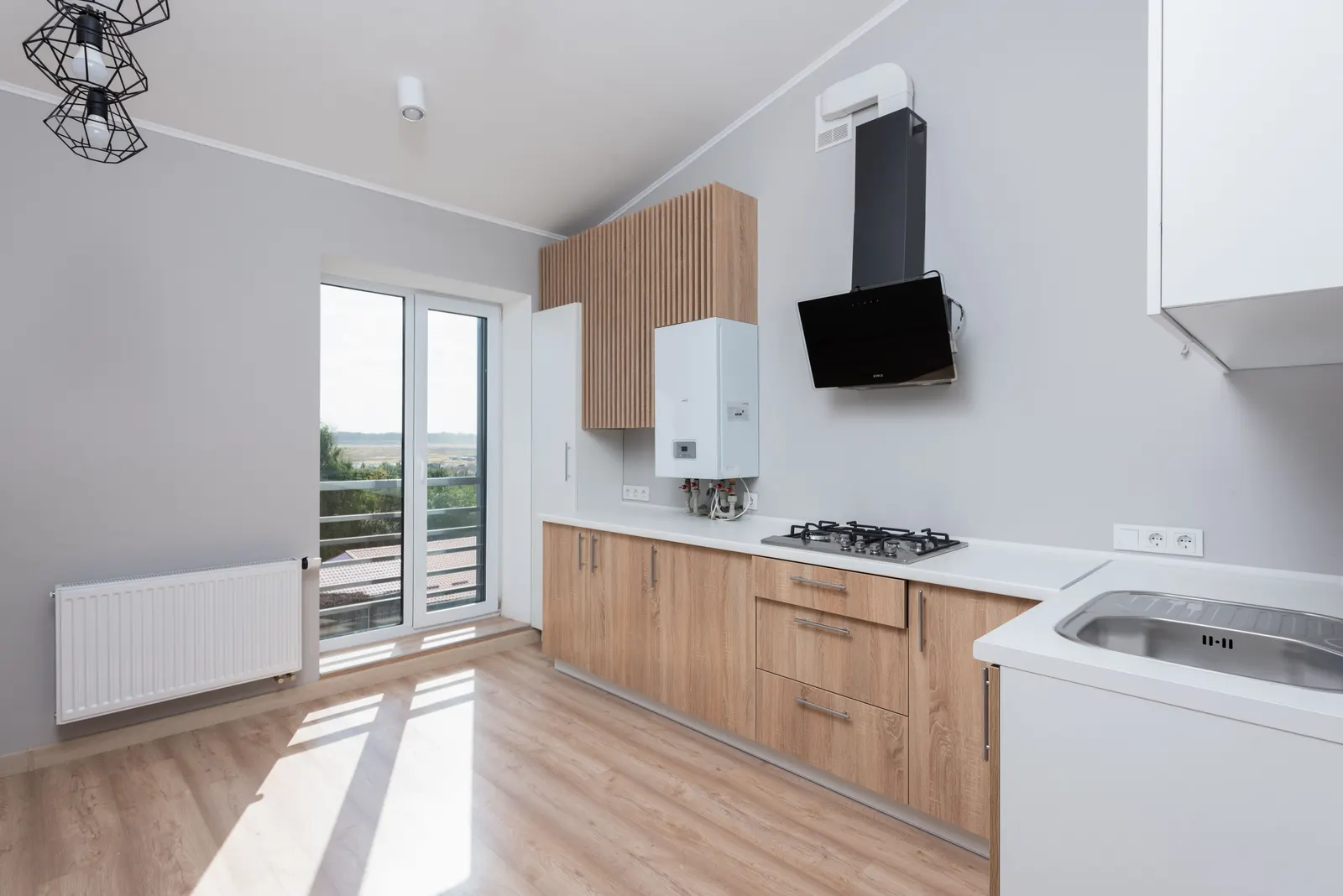
A loud vibrating noise from a boiler is rarely dangerous in itself. It usually comes from a fan with worn bearings, a pump running too fast or starting to fail, or a loose casing, bracket or pipe. It does become a safety issue if the fan is failing badly, the boiler locks out, or your carbon monoxide alarm sounds.
Is a vibrating boiler dangerous?
In most homes, no. Vibration is mechanical: something is spinning out of balance or something is loose. The boiler has its own safety devices that shut it down if the fan cannot move enough air or the water cannot circulate, so a noisy part tends to end in a lockout rather than anything worse.
There are three situations where it is a safety problem, and they are worth ruling out first.
- Your carbon monoxide alarm goes off, or people in the house get headaches, dizziness or nausea that ease outside. Open windows, switch the boiler off, get everyone out, call the National Gas Emergency Service on 0800 111 999 and seek medical advice.
- You can smell gas or fumes near the boiler. Open windows, turn the gas off at the meter if it is safe to, avoid switches, then leave and call 0800 111 999.
- The vibration has shaken the flue: you can see a gap or a dislodged joint where the flue leaves the boiler, or the casing no longer sits flush. Switch the boiler off and have it checked before using it again.
If you do not have a carbon monoxide alarm in the room with the boiler, fit one. Since October 2022, landlords in England must provide one in any room with a fixed combustion appliance other than a gas cooker.
What makes a boiler vibrate?
Listen to when the vibration starts. A boiler has two moving parts, the fan and the pump, and they start at different moments, which makes this simpler to narrow down than most noises.
- Vibration starts a few seconds before the burner lights and carries on while it runs: the fan. A worn fan bearing, dust caked on the impeller or a cracked fan housing all make it drone, whine or shudder. It is often loudest in the first minute.
- Vibration starts the moment the heating is called for and continues even between burner cycles: the pump. A pump on too high a speed setting, air trapped in it, or a failing bearing will hum and shake the pipework.
- Vibration only happens when a hot tap runs on a combi: the diverter valve or the hot water flow through a scaled plate heat exchanger.
- A rattle that changes when you press the casing: a loose front panel, a missing screw or a boiler bracket working loose from the wall.
- A buzz carried along the pipes into other rooms: pipes without clips, or pipes touching a joist, radiator bracket or kitchen unit.
Safe checks before you call anyone
Keep to the outside of the boiler. These take ten minutes and either solve a loose-part rattle or give the engineer a head start.
- Press the front casing gently with an open hand while it vibrates. If the noise stops or changes, the casing or its screws are loose. Tell the engineer; do not remove or refit the casing yourself, because on some boilers it forms part of the sealed combustion chamber.
- Check the pressure gauge reads 1 to 1.5 bar cold. Low pressure lets air into the pump, which makes it rattle and vibrate.
- With the heating off and the radiators cool, bleed them, then top the pressure back up.
- Look at the pipes under the boiler. If a pipe touches the wall, a cupboard side or another pipe, a small piece of pipe lagging slipped between them can stop the buzz.
- Look at the flue terminal outside. Birds’ nests, leaves or a plastic bag across the terminal make the fan labour and can cause a lockout.
Do not change the pump speed setting or touch the fan. The pump is wired inside the boiler on most modern models, and changing its setting without balancing the system can cause other faults.
What an engineer checks, and typical repair costs
An engineer runs the boiler with the case off to see which part is moving. For the fan, they check the bearings for play, clean the impeller, and on most modern boilers read the fan speed from the control board to see whether it is struggling to reach its target. For the pump, they check the speed setting against the size of the system, bleed the pump head and listen for a failing bearing.
If the fan is worn, replacing it is usually the right call. A fan that is noisy today will often fail completely, and the boiler cannot run without it. A pump set too fast just needs setting down and the system rebalancing. A failing pump needs replacing.
Typical UK market costs, parts and fitting included, are roughly £200 to £400 for a replacement fan and £150 to £400 for a replacement pump, depending on the boiler make and model. Tightening casing screws, refixing a bracket or clipping loose pipework is usually quick work within a standard visit. These are typical market ranges, not our prices. With us you pay the £60 call-out, and the repair price is agreed with you on site before any work starts. Gas work is carried out by Gas Safe registered engineers.
Can I keep using a boiler that vibrates?
If the boiler heats properly, holds its pressure, does not lock out and your carbon monoxide alarm is quiet, you can keep using it while you book a repair. Avoid running it harder than you need, and keep an eye on whether the noise is getting worse.
Book it in soon if the vibration is getting louder, the boiler takes longer to light, or it has started locking out with a fan or flue code. A fan that has started droning tends to get worse, not better. Our boiler repair visits cover fans, pumps and loose fixings, and if the heating has already gone off and it is cold, our emergency boiler repair service covers nights and weekends. For a noise that sounds more like a roar than a vibration, see our guide to a boiler that sounds like an aeroplane, and for pump-specific sounds, see boiler pump noise.
Questions people ask
Is a boiler making a loud vibrating noise dangerous?
Usually not. It is most often a worn fan, a fast pump or loose fixings. It is dangerous if your CO alarm sounds, you smell gas or fumes, or the flue has been shaken loose.
Why does my boiler vibrate when the heating comes on?
If it starts before the burner lights, the fan is the likely cause. If it starts as soon as the heating is called for and runs continuously, look at the pump.
Can air in the system make a boiler vibrate?
Yes. Air trapped in the pump makes it rattle and shake the pipework. Bleeding the radiators and topping the pressure back up often cures it.
How much does it cost to fix a vibrating boiler?
It depends on the part. Typical UK market prices are roughly £200 to £400 for a fan and £150 to £400 for a pump, fitted. Loose fixings are usually a quick fix.