Boiler & heating breakdowns
Whistling Noise From the Boiler
Published
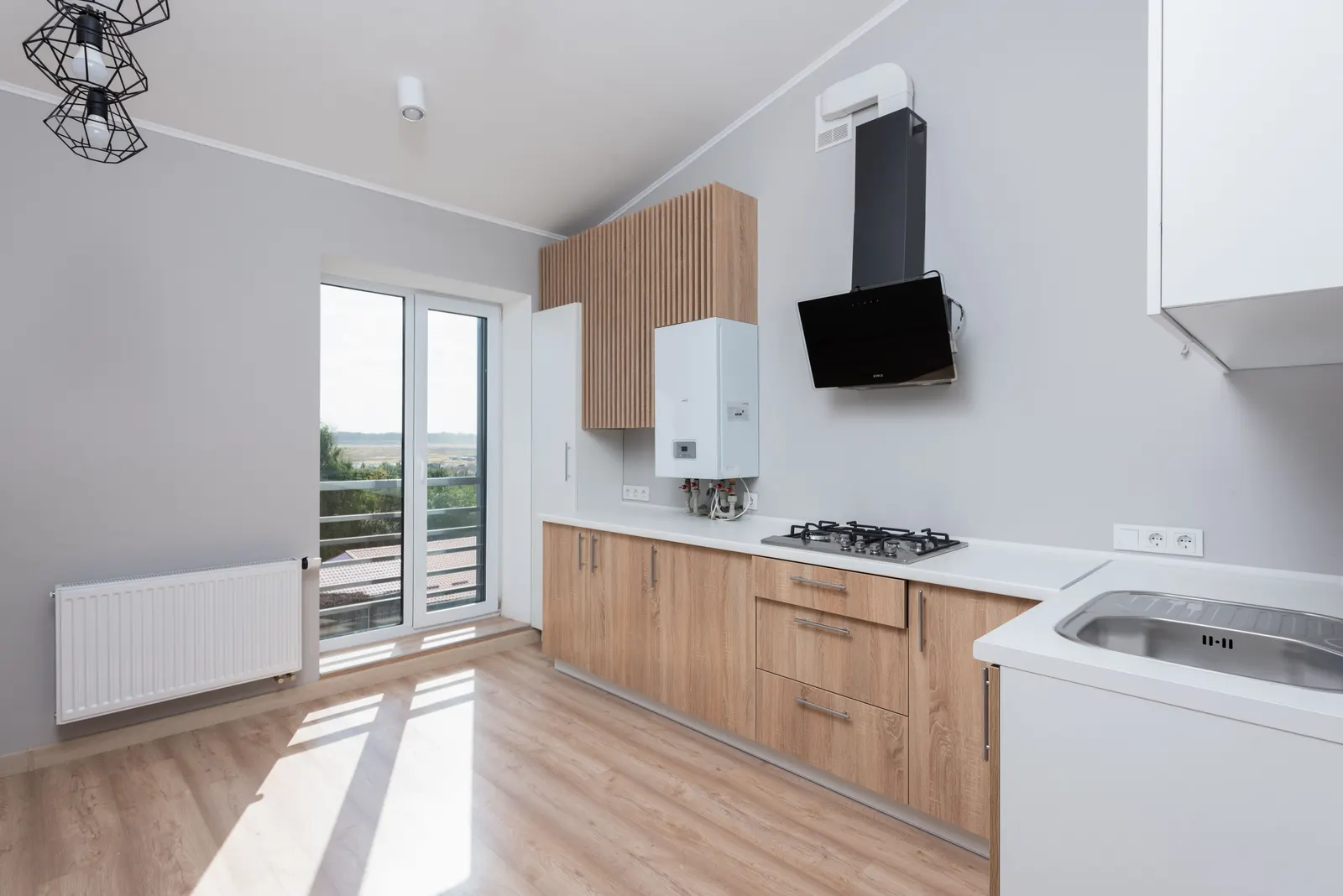
A whistle from the boiler is usually kettling: limescale or sludge on the heat exchanger making water boil in pockets, like a kettle. Low pressure, a blocked filter or a half-closed valve can cause the same sound by starving the boiler of flow. It is rarely dangerous, but kettling gets worse and shortens the boiler’s life.
Why does a boiler whistle?
Water should pass through the heat exchanger quickly enough to carry the heat away. When something slows it down or coats the metal, a thin layer of water next to the hottest surface flashes into steam. That steam escapes with a whistle or a high-pitched squeal, sometimes followed by rumbling or bangs. Heating engineers call this kettling, because it is the same thing that happens in a kettle just before it boils.
In London the most common coating is limescale. The water is hard, and on a combi every litre of hot water you run goes through a small plate heat exchanger that scales up over the years. On the heating side the usual culprit is black sludge, magnetite from radiators rusting inside, which settles in the heat exchanger and the pump.
Not every whistle is kettling. A few other sources are worth ruling out, because the fixes are very different.
- Whistling only when you run a hot tap on a combi: scale in the hot water heat exchanger, or a partly closed cold inlet valve
- Whistling when the heating runs: sludge, low pressure, a blocked magnetic filter or a valve not fully open
- Whistling from outside on windy days: air moving across the flue terminal, which is a flue issue, not a water one
- A thin whistle from a radiator valve rather than the boiler: too much flow through a nearly closed valve
Checks you can make safely
Stay outside the casing and work through these in order. Each one takes a few minutes.
- Read the pressure gauge with the boiler cold. Between about 1 and 1.5 bar is normal. If it is under 1 bar, top up through the filling loop and see if the whistle changes
- Bleed the radiators and recheck the pressure, since bleeding lowers it
- Check the water isolating valves under the boiler are fully open. They often have a screwdriver slot; the slot in line with the pipe usually means open. Leave the gas valve alone, usually the one with a yellow handle
- Make sure several radiators are open. A whistle that appears only when most rooms are warm and their valves have closed is a flow problem
- If you have a combi, run a hot tap at full flow and then half flow. A whistle that only happens at one flow rate points to the hot water side
- Turn the heating flow temperature down a step. Kettling usually eases at lower temperatures, which gives you a clue and buys you time
Do not open the boiler or the magnetic filter housing yourself if you are not sure how to isolate it. Anything behind the front panel is gas work. If you smell gas, open the windows, turn the gas off at the meter if you safely can, keep off the switches and call 0800 111 999 from outside.
Is a whistling boiler safe to use?
Usually yes, for a short while. Boilers have an overheat cut-out that stops the burner, and a pressure relief valve that lets water out before the pressure gets dangerous. The danger is to the boiler rather than to you. Repeated boiling stresses the heat exchanger, and a scaled heat exchanger runs hotter, so sensors trip more often and parts wear faster.
Switch the boiler off and get it looked at if the whistle has turned into loud bangs, if the pressure gauge climbs towards 3 bar when the heating runs, if water or steam comes from the pressure relief pipe outside, or if the boiler is locking out with an overheat fault. Our page on a boiler pressure that keeps rising covers the pressure side of this.
What the engineer does to stop the whistle
The engineer will confirm kettling by running the boiler and measuring the flow and return temperatures. A big gap, or temperatures that spike quickly, points to poor flow. They then check the pump, the filter and the valves before blaming the heat exchanger.
Fixes depend on what they find. A clogged magnetic filter just needs cleaning. Sludge through the system usually means a chemical clean or a power flush, then fresh inhibitor. BS 7593, the code of practice for treating heating water, expects a system to be cleaned, filtered and dosed with inhibitor, which is why a filter is normally fitted after a flush. A combi whose hot water plate heat exchanger has scaled badly may need that part descaled or replaced.
Typical UK market prices give a sense of scale. Power flushing is commonly quoted from about £400 to £800 for a typical house depending on the number of radiators. Adding a magnetic filter is often £120 to £250 on its own, and less when it goes in during a flush. A replacement plate heat exchanger or pump each tends to land in the low to mid hundreds with labour. These are market ranges, not our prices.
Our boiler repairs visit starts with the £60 call-out at any hour, and the repair price is agreed with you on site before any work starts. Gas work is carried out by Gas Safe registered engineers.
Stopping the whistle coming back
Once the water is clean, keep it clean. Have the filter emptied at every annual service, ask for the inhibitor level to be tested, and avoid topping up the system too often, because every fresh top-up adds oxygen and scale. If the pressure needs topping up more than a couple of times a year, there is a small leak somewhere, and our guide to a boiler losing pressure with no visible leak helps you find it.
On a combi in a hard water area, a scale reducer on the cold feed protects the hot water side. If your whistle is part of a wider set of noises, the boiler making a loud noise guide sorts them by sound.
Questions people ask
Can a whistling boiler explode?
It is extremely unlikely. Modern sealed boilers have a pressure relief valve and an overheat cut-out that act long before that could happen. The risk from kettling is a damaged heat exchanger and a breakdown, not an explosion.
Why does my combi only whistle when I run the hot tap?
Hot water on a combi goes through a separate plate heat exchanger. When that scales up in hard water, the first few seconds of heating make it whistle. A part-closed cold inlet valve can do the same. An engineer can descale or replace the plate heat exchanger.
Will bleeding the radiators stop a boiler whistling?
It helps if air or low flow is part of the cause, and it costs nothing. If the whistle carries on after bleeding and topping up the pressure, the cause is almost always sludge or scale, which bleeding will not shift.
Does a whistling boiler use more gas?
Usually yes. A coated heat exchanger passes heat to the water less well, so the boiler burns longer for the same warmth. Cleaning the system tends to make it quieter and cheaper to run.