Boiler & heating breakdowns
Boiler Losing Pressure but No Visible Leak
Published
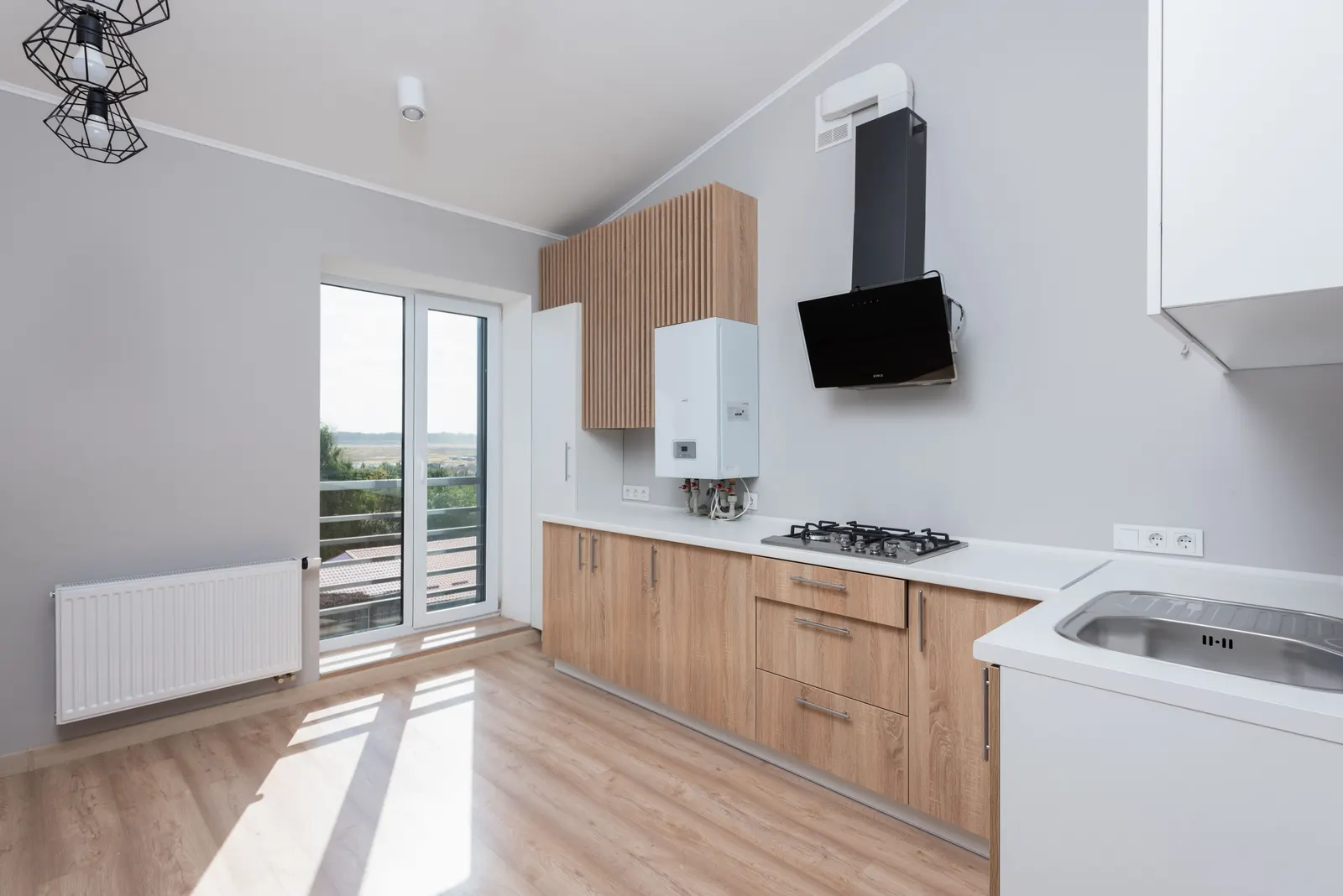
When a boiler loses pressure with no visible leak, the water is still leaving, just somewhere you are not looking. The usual routes are the relief valve pipe outside the wall, a leak inside the boiler that evaporates on hot parts, a pinhole in pipework under a floor, and on older systems a split coil in the hot water cylinder.
Where does the water go if there is no leak?
A sealed heating system cannot lose pressure on its own. Air can come out of it, which is why the gauge falls once after you bleed radiators, but after that any steady drop means water is getting out. "No leak" almost always means "no puddle", and there are four places water leaves without making one.
- Out through the pressure relief valve pipe, to the outside of the building
- Inside the boiler casing, where small drips evaporate off hot components
- Under floors, in walls or in screed, where it soaks in before it shows
- Into a vented hot water cylinder, through a split heating coil
Check the pipe outside first
Start with the copper pipe that comes out of the wall near the boiler, usually 15 mm and turned down towards the ground. That is the relief valve discharge. On a combi boiler this is the first thing to rule out, because it is the most common invisible exit.
The valve opens at 3 bar. If it has opened even once, grit can stop it sealing, and from then on it lets water out a drip at a time. In a flat the pipe may end on a balcony, above a gutter or in a hopper, so nobody sees it. Hold a dry tissue at the end for a minute with the heating running. Look for a white limescale streak on the brickwork below, or green moss where the ground stays damp.
If the tissue comes back wet, you have found your leak. It is worth asking why the valve opened in the first place, because a flat expansion vessel is the usual culprit, and replacing the valve alone just sets up the next discharge. Our page on a boiler pressure relief valve leaking goes into the valve itself.
Leaks you cannot see: inside the boiler, under floors, in the cylinder
Inside the boiler. The pump, automatic air vent, internal pipe seals and the heat exchanger can all weep inside the casing. On a running boiler, a slow drip lands on hot metal and evaporates, so you get no drip underneath until the leak grows, and then the steps for a boiler leaking water apply. Signs you can see without opening anything are rust streaks or white deposits along the bottom edge of the casing, a boiler that gurgles or hisses, and a pressure that drops faster when the heating is running. The casing stays on. Opening it is engineer work.
Under floors and in walls. Heating pipes in a solid floor or hidden under boards can leak into the void for weeks. Look for a damp patch or tide mark on a ceiling under an upstairs radiator, a spot on a solid floor that feels warm when the heating is off elsewhere, lifting laminate, or a damp, musty smell from under the stairs or a kitchen plinth.
Into the hot water cylinder. Where a sealed heating system heats a vented cylinder fed from a cold tank in the loft, the heating water passes through a copper coil inside the cylinder. If that coil splits, the higher-pressure heating water escapes into the tap water side, so the heating loses pressure and nothing drips anywhere. Signs are discoloured hot water at the taps and the loft tank overflow pipe running. Combi boilers have no cylinder, so this one does not apply to them. With an unvented cylinder the pressures are reversed, and a split coil makes the heating pressure rise instead.
Heating water often carries corrosion inhibitor. If you suspect heating water is getting into your hot water, avoid drinking from the hot taps and get it checked.
A simple overnight test to narrow it down
You can find out whether the loss is at the boiler, in the pipework or only when the heating runs, without any tools beyond a notepad.
- Evening: top up to 1.5 bar with the system cold, close the filling loop and switch the heating off at the programmer
- Next morning: write down the reading. If it held, the loss only happens when the system is hot, which points to the relief valve lifting or a leak that opens when pipes expand
- If it fell overnight with everything cold, the leak is constant: relief valve seat, a pipe joint or a cylinder coil
- Now run the heating for two hours and watch the peak. A needle near 3 bar means the expansion vessel is driving the loss
If the gauge sits near zero and will not hold any top-up at all, turn the boiler off. See our page on boiler pressure at zero.
What an engineer does to find it
On a boiler pressure repair visit, the engineer starts where your test left off. They check the relief valve discharge and test the expansion vessel charge with the boiler drained to zero. Next they close the flow and return isolating valves under the boiler and watch its gauge: if the boiler holds pressure while isolated, the leak is out in the pipework; if it still drops, they open the casing and look for the weeping part. Gas work is carried out by Gas Safe registered engineers.
For a leak under a solid floor, the next step is usually a pressure test of individual circuits, sometimes followed by thermal imaging to find the hot spot before anything is dug up. A cylinder coil is confirmed by isolating the cylinder circuit and watching the gauge.
The £60 call-out gets an engineer to you, and the repair price is agreed with you on site before any work starts. See our emergency plumbing costs. As typical UK market ranges, a relief valve replacement runs about £90 to £200 and an expansion vessel about £150 to £350, parts and labour together. A hidden pipe leak is priced once it is found, because access is most of the work.
Questions people ask
Why is my combi boiler losing pressure but not leaking?
On a combi, check the relief valve pipe outside first, then watch whether the pressure rises close to 3 bar when the heating runs. A passing relief valve, often caused by a flat expansion vessel, is the most common reason a combi loses pressure with no puddle.
Can a boiler lose pressure through evaporation?
Only if there is a leak for the water to evaporate from. Small drips on hot boiler parts or warm pipes can dry before they show, which is why a leak can exist with no visible water.
Is it safe to keep topping up a boiler that loses pressure?
As a short stopgap, yes. Over weeks it brings in fresh oxygenated water that speeds up corrosion and dilutes inhibitor, and the leak behind it keeps doing damage somewhere.
Could the pressure gauge be wrong?
Gauges do stick or read wrong. Many boilers also have their own electronic pressure sensor, so if the boiler shows a low-pressure fault, such as F22 on a Vaillant, the pressure really is low whatever the needle says.