Boiler & heating breakdowns
Combi Boiler Pressure: Why It Matters More Than You Think
Published
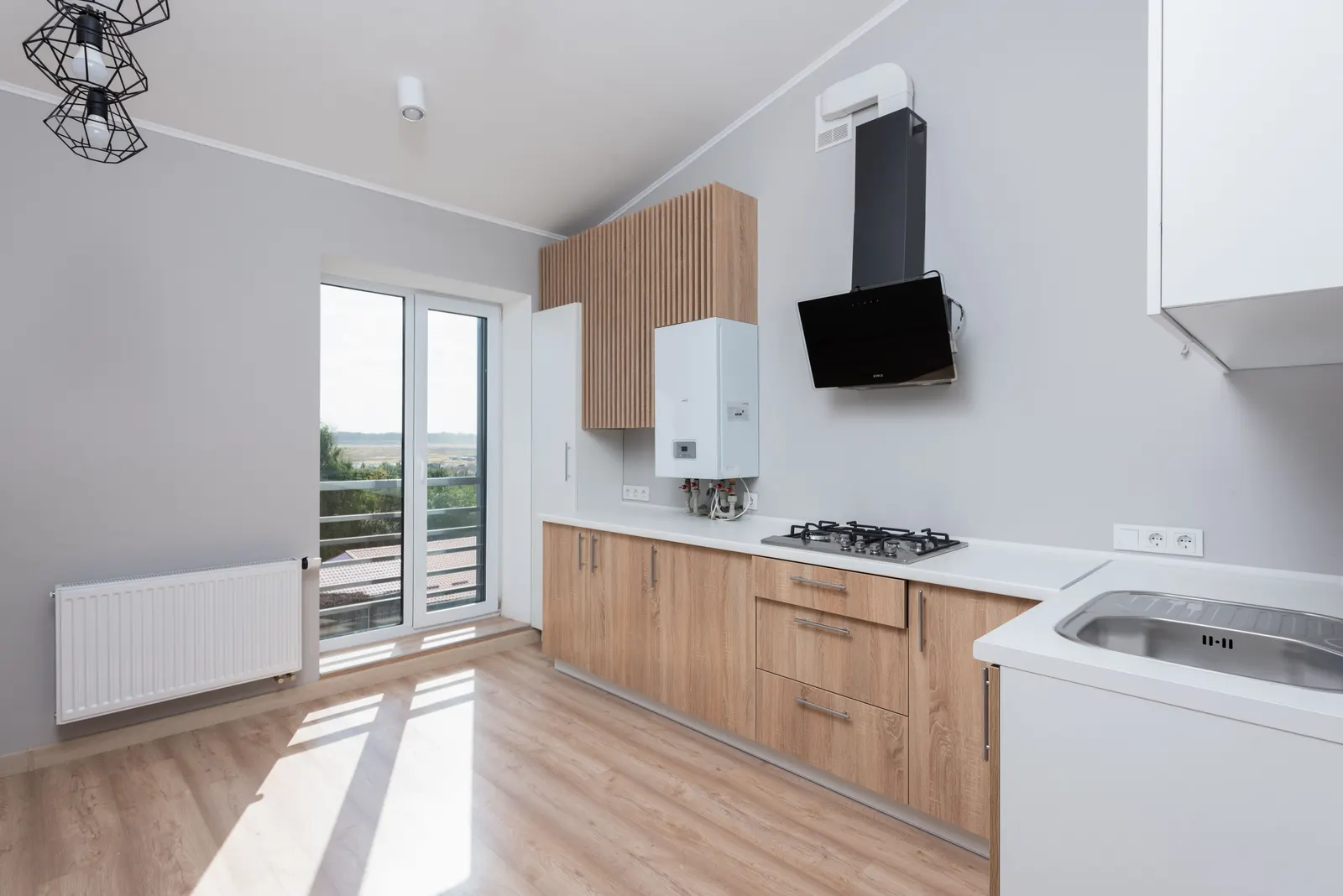
A combination boiler should show 1 to 1.5 bar when cold and rise a little when hot, to no more than about 2.5 bar. The gauge measures the sealed heating water, not your taps. When a combi loses pressure it locks out and stops heating and hot water together, so topping up through the filling loop matters more than on other boilers.
What the pressure gauge on a combi is actually measuring
A combi has two separate water circuits. One is the heating circuit: a closed loop of the same water going round the boiler and radiators, sealed and held under pressure. The other is your hot water, which is cold mains water heated on its way through the boiler to the tap. The gauge on the front measures only the first one.
That trips a lot of people up. A weak shower on a combi is not fixed by topping up the boiler, because the flow at the tap comes from the mains supply to the house. If your taps are slow everywhere, cold included, that is a supply problem, covered by our low water pressure repair page. If the boiler gauge is low, that is the heating circuit, and it is what this page is about.
- Cold heating circuit: 1 to 1.5 bar
- Heating running: typically 1.5 to 2 bar
- Lockout on most combis: below roughly 0.3 to 0.5 bar, depending on the model
- Relief valve opens: 3 bar
If your boiler has no pressure gauge and there is a small tank in the loft, you have an open vented system, not a sealed one. None of the numbers here apply.
Why a combi that has lost pressure hits harder
On a system boiler with a hot water cylinder, a low-pressure lockout stops the heating but you usually still have a tank of hot water, and often an immersion heater to reheat it. A combi has no store. When the pressure drops below its limit the boiler will not fire at all, so the showers go cold at the same moment the radiators do.
The fix, fortunately, is usually quick. Switch the boiler off, find the filling loop under it, open the valves slowly and close them at 1 to 1.5 bar. Many combis, an Ideal with the F1 low-pressure code among them, clear the code by themselves once the pressure is back; press reset once if not. Our guide to a boiler at zero pressure covers what to do if the needle is right at the bottom.
Close the loop fully afterwards. A filling loop left cracked open lets mains water keep pushing in, and within a day you have the opposite problem, with the relief valve discharging outside.
The parts inside a combi that control pressure
Three parts inside the casing decide whether a combi holds its pressure, and knowing them makes an engineer’s diagnosis easier to follow.
The expansion vessel is a steel tank with a rubber diaphragm and a charge of air on one side. As the heating water warms and expands, it pushes into the vessel instead of raising the pressure. When the air charge leaks away, typically over several years, the pressure shoots up every time the heating runs and falls back when it cools, and the relief valve may lift at the top of each swing.
The pressure relief valve is the safety outlet. It opens at 3 bar and sends water through a copper pipe to the outside wall. Once it has opened a few times it often weeps, and a combi that loses a little pressure every day with a damp patch under that pipe has usually found its cause.
The plate heat exchanger passes heat from the heating water to the tap water. It is the part that makes a combi a combi. If a leak opens between its plates, mains water, which is normally at a higher pressure than the heating circuit, can pass into the heating side and the gauge creeps up slowly over hours or days. A filling loop that is letting by can look similar, so the engineer rules that out first.
Reading the pattern: low, falling or rising
The quickest diagnosis comes from writing the cold reading down each morning for a week and noting when it changes.
- Dropped once after bleeding radiators, then steady: nothing wrong, you let water out
- Falls a little every day or two: a slow leak or a weeping relief valve, see a boiler losing pressure every day
- Normal cold, near 3 bar hot, back to normal cold: expansion vessel
- Creeps up over hours or days with the heating off and the filling loop shut: plate heat exchanger
- Rises steadily whatever you do: filling loop passing, see when the filling loop is not working
Topping up week after week is not a fix. Fresh water brings oxygen into the system, which rusts radiators from the inside and makes sludge that clogs the plate heat exchanger.
When to get an engineer out, and what it costs
Call if you need to top up more than a couple of times a year, if the pressure reaches 3 bar, if the relief pipe outside is dripping, or if a combi that is correctly pressurised still shows a pressure fault. With no heating and no hot water, and especially with someone vulnerable in the house, it is reasonable to treat a combi that will not hold pressure as an emergency boiler repair.
On a combi, the engineer tests in the order the symptoms point to: filling loop, expansion vessel charge with the boiler side drained, relief valve, then the plate heat exchanger by running a hot tap with the loop shut. Gas work is carried out by Gas Safe registered engineers. Typical UK market ranges, parts and labour, are about £150 to £350 for an expansion vessel, £90 to £200 for a relief valve and £300 to £600 for a plate heat exchanger.
Our boiler pressure repair visit starts with the £60 call-out, and the repair price is agreed with you on site before any work starts.
Questions people ask
What pressure should a combination boiler be?
Between 1 and 1.5 bar when the system is cold. It will rise with the heating on, which is normal, but should stay around 2.5 bar or less, well short of 3 bar, where the relief valve opens.
Why has my combi boiler lost pressure?
Either water has been let out, usually by bleeding radiators, or it is escaping through a leak or a weeping relief valve. A single drop after bleeding is normal. A repeated drop means a fault.
Does low boiler pressure affect hot water on a combi?
Yes, once it falls low enough for the boiler to lock out. A combi cannot heat tap water without firing, so low pressure stops hot water as well as heating.
Is the boiler pressure the same as my water pressure?
No. The gauge shows the sealed heating circuit. The flow at your taps depends on the mains supply to the house, which topping up the boiler does not change.
Should I turn my combi off if the pressure keeps dropping?
Not usually. Top it up and keep using it while you arrange a repair, checking the gauge each morning, unless you suspect the water is going into a floor, wall or ceiling. Switch it off and isolate the water only if you can see water leaking from the boiler itself or near electrics, or if the pressure falls to zero within hours of topping up.