Leaks & burst pipes
Isolation Valve Leaking
Published
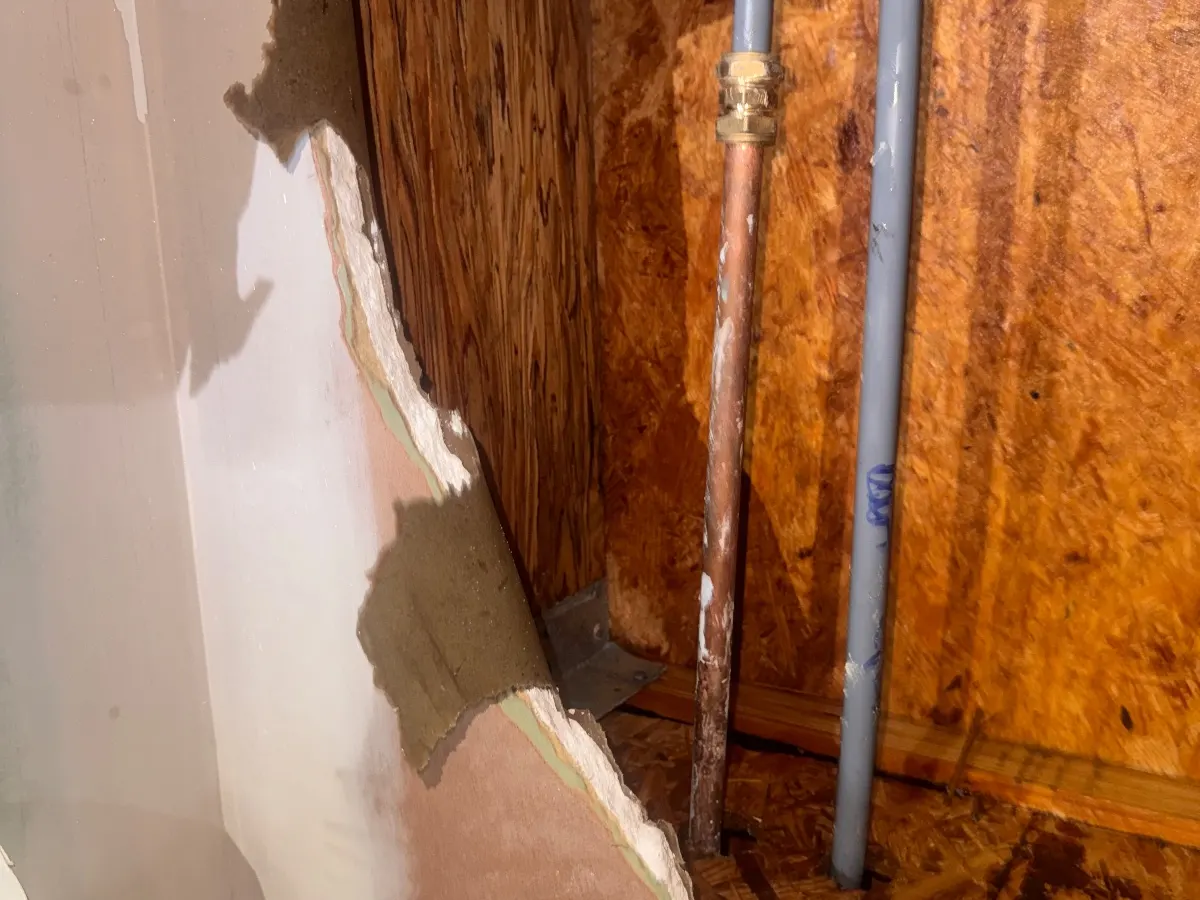
An isolation valve leaks from one of three places: a compression nut either side, the slotted spindle in the middle, or a cracked body. A nut can often be cured with a quarter turn. A spindle or body leak means replacing the valve, which needs the water off at the stopcock first, because the valve cannot isolate itself.
Where exactly is it dripping from?
Isolation valves, often called service valves or Ballofix valves after one well-known type, are the small inline valves on the pipes feeding toilets, taps, washing machines, dishwashers and boilers. The common kind has a slot on the top you turn a quarter turn with a flat screwdriver. When the slot runs along the pipe the valve is open; when it sits across the pipe it is closed. Lever versions, often with blue and red handles on appliance feeds, work the same way, and a drip from one behind the machine is among the first things to rule out when a washing machine leaks underneath.
Dry the valve and the pipe either side with a tissue, then watch. Where the first bead of water forms tells you what has failed.
- At the nut on either end, where the pipe goes in: a compression joint weeping, usually the easiest to cure
- Around the slot or lever on top: the spindle seal has worn, common after a valve has been turned for the first time in years
- From the body itself, often a hairline crack: frost damage or overtightening, and the valve must be replaced
- Only when the valve is closed, water still running through to the tap or cistern: the valve is passing, not leaking, and will not isolate
Weeping at the nut: the quarter-turn fix
Most isolation valves join the pipe with compression fittings: a brass nut squeezes a soft brass or copper ring, the olive, onto the pipe. A slow weep from behind the nut often means it has loosened slightly or the olive never quite seated.
Hold the body of the valve with one spanner so it cannot twist, and tighten the nut with a second spanner by about a quarter of a turn. Wipe dry and wait. If the weep has stopped, leave it. If not, one more small nudge is fine, but no more. Overtightening crushes the olive out of shape and can split the nut or crack the valve body, turning a drip into a spray.
If the nut is tight and it still weeps, the olive is damaged or the pipe end was cut badly. That joint needs remaking with a new olive, which means isolating the water further back. The same technique applies to other compression joints; our guide to leaking pipework joints covers them.
Always hold the valve body with a second spanner. Tightening one nut without holding the body twists the valve and can loosen the joint on the other side or kink a plastic or thin copper pipe.
Leaking from the slot or lever
A spindle leak is the one people cause by accident. A valve that has sat open for ten years gets turned to change a tap washer, and afterwards water beads around the slot. The small rubber O-ring that seals the spindle has hardened, and moving it breaks the seal.
Turning the slot back and forth a few times sometimes reseats it, and on some lever valves the small gland nut under the handle can be nipped up. On most cheap slotted valves the seal is not a serviceable part, and a replacement valve costs only a few pounds, so replacing it is the sensible repair.
Do not force a slot that will not turn. A seized valve with a stripped slot can snap internally and leave you with a valve stuck half open. Use the next valve upstream or the main stopcock instead.
Replacing the valve safely
A leaking valve cannot be used to stop the water to itself, so you need the next isolation point back towards the supply. On a mains-fed cold pipe that is the main stopcock. On pipes fed from a loft cold water tank, which in older houses includes many bathroom taps and toilets, it may be a gate valve on the pipe leaving the tank, or you may have to tie up the float in the tank and drain down. Our guide on how to turn off the stopcock helps if you are unsure which system you have.
With the water off and a tap below opened to drain the pipe, undo both nuts, fit the new valve with new olives and tighten carefully while holding the body. Match the size, almost always 15mm for taps and toilets, and fit it the right way round if it has a direction arrow. Open the water slowly and check both joints and the spindle under pressure.
Valves on toilet and cistern feeds are there for a reason. Under the Water Supply (Water Fittings) Regulations 1999, every inlet to a storage cistern, a combined feed and expansion cistern or a WC or urinal flushing cistern must have a servicing valve on the inlet pipe next to the cistern, so replace it rather than removing it and joining the pipe straight through.
Valves under a boiler, and when to call someone
A combi or system boiler has several valves underneath. The cold mains inlet and the heating flow and return valves are water valves, and a weeping nut on one of them is the same compression-joint job described above. The gas valve, usually with a yellow handle, is different. Never loosen or dismantle anything on the gas pipe. Gas work is carried out by Gas Safe registered engineers. If you smell gas, open the windows, turn off at the meter if it is safe to reach, keep away from switches, and call the National Gas Emergency Service on 0800 111 999 from outside.
A heating valve under the boiler that is dripping will also make the boiler lose pressure, so a weep there is worth dealing with before the boiler locks out. Our guide to boiler pipes leaking covers what else you can safely check below the boiler without opening the casing.
Get a plumber out tonight if the valve is spraying rather than dripping, the stopcock will not close, the valve is on a supply you cannot live without, or the leak is running into a ceiling or electrics. The job itself is short: isolate, drain, fit a new valve, test. Leak repairs explains the visit. The £60 call-out applies at any hour, and the repair price is agreed with you on site before any work starts.
Questions people ask
Which way is an isolation valve open?
When the screwdriver slot or lever runs in line with the pipe, the valve is open. A quarter turn so it sits across the pipe closes it. Turn slowly, and never force a slot that will not move.
Why did my isolation valve start leaking after I turned it?
The small O-ring seal on the spindle hardens when a valve sits in one position for years. Turning it breaks that seal and it starts to weep around the slot. On most slotted valves the answer is a new valve.
Can I just remove a leaking isolation valve?
Not on a toilet cistern or storage cistern feed. The Water Supply (Water Fittings) Regulations 1999 require a servicing valve on those inlets. Replace it with a new valve rather than joining the pipe straight through.
How much does it cost to replace an isolation valve?
The valve itself is typically a few pounds. The cost is labour, and it is usually a short job once the water can be turned off. It takes longer if the stopcock is seized or the valve is behind boxing.