Leaks & burst pipes
Leaking Pipework Joints: Compression, Solder or Push-Fit
Published
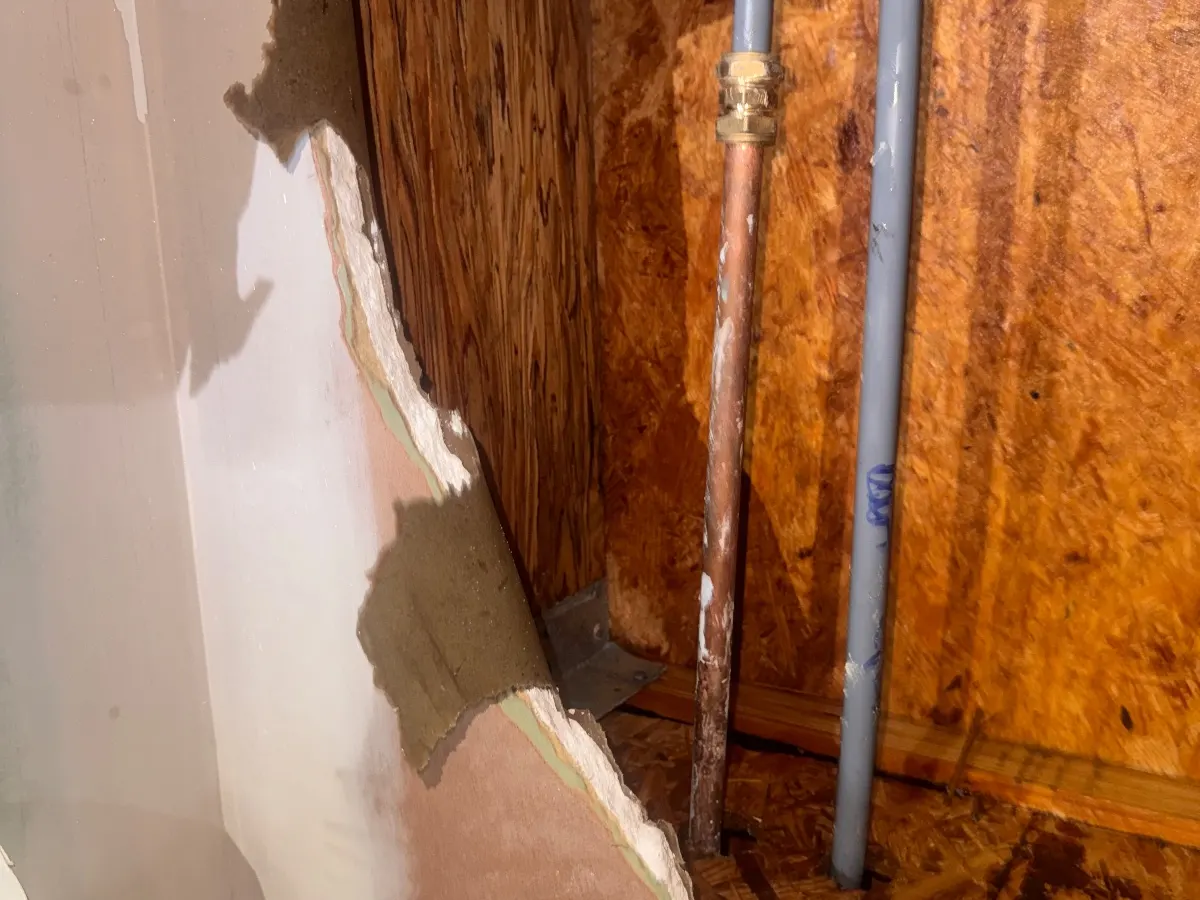
Most leaking pipework leaks at a joint, and the fix depends on the type. A compression joint can often be stopped with a quarter turn of the nut. A push-fit joint usually needs the pipe pulling out, trimming and pushing fully home. A soldered joint cannot be tightened at all: it has to be drained and remade.
Which kind of joint is leaking?
Dry the pipework with kitchen roll, wrap a sheet around each joint in turn and wait a few minutes. The one that wets the paper first is your leak. Then look at what kind of fitting it is, because each fails in its own way.
- Compression: a brass fitting with a hexagon nut on each pipe. Inside the nut a small brass ring, the olive, is squeezed onto the pipe. Common on isolating valves, tap connectors and anything a plumber wanted to take apart later
- Soldered: a smooth copper sleeve over the pipe with no nut. Solder-ring fittings have a slight bulge where the solder was pre-loaded; end-feed fittings are plain, with a thin silver line at the mouth
- Push-fit: a white, grey or black plastic fitting, or a brass body with a plastic collar, from makers such as JG Speedfit and Hep2O. The pipe is held by a grab ring and sealed by an O-ring
- Press-fit: a copper or stainless fitting with a raised ring near each end that has been crimped by a tool. Rarely leaks unless it was never pressed
Before touching any joint, shut off the water feeding it. Many pipes under sinks and behind toilets have a small isolating valve with a screwdriver slot; otherwise use the stopcock. Heating pipes need the boiler switched off first.
Compression joint leaking: what you can safely try
A compression joint seals because the olive is crushed between the nut and the fitting body. It weeps when the nut was left slightly loose, when it was overtightened and the olive distorted, when the pipe was cut at an angle, or when the pipe has been knocked or moved and the olive has shifted.
The one fix you can safely try is to hold the fitting body still with one spanner and tighten the nut with a second, a quarter turn at most. Holding the body stops you twisting the fitting and cracking the joint at the other end. If it still weeps after that, stop. More force squashes the olive out of shape and makes the leak worse.
A proper repair remakes the joint: the nut is undone, the old olive is cut or pulled off, the pipe end is checked for scoring and cut back square if needed, and a new olive goes on. A smear of jointing compound on the olive helps it seat. PTFE tape wrapped around the thread does very little, because the thread is not what seals. On plastic pipe, a compression fitting also needs a metal pipe insert inside the pipe end, or the pipe collapses and the joint leaks.
Push-fit joint leaking: usually the pipe is not fully home
Push-fit fittings are reliable when the pipe is pushed in to the full depth. The usual cause of a leak is a pipe that only reached the grab ring and not the O-ring behind it, which can hold for months before it starts to weep. Other causes are a plastic pipe fitted without its insert, a pipe end cut at an angle or left with a burr that nicked the O-ring, and copper pipe with a score mark where the O-ring sits.
To remake it, turn the water off and open a tap below to relieve the pressure. Push the release collar in against the fitting body and pull the pipe out; some makers supply a small tool or clip for this. Check the O-ring is present and undamaged, cut the pipe back square with a proper cutter, fit a new insert if it is plastic, mark the insertion depth on the pipe and push it in until the mark reaches the fitting. Then turn the water on slowly and watch the joint.
Push-fit joints also leak when the pipe has been pulled or twisted, for example by a washing machine being pushed back or a cabinet being fitted. If the pipe is under strain, clip it properly before remaking the joint or it will pull out again.
Soldered joint leaking: it has to be remade
A soldered joint that leaks was usually made with too little heat, too little solder, or dirty copper, so the solder never ran all the way round. Others fail years later because flux left on the outside keeps corroding the pipe, leaving a green crust around the joint. Frost and movement can also crack an old joint.
There is no tightening a soldered joint. The pipe has to be drained completely, because any water inside stops it reaching the temperature solder needs. The engineer either heats the joint, cleans it and adds solder, or cuts the fitting out and replaces it, which is often the more reliable choice on an old joint. A heat mat protects nearby timber and walls, and only lead-free solder is used on drinking-water pipes. Where draining the system is impractical, a compression, push-fit or press fitting can replace the soldered one without heat.
Copper water pipe leak repair covers what to do when the leak is in the pipe itself rather than at a joint.
Other joints that leak: valves, connectors and waste pipes
Some of the most common leaking pipework is not a pipe joint as such. A tap connector or flexible hose has a fibre or rubber washer that hardens and leaks at the tap tail. An isolating valve can leak at its compression nuts or around the screw slot; a leaking isolation valve explains which is which. A leak around a radiator valve is the same compression joint in a different place.
Plastic waste pipes under sinks and baths use rubber seals with loose-looking nuts, and the joint leaks only when water is running away. Those are covered in a leaking waste pipe. If the drip is under the kitchen sink and you cannot tell supply from waste, fill the basin, pull the plug and watch: a leak that appears only while it drains is on the waste side.
When a leaking joint cannot wait
A weep that marks a sheet of kitchen roll overnight can wait for a daytime repair, as long as the water feeding it is isolated or a container is catching it. It cannot wait if the joint is spraying, if water is getting into a ceiling, floor or electrics, or if it is a heating joint and the boiler pressure is falling. A push-fit joint that is visibly moving on the pipe can blow apart without warning.
Hidden joints are the other worry. The Water Supply (Water Fittings) Regulations 1999 say no water fitting may be embedded in a wall or solid floor, and no pipe joint may be a concealed fitting, so a joint should never be boxed in without an access panel. If water is showing on a wall or ceiling with no visible pipe, a buried joint is one of the first things to suspect.
Our leak repair service remakes leaking compression, push-fit and soldered joints on water and heating pipes. The £60 call-out gets an engineer to you at any hour, and the repair price is agreed with you on site before any work starts. As a typical market guide, remaking a single accessible joint is a short job; the cost rises when boards, panels or plaster have to come off to reach it.
Questions people ask
Should I use PTFE tape on a leaking compression joint?
It rarely helps. A compression joint seals at the olive, not the thread. If a quarter turn with the fitting body held still does not stop it, the olive needs replacing, ideally with a little jointing compound on the new one.
Can a push-fit fitting be reused?
Many push-fit fittings can be released and remade, but check the maker’s instructions and inspect the O-ring and grab ring first. A damaged O-ring or a fitting that has been heated or crushed should be replaced, not reused.
Why is my pipe joint only leaking when the heating is on?
Heating pipes expand as they warm up, which can open a marginal compression or soldered joint, and the system pressure also rises when hot. A joint that leaks only when hot still needs remaking, and a falling boiler pressure gauge is a sign it is losing more than you can see.
Is a leaking joint covered by home insurance?
Sudden escape of water damage often is, but damage from a slow weep over time is often excluded, and the joint repair itself usually is not covered without home emergency cover. Check your policy wording for escape of water and trace and access before any flooring or plaster is removed.