Leaks & burst pipes
Pipe Leaking Under the Sink
Published
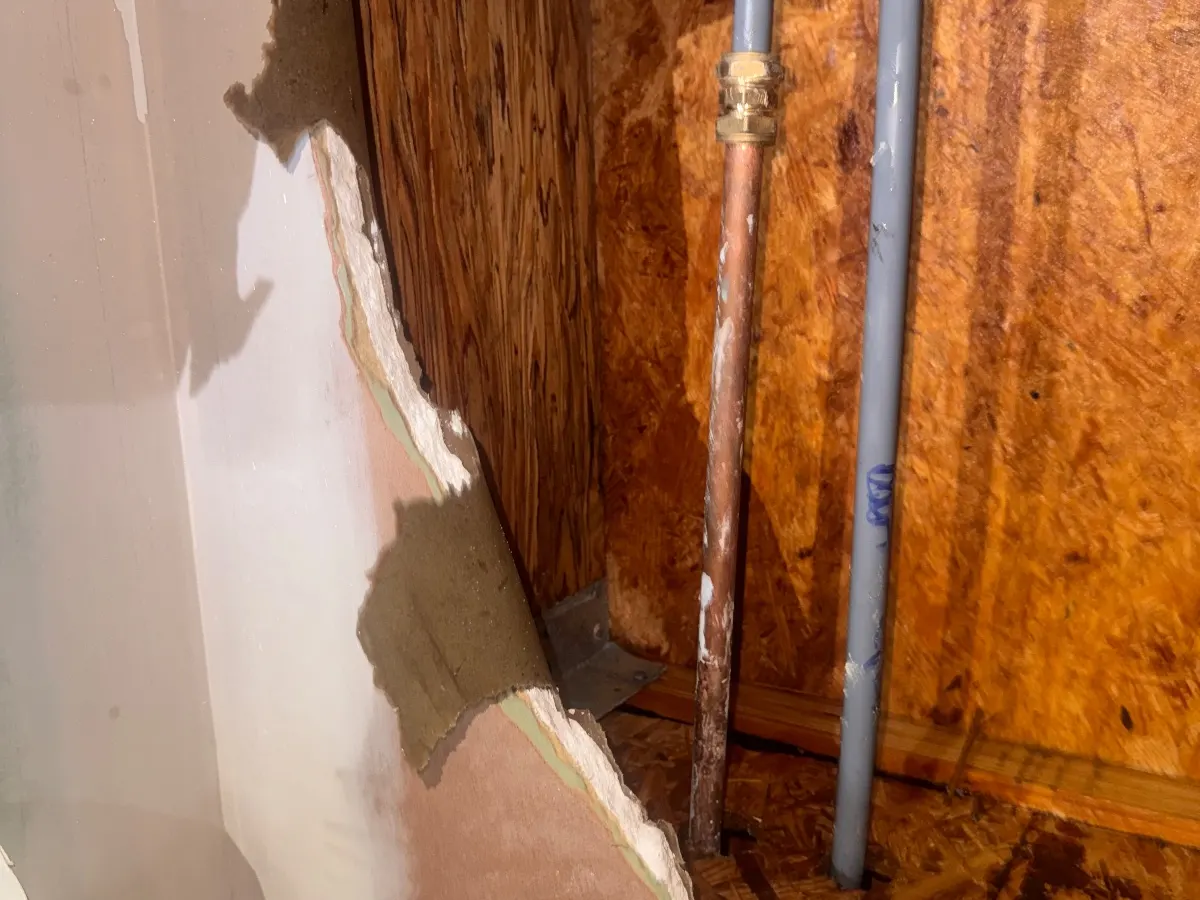
A leak under the kitchen sink is almost always one of three things: the waste trap and its seals, the flexible hoses feeding the tap, or a compression joint on a supply pipe or appliance valve. Empty the cupboard, dry everything, then test each in turn. Wastes leak only when water drains; supply pipes leak all the time.
Empty the cupboard and look before you touch anything
Take everything out, put a torch in and lay dry kitchen roll along the base of the cupboard and under each pipe. Wipe every joint dry. Leaks under a sink are rarely where the puddle is: water runs along the underside of pipes and drips from the lowest point, which is often the back corner of the cupboard.
Note what is down there. A typical kitchen sink has two copper or plastic supply pipes coming up through the floor or wall, each with a small isolation valve, then two braided flexible hoses up to the mixer tap. There is a plastic waste trap below the plughole, and often a washing machine or dishwasher valve teed off the cold pipe with a hose running sideways. In many homes the main stopcock is also in this cupboard, low down on the pipe coming out of the floor.
Water around the sink cupboard can reach a socket or fused spur for a dishwasher or waste disposal unit. If it has, switch that circuit off at the consumer unit before you reach in, as long as the unit is dry and you are on dry floor.
The three tests, in order
Each test rules out a group of fittings. Do them in this order and keep the dry paper in place so you can see where a drip lands.
- Do nothing for ten minutes. If the paper gets wet with no tap running and no appliance on, the leak is on something under mains pressure all the time: a supply pipe joint, an isolation valve, an appliance valve or the stopcock.
- Run the cold tap, then the hot, for a minute each with the plug out. A drip that starts only while a tap runs usually comes from the tap itself: a worn seal at the base or spout lets water run down through the tap hole and along a hose. The hoses are under pressure all the time, so a hose leak shows in the first test.
- Put the plug in, fill the bowl and pull the plug. Water that appears only as the sink drains is the waste: the plughole seal, the trap nuts or the overflow.
If it is the waste trap or plughole
Waste leaks are the most common and the easiest to fix yourself, because nothing is under pressure. Plastic trap nuts can be tightened by hand; they only need to be firm. If a nut is already tight, unscrew it with a bucket underneath and check the rubber or plastic washer inside. A washer that is flattened, split or has slipped sideways is the usual cause, and a new one costs pennies. Many people replace the whole trap, which is typically under £15 from a DIY store.
A drip from the underside of the sink, around the plughole, is the basket waste seal. The waste is held by a large nut or a central screw from above, sealed with a rubber washer. Tightening it may help; if not, the waste needs lifting, cleaning and reseating. The overflow, where fitted, joins the waste by a thin hose that can crack or pull off its spigot. See a leaking sink overflow if that is where the water is.
Check the trap is not blocked while it is off. A partly blocked trap holds water higher than it should and can push it out through a joint that would otherwise stay dry.
If it is a tap hose or supply pipe
The braided flexible hoses under a mixer tap are under supply pressure all the time the isolation valve is open. Look along each hose for rust spots in the braid, a bulge, kinks or a green crust at the ends. A hose in that condition can fail suddenly and flood a kitchen. Replacement hoses are typically a few pounds each, but the fitting end at the tap is awkward to reach behind a sink.
Close the small isolation valve under the leaking side before you do anything. On most, you turn the slot with a flat screwdriver so it sits across the pipe. If the valve itself is leaking from around the slot, a leaking isolation valve explains the fix.
On a compression joint between a pipe and the valve, hold the valve body with one spanner and tighten the nut no more than a quarter turn with another. Do not keep going if it still weeps; a crushed olive needs replacing, not more force. A drip from the tap body itself above the worktop is a different fault covered in a leaking kitchen mixer tap.
If it is the washing machine or dishwasher connection
Appliance valves are usually blue for cold and red for hot, with a lever you turn a quarter to close. Close it, run the appliance on a rinse cycle with the cupboard open and watch the hose connection. A worn rubber washer in the hose end is the cause more often than the valve, and a new washer costs almost nothing.
If water appears only while the appliance drains, the problem is where the drain hose joins the sink waste or a standpipe. A waste spigot on the trap with a loose clip, or a hose pushed in too far so the machine siphons, can both leave water in the cupboard. For leaks that start at the machine itself, see a washing machine leaking underneath or a dishwasher leaking at the plumbing.
When to stop and call someone
Turn the water off at the stopcock and get help if the leak is on the supply pipe below the isolation valves, on the stopcock itself, or if the isolation valve will not close. The same applies if the cupboard base has gone soft, because water may have been getting under the units and into the floor for weeks.
A plumber will usually replace worn flexible hoses and valves rather than patch them, remake any leaking compression joint with a new olive and check the stopcock actually shuts off. If the waste is old and brittle, it is often quicker to replace the whole trap and basket waste. Leak repairs cover this at any hour. The £60 call-out gets someone to you, and the repair price is agreed with you on site before any work starts.
Questions people ask
How do I know if the leak under my sink is the waste or the water supply?
Leave everything off for ten minutes with dry paper underneath. If it gets wet, the leak is on a pressurised supply. If it stays dry until you drain a full bowl, it is the waste.
Can I fix a leak under the sink myself?
Waste trap and plughole leaks are usually a DIY job: tighten the plastic nuts by hand or replace the washers or trap. Supply side leaks can be too, if the isolation valve closes properly, but stop if a joint still drips after a quarter turn.
Why is my sink cupboard wet but I cannot see a drip?
Water runs along pipes and drips from the lowest point, often at the back. It can also be condensation on a cold pipe in summer. Dry everything and lay paper under each pipe to find the real source.
How often should tap flexi hoses be replaced?
There is no fixed interval, but replace any hose with rust in the braid, a bulge, a kink or corrosion at the ends. A failed hose releases water at full supply pressure until someone shuts it off.