Leaks & burst pipes
Leak Repair Before the Insurer Visits: Allowed?
Published
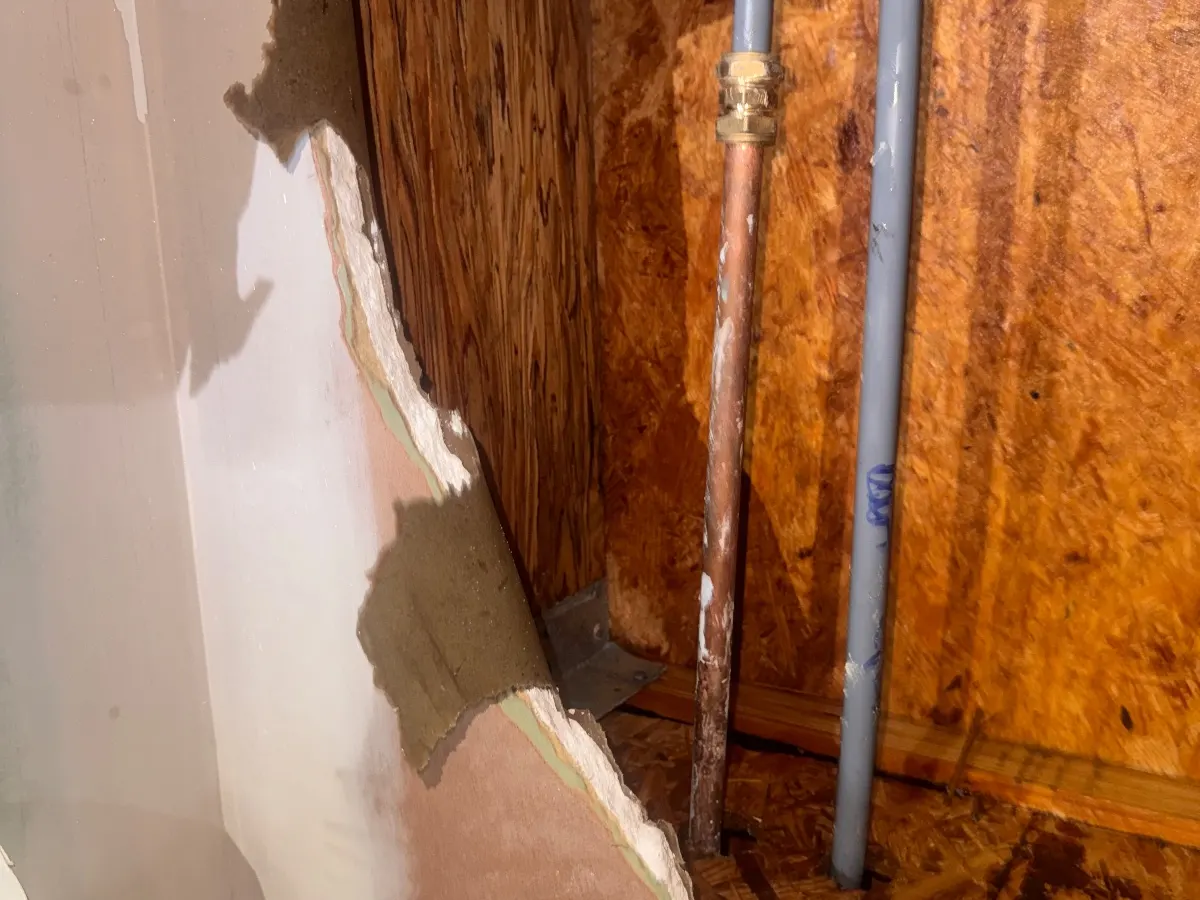
Yes. You are expected to stop water causing more damage, so an emergency repair to the leaking pipe or fitting is allowed before any assessor arrives. What needs the insurer’s agreement first is reinstatement: new kitchens, floors or plaster. Photograph it all before the repair, keep the failed part and get an invoice that says what failed.
Why stopping the leak cannot wait for the insurer
Almost every buildings and contents policy asks you to take reasonable steps to prevent further loss. Leaving a pipe dripping into a ceiling for three days so a loss adjuster can see it running does the opposite. Water that keeps flowing soaks further into joists, floor screed and plasterboard, lifts laminate, and turns a localised repair into a whole room. An insurer is entitled to ask why damage that happened after you knew about the leak should be paid for.
So the order is always the same. Stop the water, make it safe, record it, then call the claims line. If your policy includes home emergency cover, the claims line may send someone themselves; if not, they will normally ask for the invoice from the plumber you used. If they cannot get anyone out tonight, you are not expected to wait.
Before anyone touches it: the evidence to collect
Ten minutes with your phone now saves weeks of argument later. The Financial Ombudsman Service says it is down to you, as the policyholder, to show the damage was likely caused by an insured event. Your photographs are most of that proof.
- Wide shots of every affected room before you move anything, then close-ups of stains, bulges and wet flooring
- The leak itself: the dripping joint, split pipe or failed hose, ideally while it is still wet
- A short video with the water running, if it is safe to film
- Your water meter reading, and the time you shut the stopcock
- Serial numbers and labels of damaged appliances and electronics
If water is near sockets, a light fitting or the consumer unit, switch off at the consumer unit before you go in to take photographs, but only if you can reach it standing somewhere dry. Do not touch the board if it is wet. Get an electrician to check before you turn that circuit back on.
What an emergency repair covers, and what needs approval
The line most insurers draw is between making the property safe and watertight, and putting it back as it was. The first is yours to arrange straight away. The second is where they want a say, because it is where most of the money goes.
- Fine to do now: isolating the water, cutting out and replacing the failed length of pipe or fitting, capping off a branch, draining down the system, and moving belongings out of the way
- Fine to do now: lifting sodden carpet, taking up a floorboard or a small panel of ceiling to reach the pipe, and having a ceiling that is bulging with water released by whoever attends, rather than standing under it waiting for it to fall
- Ask first: removing kitchen units, bath panels that are tiled in, whole floors or large areas of plaster, or throwing away anything with a significant value
- Ask first: a full replacement of the pipework run when only one joint failed, or any upgrade you want to make while the floor is up
Keep the failed part, and get the right invoice
Keep the piece that failed. A split section of copper, a burst flexible tap connector, a cracked compression fitting or a perished washing machine hose tells the story better than any report. Put it in a bag, label it with the date and where it came from, and do not throw it away until the claim is settled.
Ask the plumber for an invoice that states what failed and how, not just “repair leak”. A line such as “15mm flexible tap connector under the bath burst at the braided section, replaced with new connector and isolating valve” is what a claims handler needs to see. Ask for photographs taken during the repair as well.
The failed part and the wording matter because of the gradual damage exclusion. Many policies exclude damage that happened slowly over time. The Financial Ombudsman Service says it may still expect an insurer to pay where the damage came from an insured event such as an escape of water, you could not reasonably have known it was happening, for example because it was hidden behind fittings, and you claimed promptly once you found it. An invoice that records a sudden failure, or a hidden leak that could not be seen, is part of that case.
We fix leaking pipes and fittings as emergency repairs day and night, and put the cause on the invoice. The £60 call-out covers the visit, and the repair price is agreed with you on site before any work starts.
Trace and access: when you cannot see the leak
If the water is coming from somewhere you cannot see, such as a pipe under a floor screed or inside a wall, finding it can cost more than repairing it. Many buildings policies include trace and access cover, which pays to locate the leak and open up the floor, wall or ceiling to reach it. The wording varies a lot: some policies pay for the search but not the repair of the pipe itself, and some have a separate limit.
Call the claims line before a hidden leak is traced if you can. Some insurers want to use their own leak detection firm, and a few will only pay the trace and access cost at their own contractor’s rate. If it is an emergency and water is still escaping, shut off the supply and ask them how to proceed rather than opening up walls on a hunch. Our guide to a leak inside a wall covers the signs.
When the adjuster visits after the repair
A loss adjuster works for the insurer. Their visit is to confirm the cause and the extent of the damage and to agree the scope of the repairs. Having fixed the leak does not weaken your claim, as long as you can show what was there. Have the photographs, the failed part, the invoice and your meter readings ready, and walk them through the order of events.
Drying out usually comes next. Plaster and screed need to be properly dry before redecoration, and insurers often send a drying firm with dehumidifiers and moisture readings. Do not paint over a stain that is still damp; it will come back. The guide to drying out after water damage covers what happens in that stage.
For large claims you can appoint your own loss assessor, who works for you rather than the insurer and usually charges a percentage of the settlement. If you disagree with the outcome, complain to the insurer first. They must give a final response within eight weeks for most complaints, after which you can take it to the Financial Ombudsman Service.
Questions people ask
Will my insurer refuse the claim if I fix the leak first?
Not for an emergency repair. You are expected to prevent further damage. Photograph the leak and the damage before the repair, keep the failed part and get an invoice that states the cause.
Should I wait for the loss adjuster before calling a plumber?
No. Stop the water and get the leak repaired now. Wait for approval only for reinstatement work such as removing kitchens, floors or large areas of plaster.
Does home insurance pay for the plumber?
It depends on the policy. Many buildings policies pay for the damage caused by the water but not the repair to the pipe that failed. Home emergency cover or trace and access cover may pay for the plumber. Check the wording.
What if the leak has been going on for months?
Many policies exclude gradual damage. The Financial Ombudsman may still expect a payout where the leak was hidden, you could not reasonably have known about it and you claimed promptly once you did.