Leaks & burst pipes
Overflow Pipe Dripping Outside: Which Pipe Is It and Is It Urgent?
Published
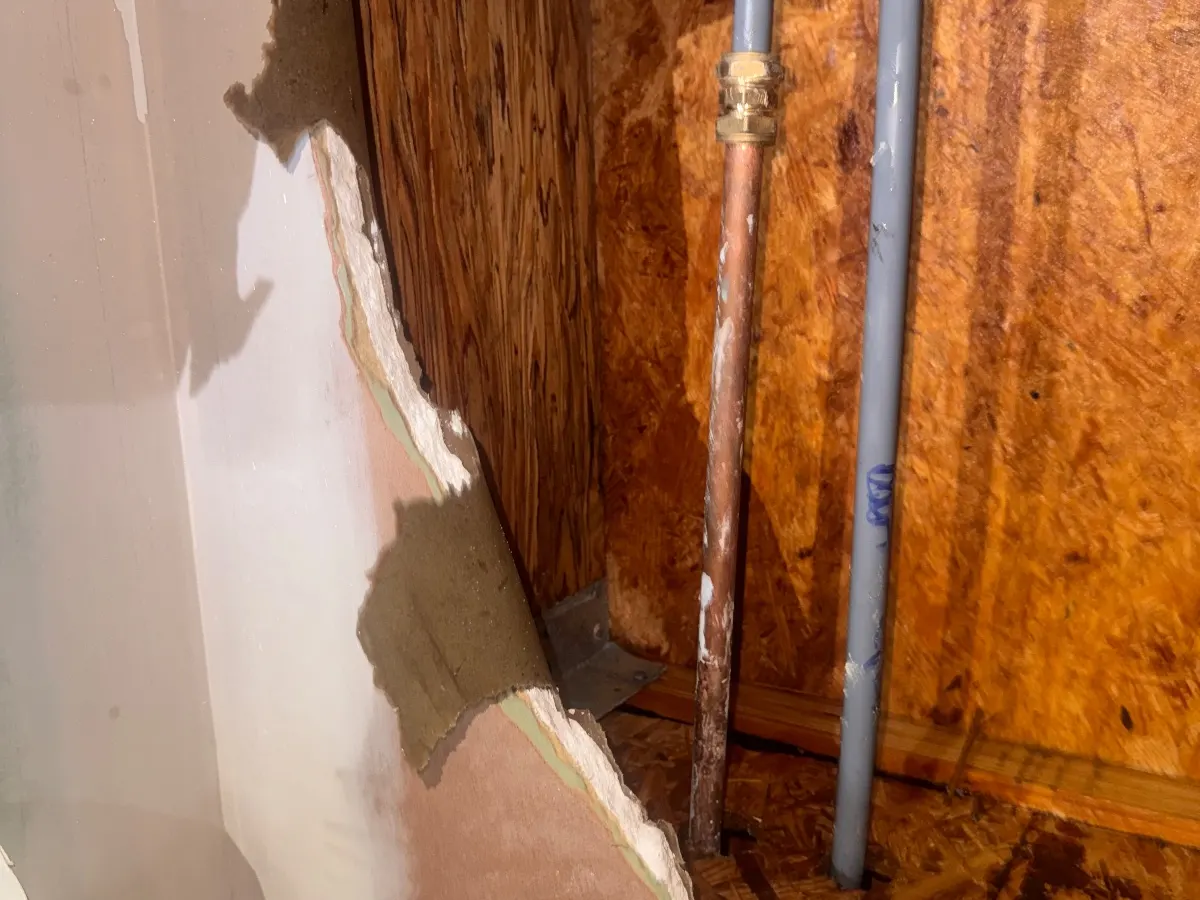
An overflow pipe dripping outside is one of five pipes: a toilet cistern overflow, the loft tank overflow, the boiler’s copper pressure relief pipe, the white plastic condensate pipe or an unvented cylinder discharge. Height, size and material tell them apart. A slow cold drip can wait a day or two; hot water running steadily cannot.
Which pipe is dripping? Read it from the outside
Stand back from the wall and note three things before you go indoors: how high the pipe comes out, how thick it is, and what it is made of. Between them they narrow five candidates down to one or two.
Then look at what lies directly behind that spot on the inside. A pipe exits the wall close to the thing it serves, so the room behind it is your next clue: bathroom, airing cupboard, kitchen with the boiler, or nothing at all because it comes from the loft.
- Toilet cistern overflow: thin white or grey plastic, roughly the width of a finger, leaving the wall at about cistern height on the outside of the bathroom. It points to a fill valve that is not shutting off. Many newer cisterns overflow into the pan instead, so if your toilet has no outside pipe, look for a trickle down the back of the bowl.
- Loft tank overflow: similar plastic pipe, but high up, just under the eaves or the gutter line. It serves the cold water storage tank in the roof space, or on older heating systems the small feed and expansion tank next to it.
- Boiler pressure relief pipe: thin copper, usually 15mm, coming out close to where the boiler hangs inside and often ending in a short bend that turns back towards the brickwork. It only carries water when the heating system’s safety valve opens.
- Condensate pipe: plastic again, but chunkier than an overflow, often around 32mm on the outside run, going down the wall into a drain, gully or soakaway. It belongs to a condensing boiler and carries waste water from the flue gases.
- Unvented cylinder discharge: copper, and the thickest of the copper pipes, usually 22mm or 28mm, often dropping to low level over a gully. It starts at the tundish near a hot water cylinder that has no tank in the loft.
If you smell gas at any point while looking round the boiler, open the windows, turn off the gas at the meter if it is safe to reach, avoid switches, then get out and call the National Gas Emergency Service on 0800 111 999.
Three tests that tell you for certain
The outside view usually leaves two suspects. These checks settle it without undoing anything, and none of them goes near the inside of the boiler.
- Timing. Watch when the drip starts. After someone flushes points to a toilet. Only when the heating or hot water is firing points to the condensate pipe or the boiler’s relief valve. When the cylinder is heating up points to the unvented discharge. Day and night regardless points to a cistern or loft tank valve.
- Temperature. Touch the water, not the pipe. Cold water is a cistern or loft tank. Lukewarm and slightly cloudy or discoloured, dripping from copper, is usually heating water from the boiler’s relief valve. Hot enough to steam or scald, from a thick copper pipe at low level, is the cylinder discharge, and that one needs action now. Hot water from the thin 15mm copper by the boiler is still the relief valve, with the heating running hot.
- Isolation. Turn off the small isolating valve on the toilet feed, or the servicing valve on the pipe into the loft tank, and wait ten minutes. If the drip outside stops, you have found it. For the boiler, look at the pressure gauge on the front: a reading near 3 bar and a copper pipe that is wet points straight at the relief valve.
Is a dripping overflow pipe dangerous, or just urgent?
The rate matters as much as which pipe it is. A drip every few seconds is a warning; a steady stream is either a lot of water being wasted or a safety device working hard.
Toilet overflow dripping: fix within a few days. It wastes water, stains the wall and can freeze and block in winter, but nothing is at risk tonight. Running hard is still not dangerous, though on a water meter it becomes expensive quickly. The fixes are covered in toilet overflow pipe leaking.
Loft tank overflow dripping: fix soon, because the float valve is not closing. Running steadily is more pressing. If the overflow pipe cannot keep up, or is blocked by ice or debris, the tank can spill over its rim onto the loft insulation and come through the ceiling. See header tank overflowing and loft tank ballcock.
Boiler relief pipe dripping: book it in the same week. Each drip lets pressure out, so the boiler will eventually stop on low pressure, and a relief valve that has opened once often keeps weeping. Running steadily, with the gauge in the red at 3 bar or above, means the system is over-pressurised: switch the boiler off at the controls and get an engineer out. More detail is in boiler overflow pipe dripping outside.
Condensate pipe dripping while the boiler runs: normal. A condensing boiler produces this water every time it fires, and it should go to a drain. It only becomes a problem if it drips somewhere it should not, or stops and the boiler locks out because the pipe has frozen or blocked. See condensate pipe leaking.
Unvented cylinder discharge dripping cold while the cylinder heats: usually the expansion vessel has lost its charge, and it wants fixing within days. Hot water running out: treat it as an emergency, as the next section explains, and read water running into the tundish.
What to do tonight, pipe by pipe
Everything below can be done from outside the boiler casing and without undoing a joint. Anything inside the boiler is work for a qualified engineer.
For a toilet, lift the float by hand. If the hissing stops, the float is set too high and can be lowered. If it does not, close the isolating valve with a flat screwdriver and refill the cistern by hand or by opening the valve briefly after each flush.
For the loft tank, find the servicing valve on the incoming pipe and close it. If there is no valve, or it will not move, turn the water off at the main stopcock; our guide to turning off a stopcock shows where to look. Check the tank is not already brimming over its sides before you leave it.
For the boiler relief pipe, note the pressure reading. If it is above about 2.5 bar with the heating cold, the filling loop under the boiler may have been left slightly open; make sure both of its taps are fully closed. With the heating off, bleeding a radiator brings the pressure back down to around 1 to 1.5 bar. Do not open the relief valve, remove the casing or try to reseat anything inside.
For the condensate pipe in freezing weather, pouring warm, not boiling, water along the outside run or holding a hot water bottle on it will often clear an ice plug. Then reset the boiler once.
Hot water or steam coming from the unvented cylinder discharge means the cylinder’s safety valves are releasing. Switch off the boiler and the immersion heater, leave the cold supply turned on so the cylinder stays full, keep people away from the outlet and call an engineer the same night.
Is the pipe itself in the wrong place?
Sometimes the fault is the installation, not the valve. It is worth knowing what a correct pipe looks like, because a badly run one can hide a leak for months or throw water where it causes harm.
Cistern warning pipes are meant to be seen. Guidance on the water fittings regulations expects the discharge to be safe and conspicuous, so you notice a failed valve, and a warning pipe from a storage cistern should be at least 19mm internal diameter. One that has been cut short inside a boxed-in soffit, or piped into a drain with no visible air break, defeats its purpose.
The boiler relief pipe should be copper, at least 15mm, falling away from the boiler and ending where a sudden discharge will not hit anyone. Manufacturers typically ask for the end to be turned back towards the wall, so it is less likely to freeze and a discharge cannot scald anyone passing. Some boilers allow the relief and condensate pipes to be combined, but only through the maker’s own tundish or fitting. A relief pipe simply teed into the condensate pipe, with nothing to show the discharge, is a known shortcut: it hides the evidence of an over-pressure fault.
An unvented cylinder discharge must drop vertically for at least 300mm below the tundish before it bends, then fall continuously, and be at least one pipe size larger than the valve outlet. It should end somewhere visible and safe, typically low down over a gully. If yours finishes above a doorway or you cannot see where it goes, have it looked at.
An outside condensate run is generally expected to be at least 32mm, and often insulated as well, to stop it freezing. A thin, bare pipe that wanders across a north-facing wall is the classic reason a boiler dies on the first frosty morning.
What happens when an engineer comes out
On arrival the engineer repeats your three tests properly: watching the cistern, the loft tank, the boiler gauge and the cylinder while each is isolated in turn, so the cause is proven before anything is replaced.
The fix then depends on the pipe. A cistern or loft tank overflow is usually a float valve or its washer, and a new fill valve typically costs around £10 to £20 at a merchant. A boiler relief pipe that drips calls for the cause of the high pressure, most often a flat expansion vessel or a filling loop that lets water past, and then a new relief valve if the old one no longer seals. An unvented cylinder discharge means checking the expansion vessel charge, the pressure reducing valve and the safety valves in that order. A frozen or badly run condensate pipe is rerouted, upsized or insulated.
The repair price is agreed with you on site before any work starts, and you can check how much the call-out costs before you book. Gas work is carried out by Gas Safe registered engineers. If you would rather someone found and fixed the drip for you, see our leak repairs service.
Questions people ask
Is a leaking overflow pipe dangerous?
It depends on the pipe. A cold drip from a toilet or loft tank overflow wastes water but is not dangerous, and a condensate pipe dripping while the boiler fires is normal. A loft tank spilling over its rim can come through the ceiling. The boiler’s copper relief pipe running steadily with the gauge at 3 bar or more means switch the boiler off and call an engineer. Hot water or steam from the cylinder discharge is the one to treat as an emergency.
Can I keep using the boiler if its overflow pipe is dripping?
If it is the plastic condensate pipe, yes: that drip is normal. If it is the copper relief pipe, check the gauge. Between about 1 and 2 bar you can usually keep the heating on while you book a repair. At 3 bar or above, or with water running steadily, switch the boiler off at the controls and call an engineer.
Which overflow pipe drips when the heating comes on?
The white plastic condensate pipe drips whenever a condensing boiler fires, and that is normal. If a thin copper pipe near the boiler drips when the heating warms up, the system pressure is rising too far as the water expands, which usually means the expansion vessel needs recharging.
Can I just block or cut off a dripping overflow pipe?
No. Every one of these pipes is a safety or warning outlet. Blocking a cistern overflow can flood the room or loft, and blocking a boiler relief or cylinder discharge pipe removes protection against over-pressure. Fix the cause of the water instead.