Leaks & burst pipes
Outside Tap Leaking or Frozen
Published
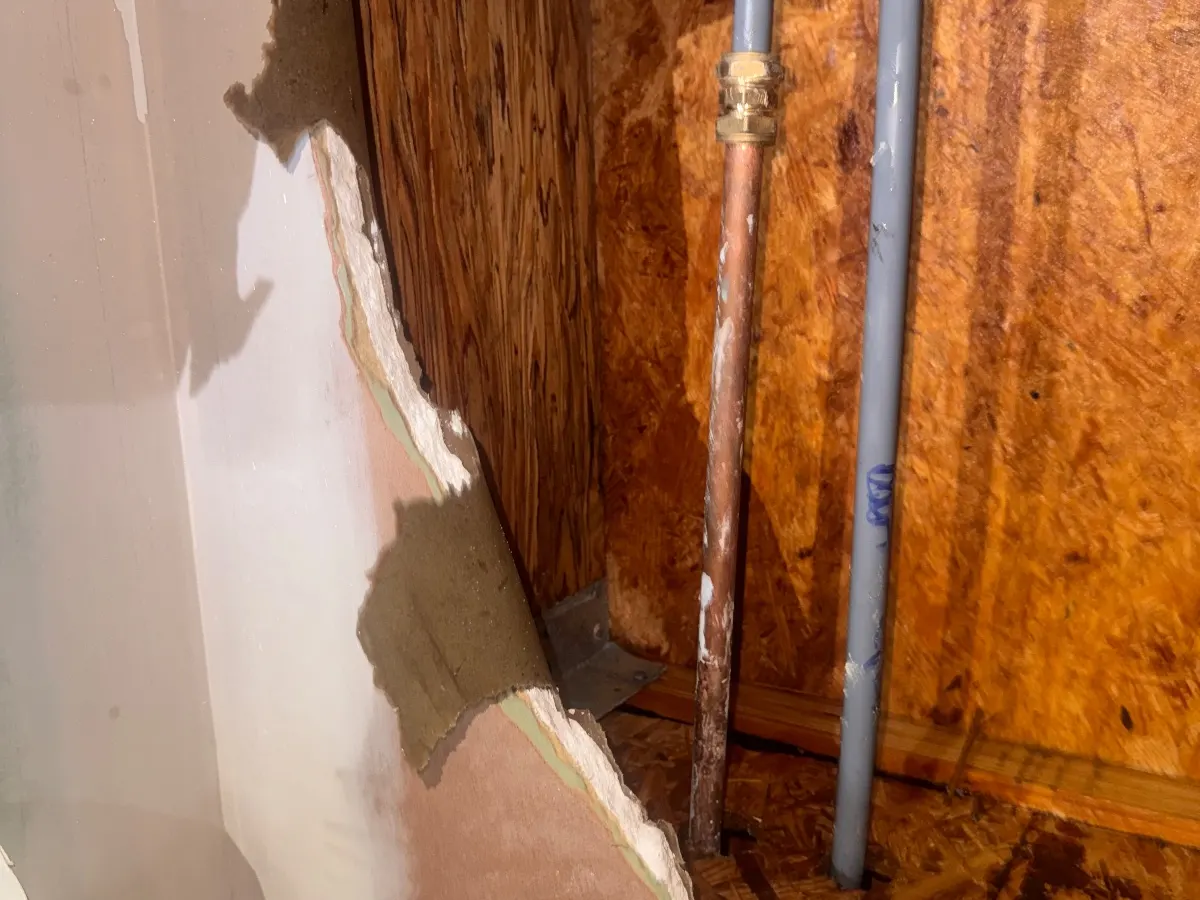
First shut the outside tap’s isolating valve, usually indoors under the kitchen sink or behind the wall. A drip from the spout is a worn washer. A leak at the handle is the spindle seal. Water from the wall or pipe behind the tap, especially after a frost, means a split pipe: keep it isolated until repaired.
Where is your outside tap leaking from?
Outside taps fail in a few predictable places, and the place tells you how urgent it is. Turn the tap fully off, dry it with a cloth and watch it for a minute; if the drip is really coming from a bare pipe end higher up the wall, it is not the tap but an overflow or discharge pipe.
- Dripping from the spout with the tap shut: a worn washer on a traditional tap, or a worn ceramic cartridge on a quarter-turn lever tap. Wasteful but not urgent.
- Water around the handle or spindle when the tap is running: the gland packing or O-ring around the spindle. Usually only leaks while in use.
- Water from the hose connector: a split hose fitting or a worn rubber washer inside the connector, not the tap.
- Water from the back plate, the wall or a joint on the pipe: a failed joint or a split pipe. This is the one that matters, because the same pipe often continues inside a wall or cavity.
- Damp inside the house on the wall behind the tap: the pipe has split where it passes through the wall. Treat it as a leak inside the building.
How to turn off an outside tap properly
Turning the tap handle off does not isolate it. Most outside taps have a separate isolating valve on their supply pipe inside the house. Look under the kitchen sink for a branch heading towards the outside wall, or in a garage, utility room or downstairs cupboard on the other side of the wall. It is usually a small valve with a slot you turn a quarter turn with a flat screwdriver, or a small lever.
Turn the slot or lever across the pipe to shut it, then open the outside tap to let the trapped water drain out. If there is no inside valve, or it will not shut, turn the water off at the main stopcock. How to turn off a stopcock covers stiff ones. A valve that weeps once you move it is a separate small fault; a leaking isolation valve explains why.
If water is coming through an inside wall behind the tap and you cannot stop it at the isolating valve, shut the main stopcock straight away and keep it shut until the pipe is repaired.
Split pipe after a frost: when it cannot wait
The pipe to an outside tap is the most exposed water pipe most houses have. In a hard frost the water left in it freezes and expands. The ice itself holds the leak back, so a split often shows only when the thaw comes and water starts to spray from the pipe, the tap body or somewhere inside the wall.
If you see water from the back of the tap or inside the house after a cold night, isolate it, leave it isolated and get it looked at. A split on the section inside the wall will keep soaking the brickwork and plaster every time the supply is turned on. Our burst pipe emergency repair visit starts with the £60 call-out at any hour, and the repair price is agreed with you on site before any work starts.
Thawing a frozen outside tap safely
If you turn the tap and nothing comes out on a cold morning, it is frozen, usually in the tap body or the short run of pipe through the wall. Before thawing it, check the tap and pipe for splits or bulges. If you find one, shut the isolating valve before the ice melts, so the water has nowhere to go, and leave it shut until the pipe is repaired.
If there is no sign of damage, open the tap so meltwater can escape and warm the tap and pipe gently. A hot water bottle, a towel soaked in hot water or a hairdryer on a low setting all work. Start at the tap end and work back towards the wall. Never use a blowtorch or a heat gun. Sudden heat can crack a brass tap body or melt plastic pipe, and a naked flame against a wall risks setting fire to timber or insulation behind it.
Once water runs, watch the pipe and the wall behind for a few minutes. A slow drip that appears after thawing means the ice has already split something. More on what to do across the house in frozen pipes: what to do.
Fixing a dripping outside tap
On a traditional outside tap with a rising handle, the drip is the jumper washer. With the tap isolated and drained, unscrew the headgear with a spanner while holding the tap body steady, pull the old washer off the jumper and fit a new one of the same size, usually the 1/2 inch size on a standard outside tap. Washers are sold in mixed packs. If the seat inside the tap body is pitted, a new washer will only help for a short while; a new tap is the better fix.
Quarter-turn outside taps use ceramic discs instead. A worn cartridge is replaced as a unit, but cartridges vary by maker, so take the old one with you. As a typical market range, a basic outside tap costs from around £6 to £15, and a full outside tap kit with pipe, valves and backplate around £20 to £30.
A leak at the spindle can often be stopped by tightening the gland nut under the handle an eighth of a turn. If that makes the tap stiff to turn, back it off and replace the O-ring or packing instead. How to stop a tap leaking covers the same parts on indoor taps.
Does your outside tap need a check valve?
Yes. Under the Water Supply (Water Fittings) Regulations 1999, an outside tap needs backflow protection so that dirty water from a hose cannot be drawn back into the drinking water supply. For a tap used for watering a domestic garden or washing the family car with a hand-held hose, the risk is normally classed as fluid category 3, which a double check valve covers.
Water Regs UK guidance says that in homes built after 1 July 1999, the double check valve protecting an outside tap should be fitted inside the property, not on the outside. Taps with a double check valve built into the tap (type HUK1) can only lawfully be used where they were installed before that date. When one needs replacing, Water Regs UK recommends fitting a standard outside tap and moving the double check valve inside, where it is protected from frost. The check valve itself can stick or leak with age, which can show up as a drip on the pipe inside or as a tap that runs slowly.
Stop it happening again next winter
Before the first frost, shut the inside isolating valve, open the outside tap to drain it, and leave the tap slightly open for the winter. Disconnect the hose, because a hose left on holds water in the tap body. Fit an insulated tap cover over the tap and lag any exposed pipe on the outside wall with foam pipe insulation. How to prevent frozen pipes covers the rest of the house, including the loft.
If your outside tap has no inside isolating valve at all, have one fitted with the double check valve next time a plumber is at the house. It turns a future frozen pipe from a flooded kitchen wall into a simple job.
Questions people ask
Why is my outside tap leaking when it is turned off?
A drip from the spout with the tap shut is almost always a worn washer or ceramic cartridge. Water from the back plate or the wall is a different fault: a joint or a split pipe.
Should I leave my outside tap on or off in winter?
Turn it off at the inside isolating valve, then open the outside tap to drain it and leave it slightly open. That way there is no water in the exposed section to freeze.
Can I pour boiling water on a frozen outside tap?
Avoid it. Sudden heat can crack a cold brass tap body. Use a towel soaked in hot tap water or a hairdryer on low, working from the tap back towards the wall.
Who is responsible for a leaking outside tap in a rented home?
In most tenancies the landlord is responsible for the water supply pipes and fittings, including an outside tap. Isolate it, report it in writing and keep a photo.