Emergency help & costs
The 8-Item Plumbing Emergency Kit for Every Home
Published
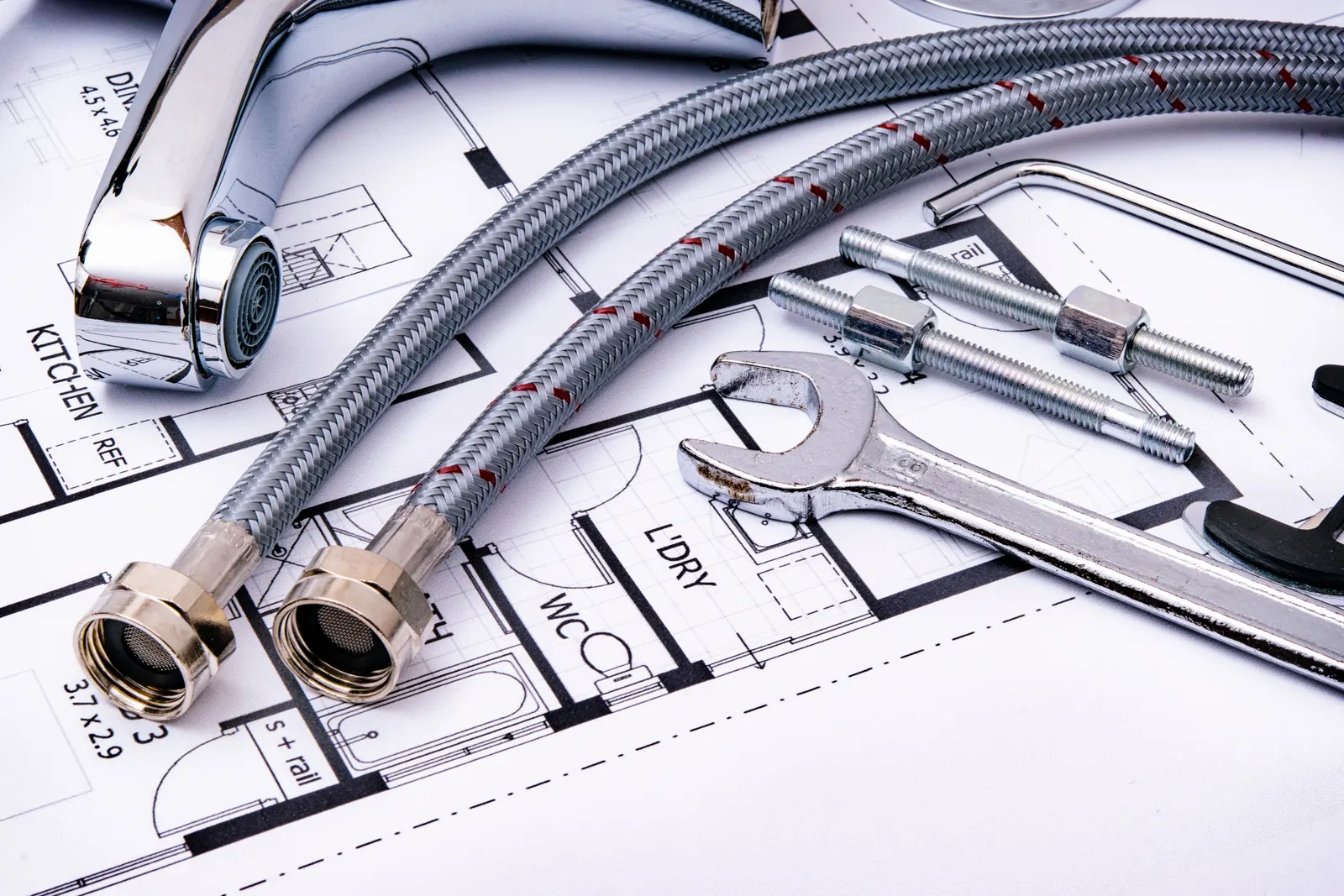
Keep eight things together where you can find them in the dark: a head torch, an adjustable spanner, a stop tap key, self-amalgamating tape, epoxy putty, a pipe repair clamp, a radiator key and a flanged plunger. With them you can stop the water, slow most leaks and hold on until a plumber arrives.
Before any kit: can you turn your water off?
No tape or clamp matters if the water is still running. Find your internal stopcock now, while nothing is leaking. In most houses it is under the kitchen sink, where the mains pipe comes up through the floor. In flats it may be in a hallway cupboard, beside the boiler, or in a riser outside the front door. Where to find your stopcock walks through the usual spots.
Then test it. Turn it clockwise until it stops and check the kitchen cold tap runs dry, then open it again fully and back it off a quarter turn so it does not seize. Stopcocks that have not moved in years often stick or start weeping at the spindle when you finally try them, which is far better to discover on a quiet afternoon than during a burst.
Know where the outside stop tap is too. It is usually under a small metal or plastic cover in the pavement or front garden near your boundary, and it is the only way to stop the supply if the inside stopcock fails.
If your stopcock will not move by hand, do not force it with a long bar. A seized brass stopcock can snap at the body, which turns a stiff valve into a flood. A stopcock that will not turn explains the safer options.
The eight items and what each one is for
Prices are typical ranges from DIY sheds and plumbing merchants, and change with brand and size.
- Head torch (around £10 to £25). Leaks rarely happen in good light, and the stopcock is always at the back of the darkest cupboard. A head torch leaves both hands free.
- Adjustable spanner and a pair of water pump pliers (around £15 to £30 for both). For tightening a weeping compression nut by a quarter turn, closing a stiff isolation valve, or holding one fitting while you turn another.
- Stop tap key (around £10 to £20). A long T-handled key that reaches the outside stop tap under the pavement cover. Buy one that fits both the older crutch-head taps and newer boundary boxes, or a multi-head key.
- Self-amalgamating tape (around £5 to £10). Rubber tape that fuses to itself as you wrap it, making a watertight sleeve over a pinhole or a weeping joint. It is the most useful single item on this list.
- Epoxy putty stick (around £5 to £10). Two parts you knead together into a putty that sets hard on copper, many plastics or a metal tank; check the pack for the materials it bonds to. It seals small holes and cracks where tape cannot grip.
- Pipe repair clamp (around £5 to £15). A hinged metal band with a rubber pad that bolts over a split. Buy the size that matches your pipes, usually 15mm for supply pipes to taps and 22mm for the main runs.
- Radiator key (a few pounds). For bleeding a radiator, and for letting a little pressure off a sealed heating system that has been overfilled. Buy two, because one always goes missing.
- Flanged plunger (around £8 to £15). The kind with a soft sleeve that folds out of the cup, which seals in a toilet outlet. A flat cup plunger is only for sinks and baths.
How to use tape, putty and a clamp on a leaking pipe
Turn the water off first if you can, and drain the pipe by opening the lowest tap. Every one of these repairs works better on a dry, clean pipe, and none of them holds well against full mains pressure while water is pouring out.
For self-amalgamating tape, dry the pipe, then start wrapping a few centimetres to one side of the leak. Stretch the tape hard as you go, overlapping each turn by about half, and carry on a few centimetres past the other side. Pressing the finished wrap in your hand for a minute helps it bond.
For epoxy putty, cut off what you need, knead it until it is one even colour, and press it firmly over the hole, feathering the edges onto clean metal. Leave it to cure for as long as the pack says before turning the water back on. A clamp goes on last or on its own: centre the rubber pad over the split and tighten the bolts evenly, a little at a time on each side.
All three are temporary. They are meant to last until a plumber can cut out the damaged section, which should be days, not months. More on making a stopgap hold is in temporary fixes for a leaking pipe.
Never use tape, putty or a clamp on a gas pipe. If you smell gas, open windows, turn off at the meter if you can reach it safely, leave the torch off until you are outside, and call the National Gas Emergency Service on 0800 111 999.
Where to keep the kit and what to add for your home
Keep everything in one small box or bag next to the stopcock, or in the nearest cupboard to it. A kit in the loft or the shed is no use at 2am. Tape a card to the lid with the gas emergency number, your water company’s leak line, and a note of where the stopcock, the outside stop tap and the consumer unit are, so anyone in the house can act.
Then add what your particular system needs. If you have a combi boiler, keep the filling loop or filling key with the kit, because some boilers use a removable key that goes missing. If you have a hot water cylinder, find and label the valve on the cold feed pipe going into it. A bucket, old towels and a pair of rubber gloves cost nothing extra and get used every time.
A cheap wet-and-dry vacuum is the one larger item worth having if you live in a flat with neighbours below, because it lifts standing water from a floor far faster than towels.
What the kit cannot handle
The kit is for the first half hour, not the repair. Call a plumber straight away if water is coming through a ceiling or a light fitting, if a pipe has split along its length, if the leak is at the stopcock itself so you cannot shut it off, or if hot water is pouring from the pipe that runs from a pressurised cylinder. That last one is a safety valve discharging: switch off the boiler and any immersion heater, keep clear of the hot water, and get an engineer out the same day.
Anything inside the boiler casing is for a Gas Safe registered engineer, not a householder, whatever the leak looks like. For water coming from the boiler itself, turn the boiler off, close the stopcock and call for help.
When you need someone out, our 24-hour plumber covers leaks, bursts and blockages at any hour, and emergency leak repairs takes over where the tape stops. The visit is the £60 call-out, and the repair price is agreed on site before any work starts. For the other two shut-offs worth knowing, see how to turn off water, electricity and gas in an emergency.
Questions people ask
Will PTFE tape stop a leaking pipe?
No. PTFE tape is thread sealant, wrapped around threads before a fitting is screwed together. It does nothing wrapped over a hole. Use self-amalgamating tape or epoxy putty for a leak.
Does self-amalgamating tape work on hot pipes?
Many brands are rated for heating and hot water temperatures, but not all. Check the temperature rating on the pack, and for a heating pipe turn the boiler off and let the pipe cool before you wrap it.
How long does a temporary pipe repair last?
It can hold for weeks, but you should not rely on it for more than a few days. Pressure changes and temperature cycles work it loose, and a failure while you are out causes far more damage than the original leak.
Should I keep spare washers and valves in the kit?
Only if you are confident fitting them with the water off. For most people the eight items above are enough to stop the damage, and a plumber brings the right parts for the actual repair.