Leaks & burst pipes
Leaking Pipe: Temporary Fixes That Actually Hold
Published
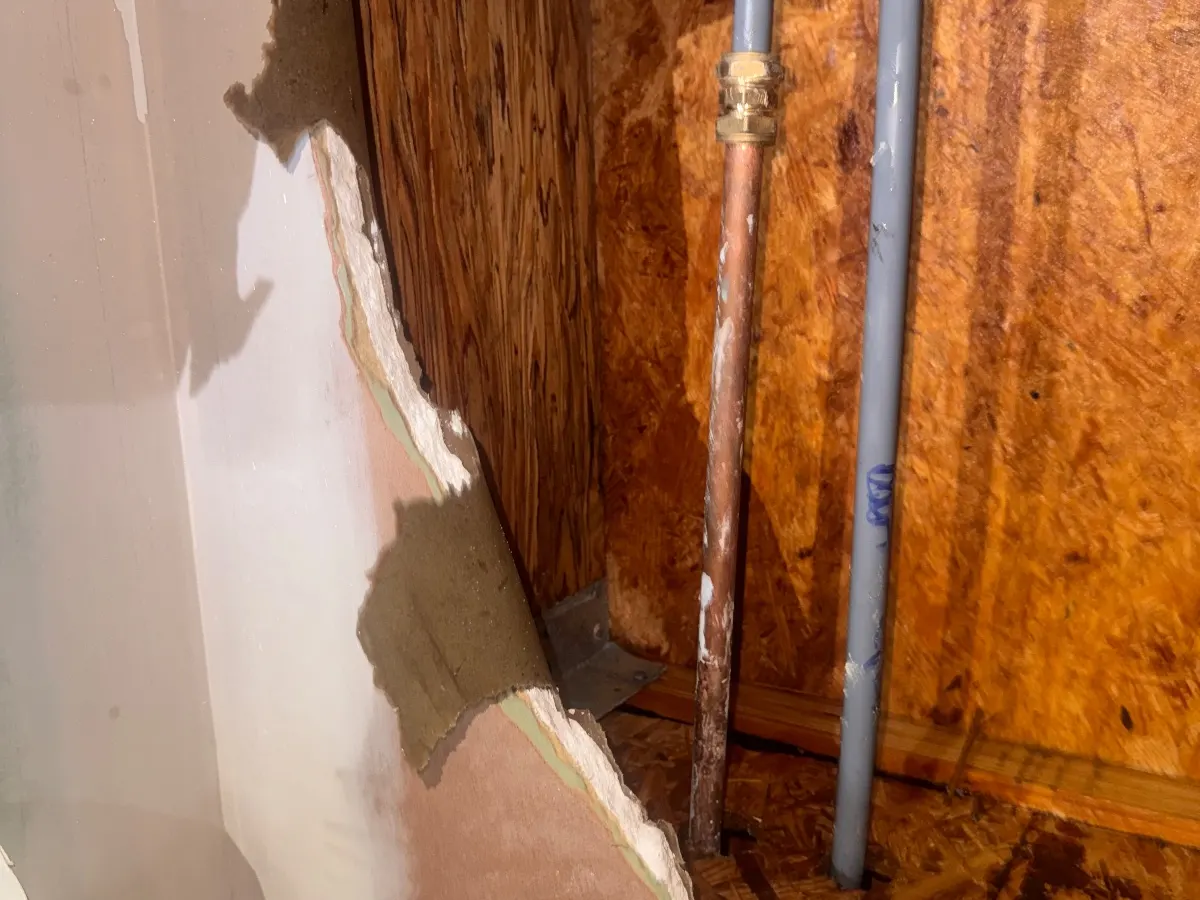
A leaky pipe can usually be held overnight if you match the fix to the leak. A weeping nut often needs a quarter turn. A pinhole takes self-amalgamating tape or epoxy putty on a dry pipe. A split needs a repair clamp. Turn the water off first, and treat any of these as a stopgap, not a repair.
First, where exactly is the pipe leaking?
Every temporary fix works on one kind of leak and fails on the others, so the first job is to look closely. Turn the water off at the stopcock or the nearest isolation valve, open a tap to drop the pressure, then dry the pipe completely with kitchen roll. Turn the water back on briefly and watch where the first bead of water appears. A torch held low along the pipe helps.
You will be looking at one of four things:
- A nut on a joint: water beads at the edge of a brass compression nut. This is one of the most common leaks in a house.
- A soldered joint: water appears at the ring where a copper fitting meets the pipe, often with a green crust.
- A pinhole in the pipe: a fine spray or a single bead in the middle of a length of copper, usually with green or white staining around it.
- A split: a crack along the pipe, most often after a frost or on old lead or thin copper. Water comes out along a line, not a point.
If the water is near sockets, a light fitting or the consumer unit, switch the power off at the consumer unit first, but only if you can reach it standing on dry floor.
A leaking nut: tighten it, but only a little
A compression joint seals with a brass ring called an olive, squeezed between the nut and the fitting body. When it weeps, the nut has usually backed off slightly or the olive has settled. Hold the fitting body still with one spanner and turn the nut clockwise with another, no more than a quarter turn. Using two spanners stops you twisting the pipe and opening another joint further along.
If a quarter turn does not stop it, stop tightening. Over-tightened olives crush and leak worse, and a plumber then has to cut the pipe back to fit a new one. A drip tray and a towel will do until the fitting is remade. If the leaking joint sits on a valve rather than a straight connector, see a leaking isolation valve, because the spindle seal is a different problem.
Push-fit joints, the plastic ones with a grey or white collar, cannot be tightened. A weeping push-fit usually means the pipe was not pushed fully home or the pipe insert is missing. Turning the water off and leaving it off is the only safe temporary fix.
A pinhole or weeping solder joint: tape or putty
Self-amalgamating silicone tape is the best overnight fix for a pinhole on copper or plastic. It has no adhesive; it fuses to itself when stretched. With the water off and the pipe dry, start a few centimetres to one side of the hole, stretch the tape to about twice its length and wind it with each turn overlapping the last by half, finishing a few centimetres past the hole. Several layers hold far better than one. A roll usually costs well under £10 at a DIY store.
Epoxy putty for plumbing comes as a two-part stick that you knead until the colour is even, then press over the leak. It sets hard and works well on a pinhole or a weeping soldered joint where tape cannot wrap neatly. Check the pack for the cure time before you turn the water back on; turning it on early is the usual reason it fails. Some putties are sold as safe for drinking water pipes; if the leak is on a cold pipe feeding the kitchen tap, pick one of those.
Ordinary PTFE tape, duct tape and insulation tape do nothing on the outside of a pressurised pipe. PTFE is a thread sealant for inside a joint, not a wrap. Duct tape just directs the spray.
A split pipe: clamp it or leave it off
A split cannot be taped reliably because the pipe moves as pressure comes back on. A pipe repair clamp is the right temporary part: two metal half-shells with a rubber liner that bolt around the pipe. Buy the size that matches your pipe, which in most homes is 15mm for supplies to taps and 22mm for the main runs. They are cheap and sold in most hardware shops, but you need one before the shops shut.
Centre the rubber over the split, bolt the clamp up evenly on both sides and turn the water on slowly. If it still weeps, tighten the bolts a little more. A clamp on a frozen pipe that has split should only go on once the pipe has thawed, because the ice may have cracked it in more than one place. Our page on what to do when a pipe bursts covers the bigger picture if the water is pouring.
If you have no clamp, the safe option is to leave that section isolated. On the cold mains side that means no water until it is fixed; on a heating pipe it means the boiler stays off.
How long will a temporary fix last?
Treat none of these as a permanent repair on a mains supply: the pipe behind them is still damaged. As a rough guide, tape on a pinhole can hold for days or weeks if nothing disturbs it, putty for longer, and a clamp for weeks. A pinhole usually means the copper has thinned from the inside, and the next pinhole is often a short distance away.
Treat the fix as a way to get water back on tonight, not as the repair. Check it morning and evening with a dry tissue, keep a tray underneath and do not leave a patched pipe running unattended while you are away. If the leak is on a pipe you cannot see, such as under a floor or inside a wall, no surface fix will help. Signs of a hidden leak explains what to look for.
When a temporary fix is the wrong call
Some leaks should be isolated and left for a plumber, however handy you are with tape:
- Lead pipe, which is dull grey and shows bright silver when scratched with a key. Isolate it and leave it; lead needs replacing, not patching.
- Anything on or near the gas pipe, or inside the boiler casing
- A leak on a hot water cylinder or the pipes around an unvented cylinder with a pressure relief valve
- Water coming from a joint that has already been taped or patched once
- A pipe that has frozen and burst in more than one place
If you smell gas at any point, put the tools down, open windows, shut the gas off at the meter if it is safe to, use no switches, and call the National Gas Emergency Service on 0800 111 999 from outside.
What the permanent repair involves
A plumber cuts out the damaged length and joins in new pipe with compression, soldered or push-fit fittings, or remakes the leaking joint with a new olive. On a pinhole, they will usually check the pipe either side for thinning before deciding how much to replace. It is typically a short job once the water is off and the pipe is reachable; most of the time on a hidden leak goes into getting to it.
If you would rather not rely on tape overnight, leak repairs cover exactly this. The £60 call-out applies at any hour, and the repair price is agreed with you on site before any work starts.
Questions people ask
Does tape stop a leaking pipe?
Self-amalgamating silicone tape can hold a pinhole on a dry pipe for a while if you stretch it and wrap several overlapping layers. PTFE, duct and insulation tape do not work on the outside of a pressurised pipe.
Can I use a temporary fix on a pipe under pressure?
Tape and putty only bond properly to a dry pipe, so turn the water off, open a tap and dry the pipe first. A repair clamp can go on a wet pipe, but it is still easier and safer with the water off.
Is it safe to leave a leaking pipe overnight?
A slow drip into a tray, well away from electrics, is usually fine overnight if you check it. A spray, a steady flow or water reaching sockets or a ceiling is not: turn the water off at the stopcock and leave it off.
Why does my compression joint still drip after tightening?
The olive inside is probably crushed or seated badly. More tightening makes that worse. The joint needs remaking with a new olive, which means cutting the pipe back slightly.