Toilets, taps & fixtures
Toilet Cistern Overflowing Into the Bowl or Outside
Published
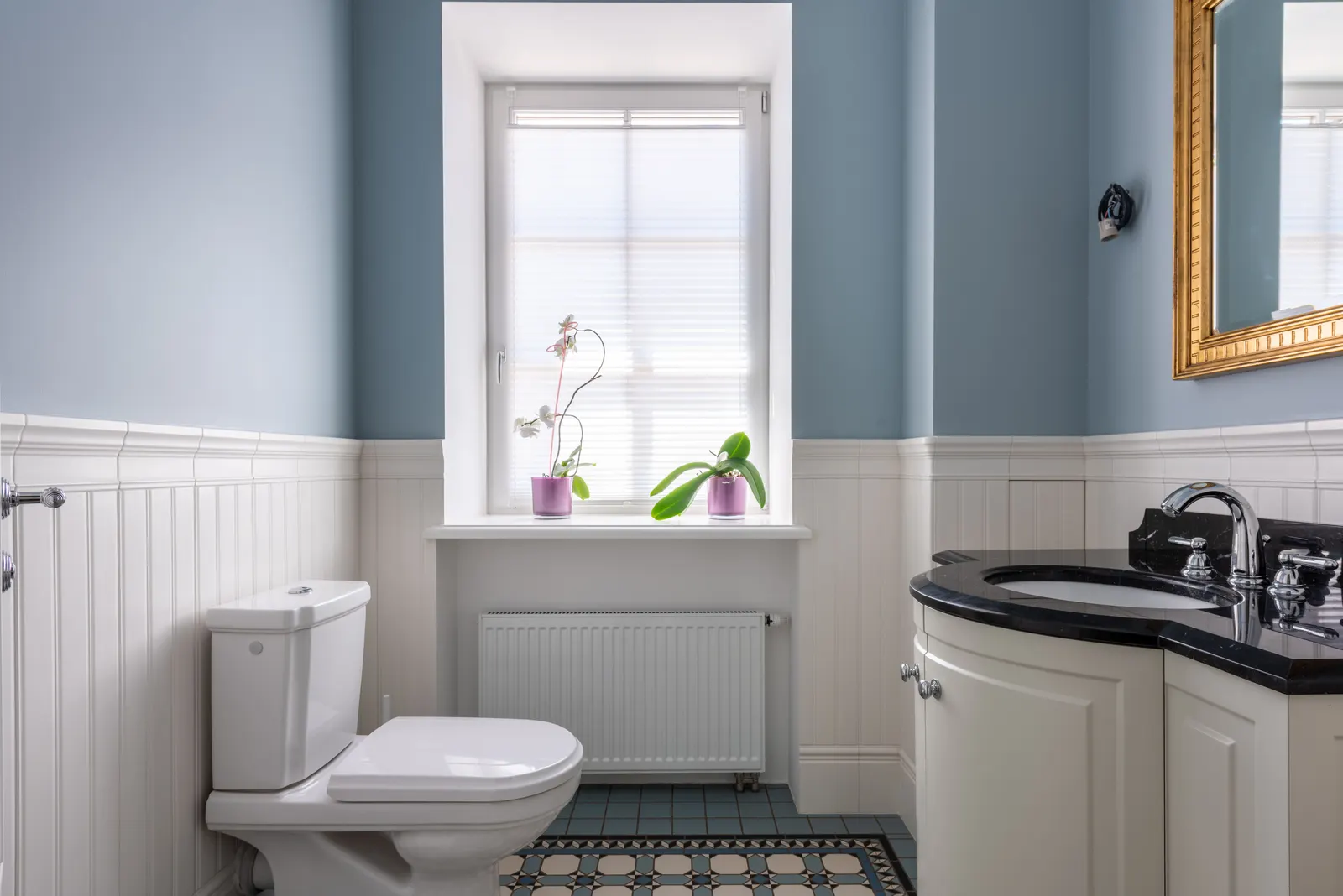
A cistern overflows because the fill valve keeps letting water in after the level is reached. Normally the excess escapes down the overflow into the bowl or out through a pipe in the wall. If water is coming over the rim onto the floor, the overflow route has failed too: turn the isolation valve off now.
Which way is your cistern overflowing?
An overflowing cistern always has the same root cause, a fill valve that does not close, but where the water ends up decides how urgent it is. Lift the lid and look before you do anything else. There are three routes, and each one needs a different response.
The first is into the bowl. Most modern toilets have an internal overflow: a plastic tube built into the flush valve, standing upright in the middle of the cistern. Water that rises above its top runs down inside the flush valve and appears as a thin, constant trickle down the back of the pan. It wastes water and makes the valve hiss, but nothing gets wet that should not.
The second is outside. Older toilets, and some newer ones plumbed into old pipework, have a warning pipe that leaves the side of the cistern and runs through the wall. A cistern overflowing this way drips or runs from a small pipe outside, usually at about cistern height. The detailed fix for that version is in toilet overflow pipe leaking outside.
The third is over the rim, and it is the one that causes damage. If the water level is above the overflow and still rising, or you can see water on the floor, on the back of the pan or running down the wall below the cistern, both the valve and the overflow have failed. That needs stopping now, not in the morning.
Water coming over the top: stop it now
Work through these in order. The first one usually ends it, and none of them needs more than a flat screwdriver.
- Find the isolation valve on the pipe feeding the cistern, usually low down on the wall or just under the cistern. Turn the slot a quarter turn so it sits across the pipe. If it has a small handle, turn that across the pipe instead.
- If there is no isolation valve, or it will not move, lift the float or the float cup by hand and hold it up. On most valves this stops the flow while you get to the stopcock.
- Turn the water off at the main stopcock, normally under the kitchen sink or where the supply enters the house. See how to turn off a stopcock if you cannot find it.
- Flush once. That drops the water well below the rim and takes the pressure off any wet joints.
- Mop up and check the room below. Water over a cistern rim runs down the back of the pan and under the flooring surprisingly fast.
If water has reached a light fitting, a shaver socket or the ceiling of the room below, switch that circuit off at the consumer unit before you touch anything wet, as long as you can reach the consumer unit without standing in water. A bulging, sagging ceiling needs a bucket under it and people kept clear; our guide to a ceiling leak below a bathroom covers what to do next.
Why did the overflow not catch it?
A cistern that spills over its rim tells you two things are wrong, not one. Every flushing cistern in England and Wales must have a warning pipe or "a no less effective device" under paragraph 25 of Schedule 2 to the Water Supply (Water Fittings) Regulations 1999. That device is there precisely so a failed valve never floods the room. When it does, look for one of these.
- A blocked or capped warning pipe. Pipe ends outside get blocked by ice in winter, by a wasps' or birds' nest, or by a decorator who sealed over a pipe they thought was redundant.
- An internal overflow tube set too high or missing. Some flush valves have a height-adjustable overflow tube, and if it has been set at or above the rim of the cistern it cannot work.
- More water coming in than the overflow can carry. A fill valve fitted with a low-pressure seat on a high mains supply can deliver a flow that a small internal overflow cannot drain fast enough, especially at night when street pressure is highest.
Why will the fill valve not shut off?
Once the water is off, find out why the valve failed. Turn the isolation valve back on a little with the lid off and watch the float as the cistern fills.
If the float rises and then catches on something, the valve is fine. Floats snag on the cistern wall, on the lever link of an older siphon, on button rods from a lid refitted slightly off, or on insulation stuffed in to stop condensation. Free it and the fault is gone. If the float rises freely but the water keeps coming, press it up gently by hand. The flow stopping means the float is set too high; the flow continuing means the valve is not sealing.
A valve that does not seal usually has one of three problems. Grit or limescale sits on the seal, which is common after mains repairs in the street stir up sediment. The rubber washer or diaphragm inside has hardened or split with age. Or, on an older float valve, the float itself has a crack and has partly filled with water, so it no longer lifts with enough force. Shake a ball float: if it sloshes, replace it.
Many traditional ball valves made to BS 1212 take interchangeable high- and low-pressure seats, and the wrong one for your supply is a surprisingly common cause of repeat overflows. Our guide to a toilet refill valve leaking goes through cleaning, adjusting and replacing the modern bottom-entry valves in more detail.
Overflowing into the bowl: how urgent is it?
If the water is going down the internal overflow and nowhere else, this is a waste problem, not a flood. You can use the toilet normally, and you can stop the waste overnight by turning the isolation valve off after each refill.
Make sure it really is the overflow and not a leaking flush valve seal, because the two look identical from the bowl. Take the lid off and look at the water level. If it is right at the top of the overflow tube, the fill valve is overfilling. If it is well below the tube and the cistern still slowly empties into the pan, the seal at the bottom of the flush valve is the culprit, which is covered in toilet leaking into the bowl.
Do not leave it for weeks on a water meter. A cistern topping itself up round the clock can easily move the meter with every tap in the house shut.
What an engineer does, and typical costs
An engineer first makes the overflow route work again, because that is the safety net. They check the warning pipe runs clear to the outside, or that the internal overflow tube is intact and set below the rim. Then they test the fill valve at your actual mains pressure, and either service it, fit the correct pressure seat, or replace it with a valve matched to the cistern's inlet position. The last step is setting the water line and checking the isolation valve still turns, because an old one often weeps once it has been used.
Across the London market, clearing an overflow fault and replacing a standard fill valve typically falls between about £80 and £150, with more for concealed cisterns behind boxing or a wall-hung frame. With us the visit is a £60 call-out at any hour, and the repair price is agreed with you on site before any work starts. If water is still getting past the valve or you cannot reach the cistern, book a toilet repair.
Questions people ask
Is an overflowing toilet cistern an emergency?
Only when water is going over the rim or the overflow pipe is blocked. Then turn the isolation valve or stopcock off straight away. A cistern that overflows neatly into the bowl or out through the warning pipe is a waste problem you can isolate and have fixed at a convenient time.
Why does my cistern only overflow at night?
Mains pressure in the street rises overnight when demand falls. A tired valve washer that just holds during the day lets water creep past at the higher pressure, so the level rises while you sleep.
Can I keep using the toilet with the water turned off?
Yes. Flush it, then open the isolation valve until the cistern refills to the normal level and close it again. You can also flush with a bucket of water poured briskly into the bowl.
Should I seal up the overflow pipe outside to stop the drip?
No. A warning pipe, or an equally effective overflow, is a legal requirement for a flushing cistern, and it is what stops a failed valve from flooding the bathroom. Fix or replace the fill valve instead.