Leaks & burst pipes
Ceiling Leaking Below the Bathroom
Published
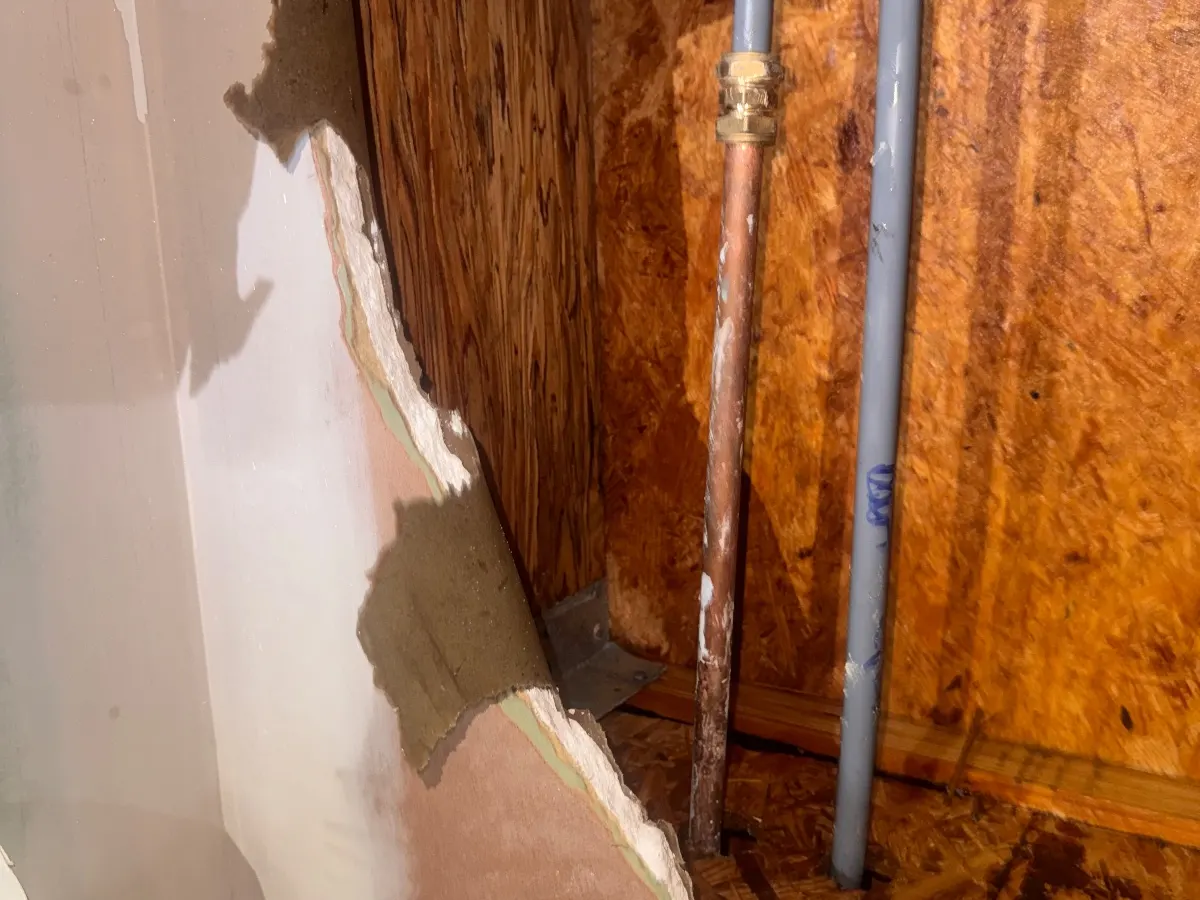
A leak in the ceiling below a bathroom usually comes from a failed shower or bath seal, a loose waste joint, the toilet’s pan connector, or a pressurised pipe under the floor. If it drips only when the bathroom is used, suspect a seal, waste or toilet. If it drips all the time, it is a pipe.
Make it safe before you look for the cause
Water in a ceiling and electricity share the same space. If water is dripping from a light fitting, a ceiling rose or a downlight, or anywhere near one, switch off the lighting circuit at the consumer unit, as long as the unit is dry and you are not standing in water, and do not touch the switch in the room. Use a torch.
Look at the ceiling itself. A small brown ring is not urgent. A bulge or a sagging patch means water is pooling on top of the plasterboard. Put a bucket underneath, stand to one side and make a small hole in the lowest point with a screwdriver so the water drains in a controlled way instead of bringing a whole board down.
Then stop the flow at the source. If the drip is constant, turn off the water at the stopcock. If it only started after someone used the shower or bath, simply stop using that bathroom until you have done the tests below.
If water is coming through a light fitting, treat the circuit as unsafe until an electrician has checked it, even after it dries.
Constant drip or only after use? The test that narrows it down
This one question sorts the causes into two groups, and it costs nothing to answer.
If the ceiling drips day and night, with nobody using the bathroom, water is escaping from a pipe that is always under pressure: the cold mains, the hot supply, or a heating pipe to a radiator or towel rail. If the leak is on the heating side of a combi or system boiler, the boiler loses pressure too. Look at the gauge on the front: a drop below 1 bar over a day or two points to a heating pipe.
If the drip appears only during or shortly after a shower or bath, the water is coming from something that only has water in it when in use. That points to a seal, a waste pipe, or water getting behind tiles.
For a constant leak, turn off the stopcock and see whether the drip slows over the next hour. If it does, the leak is on a mains-fed pipe: the cold supply, or the hot supply on a combi or unvented cylinder. If you have a cold water tank in the loft, the pipes it feeds stay live after the stopcock is closed, so close the gate valve on the tank outlet as well. A leak that carries on with the water off and the boiler losing pressure is on the heating circuit, which holds its own pressure.
Finding the leak when it only drips after a shower
Work through the bathroom in this order, one item at a time, with someone downstairs watching the ceiling. Allow ten minutes between tests so you know which one caused the drip. A head that drips into the tray after the shower is off is not the culprit, because that water goes down the waste; it is a shower valve letting water through to the head.
- Shower head only, aimed down the middle of the tray or bath, away from the walls and screen. A drip now means the waste trap or its joint under the tray is leaking.
- Shower aimed at the tiled walls. A drip now means water is getting through grout or failed silicone at the tile edge.
- Shower aimed at the screen or curtain line. A drip now means the screen seal or its bottom seal is letting water over the edge.
- Fill the basin, then pull the plug. A drip now points to the basin waste or the trap under it.
- Flush the toilet a few times. A drip now points to the pan connector at the back of the toilet, or the cistern-to-pan seal on a close-coupled toilet; a toilet leaking from the base has the tests that tell those apart.
- Run the bath and let it drain. A drip now means the bath waste, overflow or trap.
The usual culprits, roughly in order of how often they turn up
Silicone and grout come first. Shower trays and baths move slightly under weight, which splits the silicone along the back edge. Water runs down behind the tray and onto the floor void. It often takes weeks to show on the ceiling, so the stain can be bigger than the leak sounds. Resealing needs the old silicone cut out completely, the joint dried for a day and the bath filled with water while the new bead cures, so it sits at its loaded position.
Next is the shower tray or bath waste. The large nut under the tray compresses a rubber washer, and trays that flex loosen it. On a low tray the trap is only reachable from below or through an access panel. Leaks at the bath overflow are similar: the overflow sealing washer fails and water runs out only when the bath is filled close to the top.
Then the toilet. The pan connector, the flexible rubber or plastic sleeve that joins the back of the pan to the soil pipe, can crack or pull loose when the pan moves. That leak shows only when flushing and it is unpleasant water, so deal with it quickly. See a leaking toilet pan connector for how to spot it.
Least often, but most urgently, a supply pipe or a compression fitting on the pipework under the floor. Pipes to a bathroom run through the joists, so a failing joint there drips constantly. Our guide to leaking pipe joints covers compression and soldered joints.
When it cannot wait until morning
Call someone out tonight if the drip is constant and does not stop at the stopcock, if the ceiling is bulging, if water is near any electrics, or if the bathroom is above a neighbour’s flat. A slow drip from a failed seal can usually wait for a daytime visit, as long as nobody uses that shower or bath until it is fixed.
For water already coming through, emergency ceiling leak repair is the right starting point. You pay the £60 call-out at any hour, and the repair price is agreed with you on site before any work starts.
What the engineer does, and typical costs
The engineer repeats the use tests with a moisture meter on the ceiling and often a thermal camera, which shows hot water leaks as warm streaks. If the cause is still unclear, they lift a floor panel or the bath side panel rather than opening the ceiling, because the leak is fixed from above.
As typical market ranges, resealing a bath or shower tray is usually a small job, often under £150. Tightening or replacing a waste trap, or fitting a new pan connector, generally costs somewhere between £100 and £250 including parts. Repairing a pressurised pipe under the floor costs more when floorboards or tiles have to come up. The ceiling repair below is separate: a small patch is a plasterer’s morning, but a board that has collapsed needs replacing, skimming and painting.
Keep photos of the stain, the source and the repair. Most home insurers cover the ceiling damage from a sudden escape of water, but not the gradual wear of a failed seal. For the wider list of causes in any room, see emergency leak repairs.
Questions people ask
Why does my ceiling only leak when I have a shower?
Because the water is coming from something that is only wet in use: split silicone, porous grout, the screen seal or the shower waste. Test each in turn by aiming the shower at one area at a time.
Can I keep using the bathroom if the ceiling below is leaking?
Use the toilet and basin if they are not the cause, but stop using the shower or bath until the leak is found. Every shower adds water to the ceiling void and makes the damage worse.
Will the ceiling dry out on its own?
A small stain from a leak that has stopped usually dries in a week or two with good ventilation. Use a stain-blocking primer before repainting. A soft, bulging or crumbling board needs replacing.
Is a leak from the bathroom above covered by insurance?
Damage from a sudden escape of water usually is. Gradual leaks from worn seals and grout are often excluded, so report it early and keep evidence of when it started.