Hot water problems
Water Heater Working but No Hot Water
Published
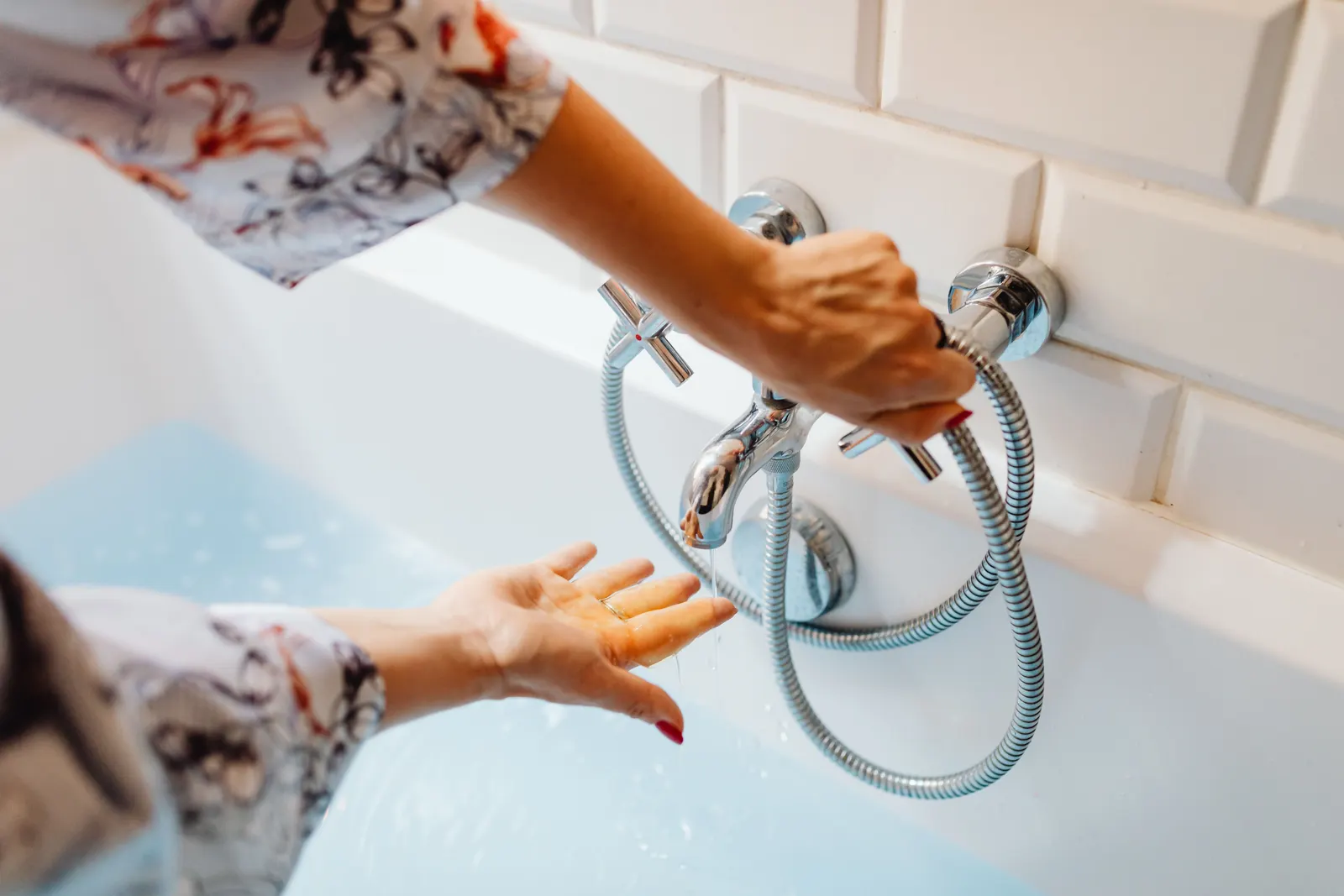
If your water heater is working but there is no hot water at the taps, the heat is being made but not reaching you. On a combi that is usually the diverter valve or low flow; on a cylinder, a stuck motorised valve or programmer setting; on an electric heater, a tripped cut-out. Start by checking which taps are affected.
First: is it every hot tap, or just one?
This single check halves the problem. Run the kitchen hot tap, then a basin, then the shower, for a full minute each.
- One tap or the shower only runs cold: the heater is fine and the fault is at that outlet, usually a mixer cartridge, a thermostatic shower valve or a blocked isolation valve. See no hot water to the shower only.
- Every hot tap runs cold, or hot for a moment then cold: the fault is in the heater or between the heater and the pipes. Keep reading.
- Hot taps barely run at all, hot or cold: that is a supply or flow problem, not a heating one. On a system with a loft tank, check the tank has water in it.
Combi boiler: lit, heating works, taps stay cold
A combi can look perfectly healthy, with hot radiators and no fault code, while the taps run cold, because the parts that switch it over to hot water only work when a tap is open. Open the hot tap fully first, since a gently run mixer or a clogged aerator may never reach the minimum flow a combi needs to fire. If that changes nothing, the tap test in heating on but no hot water points to the flow sensor, diverter valve or plate heat exchanger, all of which sit inside the casing and are engineer work.
Cylinder system: boiler running but the tank is cold
With a hot water cylinder, the boiler heats a coil inside the tank through a motorised valve. Heating can work perfectly while that valve refuses to open for the cylinder, so the boiler runs and the radiators get hot but the stored water never warms up. Feel the pipes: if the pipes at the boiler are hot but the pipe going into the coil at the cylinder is cold, the valve is the prime suspect.
- Check the programmer shows hot water on, and try boost or advance. After a power cut, many programmers lose their times or revert to off.
- Check the cylinder thermostat, the small dial strapped to the side of the tank. It should be around 60°C. Turn it up briefly and listen for a click; no click can mean a failed stat.
- Find the motorised valve, a small box on a brass valve body near the cylinder or boiler. Most have a manual lever. With the boiler already firing, moving the lever to manual open and seeing the cylinder pipe warm up within a few minutes shows the valve body is free and the fault is in the actuator head or the signal reaching it.
- Check the immersion as a backup. If it heats the cylinder, the tank and taps are fine and the fault is on the boiler side. The guide to immersion on but still no hot water covers the opposite case.
- On a vented system, look in the loft tank. If it is empty, hot taps will splutter or stop, however hot the cylinder is. A stuck float valve is the usual cause.
Hot cylinder, cold taps: the problem between them
Sometimes the tank is too hot to touch and the taps still run cold or lukewarm. That means hot water is leaving the cylinder but being cooled or blocked before it arrives.
On unvented cylinders, some installations have a thermostatic blending valve on the hot outlet that mixes in cold water to a safe temperature. If its cartridge fails or scales up, it can send out mostly cold water. Mixer taps and showers with failed non-return valves can also push cold mains water into the hot pipe, so the hot side of the house fills with cold water whenever a tap is open. The clue is that the hot tap runs cold even though the pipe coming off the top of the cylinder is hot.
On a vented cylinder, an airlock after draining or a repair can stop flow to the upper floors. Opening the hot taps one at a time sometimes shifts it; if not, a plumber can push it through using mains pressure. If the problem is that the tap runs hot briefly and then turns cold, read hot water runs cold after a minute.
Electric water heaters and immersion heaters
Under-sink and over-sink electric heaters, and electric showers, have a thermal cut-out that trips if the element overheats, usually after a low-flow or scale problem. The unit may still show a power light while the element is off. The reset is usually behind the cover, next to live terminals, so the circuit must be isolated at the consumer unit before anyone touches it. If you are not confident doing that, leave it to an electrician. Treat a trip that repeats as a fault rather than something to keep resetting.
An immersion heater with the neon on at the switch but a cold cylinder usually has a tripped thermostat cut-out or a burnt-out element. The guide to resetting an immersion heater walks through the safe way to do it once.
When it cannot wait, and what the engineer does
No hot water is rarely dangerous, but it becomes urgent when there is a baby, someone elderly or unwell, or someone who needs to wash for medical reasons. It also becomes urgent if the cylinder is very hot while the taps run cold and you hear banging, or if water is running into the tundish by the cylinder. In that case switch off the boiler and immersion.
On a combi the engineer will check the flow sensor reading, the diverter valve movement and the plate heat exchanger for scale. A diverter cartridge and a flow sensor are common parts, often changed in one visit when the part is to hand. On a cylinder system they test the programmer output, the cylinder stat and the motorised valve microswitch. Many motorised valve actuator heads can be swapped without draining the system, which keeps the job short. Gas work is carried out by Gas Safe registered engineers.
The repair price is agreed with you on site before any work starts. The call-out is shown on our pricing page, and you can book through no hot water repair.
Questions people ask
Why is my boiler on but no hot water comes out?
On a combi, the diverter valve or flow sensor is the usual cause. On a cylinder system, the motorised valve to the cylinder or the programmer setting is. The boiler can be working perfectly for the heating either way.
Why is my hot water tank hot but the taps cold?
A failed thermostatic blending valve, cold water crossing into the hot pipe through a faulty mixer, or an airlock on a vented system. Check whether one tap or all taps are affected first.
Can low water pressure stop a combi giving hot water?
Yes. A combi needs a minimum flow through the tap before it fires. Low mains flow, a blocked aerator or a part-closed isolation valve can keep it below that point.
How do I know if my motorised valve is stuck?
With hot water called for and the boiler running, the pipe into the cylinder coil stays cold. If moving the valve’s manual lever to open makes that pipe warm up, the valve body is free and the actuator head, or the power reaching it, is at fault.