Leaks & burst pipes
Water Leaking From an AC Unit Indoors
Published
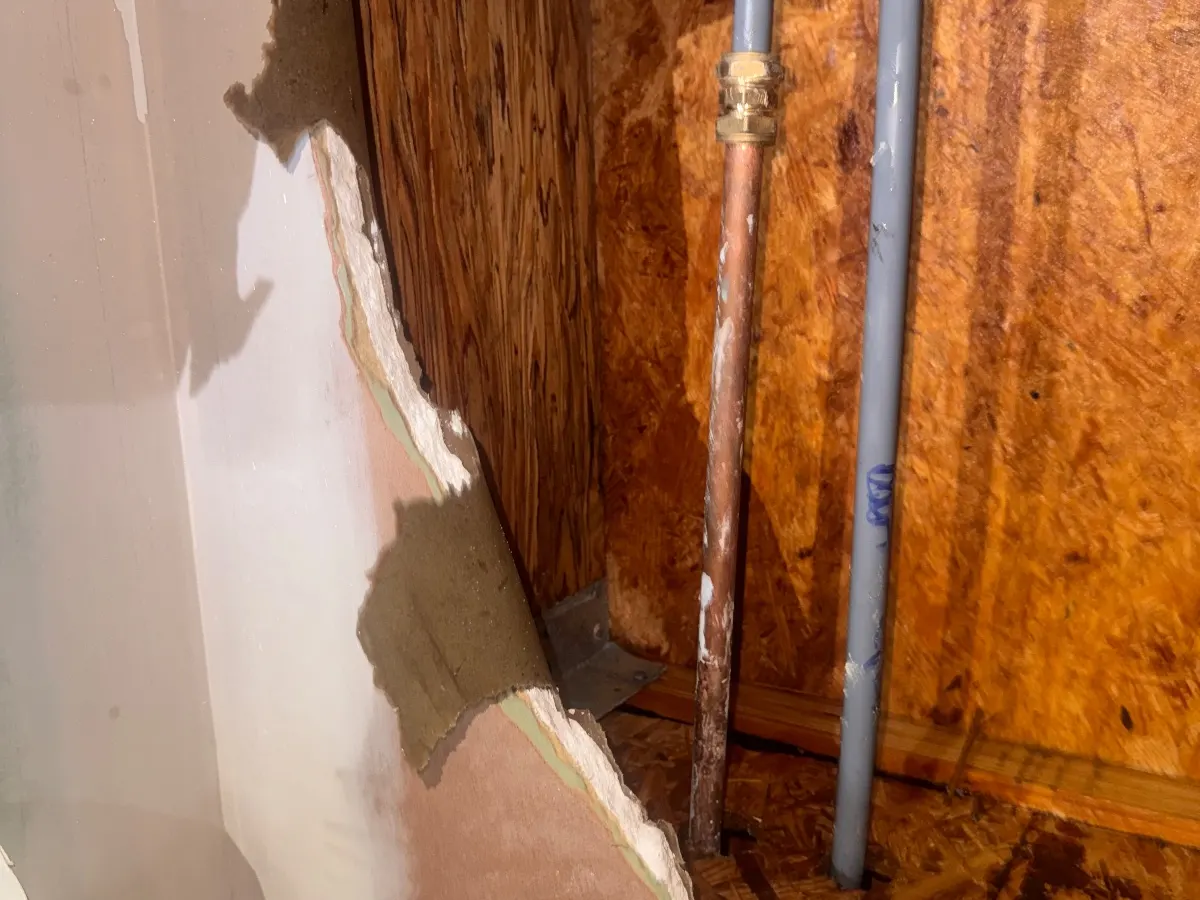
Water leaking from an indoor AC unit is almost always condensate that cannot get away. The usual causes are a blocked drain line, a failed condensate pump, a coil that has iced over because of a dirty filter or low refrigerant, or a unit that is not level. Switch it off, catch the drips and check the filter first.
Why is my AC unit leaking water inside?
An air conditioner cools a room by blowing warm air across a cold coil inside the indoor unit. Moisture in that air condenses on the coil, drips into a tray underneath and leaves through a small plastic drain pipe. On a humid London summer day a wall-mounted unit can make several litres of water. When any part of that path fails, the tray overflows and the water comes out of the front or bottom of the unit and runs down the wall.
So the water itself is clean and cold, not refrigerant and not mains water. That matters for two reasons. It will not harm you, and it tails off once the unit stops cooling, though an iced coil can keep dripping for a few hours as it thaws. If water keeps appearing long after any ice has gone, it is not the AC. Look instead at pipes above or behind it, and read how to spot a hidden leak.
Refrigerant escaping into a room turns straight to gas at normal air pressure. A refrigerant leak does not drip; it shows as poor cooling, ice on the pipes, a hiss at the joints or an oily mark at a flare fitting.
If water is running into a light fitting, socket or switch, do not touch that fitting or the isolator next to it. Turn the power off at the consumer unit (fuse box) instead, if you can reach it from a dry floor with dry hands. If you cannot, keep everyone out of the room and call an electrician.
What to check first, in this order
Work through these in order. Each one rules out a cause without opening the unit or touching the refrigerant pipes.
- Switch the unit off at the remote, and at its isolator if the isolator and the wall around it are dry, then put a bowl or towels under the drip. If ice is visible on the coil behind the front flap, leave the unit off for two to three hours so it thaws into the tray rather than onto the floor.
- Lift the front panel and slide out the mesh filters. A grey, felted filter starves the coil of warm air, the coil drops below freezing, ices up and then floods the tray when it melts. Rinse the filters in lukewarm water, let them dry fully and refit them.
- Follow the drain pipe outside or to where it joins the waste. Pull it clear of anything blocking the end: leaves, a spider nest, a kink behind the unit, or an end that has ended up sitting in a puddle or a full gully.
- Check the unit is level with a spirit level on its top edge. It should fall very slightly towards the side the drain leaves from. A unit tipped the wrong way fills one end of the tray and spills over it.
- If you can hear a small pump clicking or humming near the unit, or in the trunking below it, the unit has a condensate pump. Silence while the tray is full usually means the pump has failed.
Do not pour drain cleaner, solvents or neat bleach into the unit or the drain line. They can damage the pump, seals and coil. Do not unscrew any pipe that is insulated: those are the refrigerant lines.
Is the AC drain line blocked?
The most common cause is slime. Algae and bacteria grow in the warm, wet tray and drain, especially in a unit that has not been serviced, and form a jelly that blocks the outlet. A second cause is the pipe itself. A condensate line has to fall all the way from the unit to where it discharges. Where an installer has run it along a skirting board with a dip, or up and over a door frame, water sits in the low point and backs up.
An engineer clears the outlet and flushes the line, then checks the fall along its whole length. Where the line was never going to work, for example a flat run through a ceiling void, the fix is to re-route it with a proper fall or to fit a pump.
Where the condensate joins the building waste, it should do so through a trap or a waterless valve such as the HepvO type. A plain open connection lets drain smells back into the room, and a water trap under a unit that only runs in summer can dry out over winter. A misjudged connection to the waste pipe is also a common cause of drips in the cupboard below rather than at the unit.
AC condensate pump not working
Units that cannot drain by gravity, such as ceiling cassettes in flats and offices, and wall units on an internal wall, rely on a small condensate pump. Common makes are Aspen, with its Mini Orange and Mini Lime ranges, and Sauermann. The pump sits in the trunking, in the ceiling void or inside the unit, with a small reservoir and a float that switches it on.
Pumps fail in three ways. The float sticks in slime so the pump never starts. The motor burns out and the reservoir overflows. Or the non-return valve on the outlet leaks so water runs back. Many pumps have a high-level safety switch wired to cut the AC when the reservoir is about to overflow. If that switch was never connected, the unit keeps cooling and the reservoir floods the ceiling. That is how a cassette unit ends up bringing water through the ceiling of the room below, or through the flat downstairs.
Pump parts are cheap compared with the labour of getting to them. The work is cleaning the reservoir and float, testing the pump, replacing it if it has failed, and checking that the safety switch is wired so it stops the unit before the tray overflows next time.
Ice on the AC pipes or coil: a refrigerant leak?
If the water comes in bursts, often an hour or so after the unit has been running hard, the coil is freezing and thawing. With clean filters the likely cause is low refrigerant, and low refrigerant means there is a leak somewhere in the circuit. Topping it up without finding the leak only delays the next call.
This is not plumbing work. In Great Britain anyone who opens a refrigerant circuit, recovers or recharges refrigerant must hold an F gas certificate covering that work. A plumber can deal with the water side: the drain, the pump, the waste connection and any damage the water has done. The refrigerant side needs an F gas qualified air conditioning engineer, and it is fair to ask to see the certificate.
When an AC leak needs someone tonight
A drip onto a towel is a job for the next working day. Call someone tonight if water is coming through a ceiling, running into electrical fittings, soaking a floor with a ceiling below it, or reaching a neighbour in a flat, where who pays for a leak from the flat above soon becomes the question. A ceiling that is bulging or sagging holds water above it and needs draining in a controlled way. Our guide to the first ten minutes of a water leak covers what to do before anyone arrives.
Keep in mind that the AC may not be the source at all. Cassette units share ceiling voids with supply pipes, heating pipes and soil stacks, and the unit is simply where the water finds a way out. If the water is warm or discoloured, or keeps coming once the AC is isolated and any ice on the coil has melted, treat it as a pipe leak and turn the water off at the stopcock.
An engineer can trace where the water is really coming from, clear the drain or pump as part of a leak repair, and make safe any water coming through the ceiling. The £60 call-out applies at any hour, and the repair price is agreed with you on site before any work starts. If the leak is in the refrigerant circuit, we will tell you plainly that you need an F gas engineer rather than attempt it.
Portable air conditioner leaking water
Portable units with a hose out of the window collect condensate in an internal tank or re-evaporate it through the exhaust hose. Water on the floor usually means the tank is full and the float switch has stuck, the drain plug at the back is loose, or the unit is on an uneven floor. Empty the tank over a tray using the plug at the base, check the plug seal and stand the unit flat. In very humid weather some models need a continuous drain hose fitted to the outlet and led to a bucket or floor drain. None of this needs a plumber.
Questions people ask
Is water leaking from an air conditioner dangerous?
The water is condensate and harmless in itself. The risk is where it goes: into electrical fittings, through a ceiling, or into walls and flooring where it causes mould. If water is near anything electrical, turn the power off at the consumer unit, as long as it is dry, rather than touching a wet isolator or switch.
Can I keep using the AC while it leaks?
Not for long. Every hour of cooling adds more water to a tray that cannot drain. Switch it off, check and clean the filters, and only run it again once the drain is clear or the pump is working.
Why does my AC only leak on very hot days?
Hot, humid air makes far more condensate. A drain that is part blocked or a pump that is weak copes on a mild day and overflows on a humid one. It is an early warning that the drain line needs clearing.
Can a plumber fix an air conditioning leak?
A plumber can fix the water side: a blocked or badly run drain, a failed condensate pump, the connection to the waste, and any water damage. Anything that involves the refrigerant needs an engineer with an F gas qualification.