Leaks & burst pipes
Leak From the Upstairs Flat: Who Is Liable?
Published
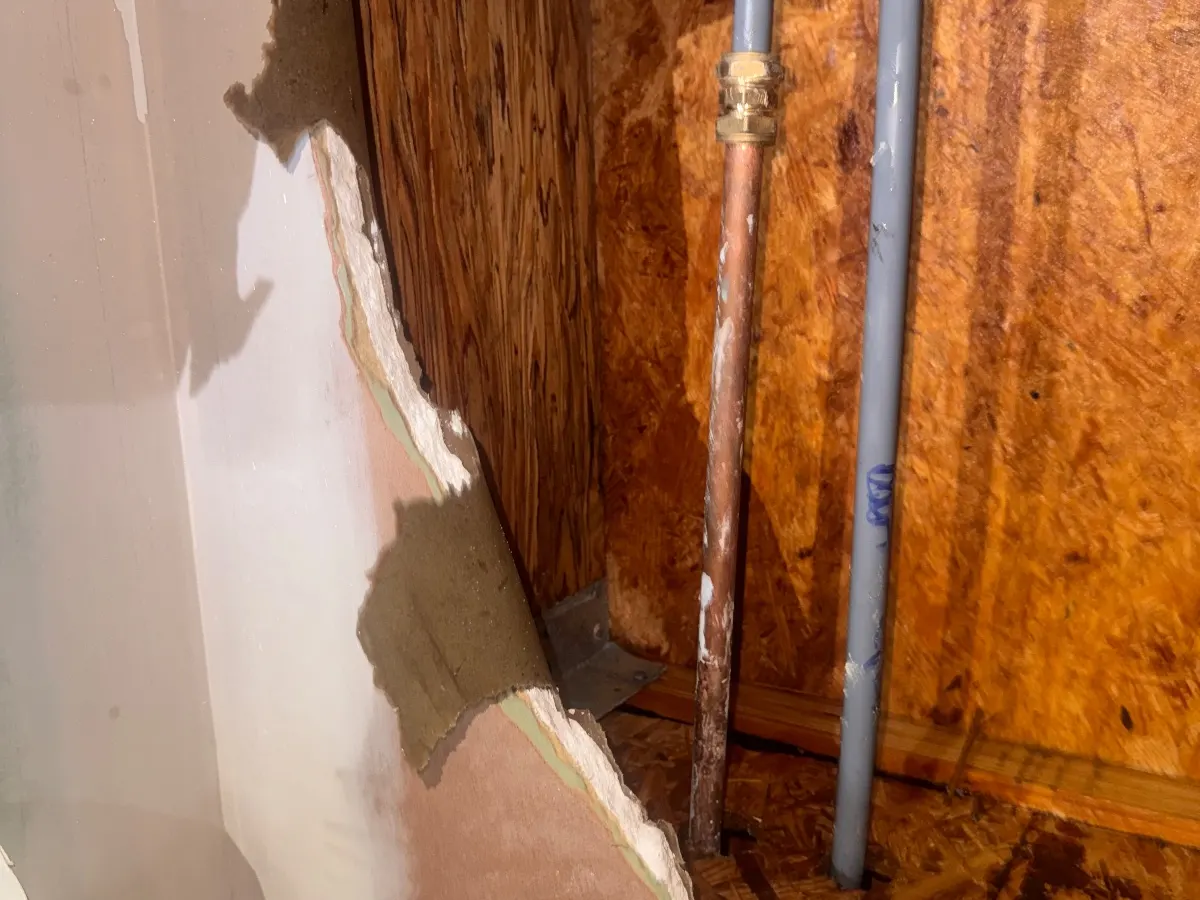
Your upstairs neighbour is usually only liable if the leak came from their carelessness, such as an overflowing bath. Most leaks are wear and tear, so the repair falls on whoever owns the failed pipe and the damage goes through buildings and contents insurance. Tonight, stop the water first and record everything.
Water is coming through now: what to do first
Liability can wait until the morning. The water cannot. Go upstairs and knock. Most leaks from above are a bath or basin waste, a washing machine leaking at its hose or pump filter, a toilet seal or a pipe under the floor, and the person living there can usually stop it in a minute by closing their stopcock or the isolation valve on the appliance.
If nobody answers, try the managing agent’s or freeholder’s out-of-hours line, which is often on a notice in the communal hall or in your lease paperwork. Some blocks have a communal stopcock in a riser cupboard, a basement plant room or near the entrance. Closing it cuts water to other flats too, so only do it if the leak is serious and you have told anyone you can reach. Our guide to the stopcock in a flat explains the usual places.
In your own flat, deal with the electrics before anything else. If water is coming through a light fitting, a ceiling rose or near sockets, do not touch those switches. Turn the power off at the consumer unit if you can reach it standing on dry floor. Then catch the water, move furniture and valuables out of the drip zone and roll back rugs.
- Buckets and towels under every drip point
- Photos and a short video of the ceiling, walls and floor before you tidy up
- A note of the time you first saw the water and when it stopped
- The names and numbers of anyone you spoke to upstairs or at the agent
A ceiling that is sagging or bulging is holding water. Keep people out of the room below it. Do not poke it unless you know what you are doing and have a large container ready, because a saturated plasterboard ceiling can come down in one piece.
Who is liable for the leak?
In England and Wales a neighbour is not automatically responsible for water that escapes from their flat. To make them pay for your damage you generally have to show they were negligent: they left a tap running, ignored a leak they knew about, or had a fitting put in badly by someone they hired. If the lease makes each owner keep their own pipes in repair and they ignored a known problem, that breach can also count against them. A pipe that fails through ordinary wear, with no warning, is usually nobody’s fault in law, even though it came from their home.
That is why most leaks from above are settled through insurance rather than between neighbours. Your lease or tenancy decides who repairs what:
- Pipes, wastes and appliances serving only the flat above: normally the responsibility of that flat’s owner, or their landlord if they rent
- Shared pipes, risers, stacks and the structure between floors: usually the freeholder’s, managed through the service charge
- Your ceiling: the joists above may belong to the flat above, the freeholder or be split between you, while the plaster or boards and the decoration on your side are often included in your flat. Check the demise clause in your lease
- Your belongings: your own contents insurance, whatever caused the leak
Whose insurance pays for the damage?
In a leasehold block the freeholder or managing agent normally holds one buildings policy for the whole building, and every leaseholder pays towards it. Escape of water is one of the most common claims on those policies. The damage to your ceiling, walls and floors would usually go on that policy, and the repair of the pipe itself often does not, because most buildings policies pay for the damage caused and not for fixing the part that failed.
If you own a freehold flat or a converted house split into two, check whether each flat carries its own buildings cover. Your furniture, carpets you own and electronics go on your own contents policy. Tenants rely on their contents policy for belongings; the landlord deals with the structure and the pipes.
Ask the agent or insurer what the excess is before you agree who pays it. On block policies the excess is sometimes shared, sometimes charged to the flat where the leak started, depending on the lease. Many insurers also cover the cost of finding the leak, known as trace and access, which matters when the source is hidden under the upstairs floor. Our page on what to do before the insurer visits covers what they will want to see.
If you rent: your landlord deals with it
Tenants in England have a straightforward route. On most residential tenancies of under seven years, section 11 of the Landlord and Tenant Act 1985 makes the landlord keep the installations for the supply of water in repair and proper working order, along with the structure and exterior of the building. Report the leak to your landlord or letting agent in writing as soon as you can, with photos, and keep a copy.
Your landlord’s duty starts once they know about the problem, so a text or email that night protects you. If it is an emergency and you cannot reach anyone, your tenancy agreement or the agent’s paperwork should give an out-of-hours contact. Only get your own plumber in if the water is still running and nobody responsible can be contacted, and tell the landlord straight away that you have. For the wider picture of what a tenant should do on the night, see a water leak in your flat: the first steps.
When the neighbour cannot be reached or will not act
An empty flat above, a holiday let or a neighbour who says it is not their problem is where people lose ceilings. If water is still coming through and you have tried the door, the agent and the freeholder, it is reasonable to get an emergency plumber to find and stop the source. The plumber can close the communal stop valve for that riser if one exists, isolate the supply to the flat above from outside it where the pipework allows, or confirm that the water is coming from a shared stack rather than the neighbour’s bathroom.
Nobody should force entry into another flat. If the leak cannot be stopped from outside it, the managing agent or freeholder usually has a right of access under the lease for emergencies and may hold keys. In a genuine flood with no one answering, the police or fire service can be called if there is a risk to safety, for example water pouring onto electrics.
Once the water is stopped, write to the upstairs owner and the agent with the date, your photos and a short account. If you think they were careless, such as a bath left running, say so plainly and keep it factual. That letter is what any insurer on either side will ask for.
What a plumber does on the night
Stopping the water is the first job. After that, the plumber works out whether the leak is in the flat above or in something shared. A slow drip that gets worse when the upstairs shower runs points to a shower tray seal or waste. Water that appears only when a toilet above is flushed points to the pan connector or the soil pipe. A constant flow regardless of use suggests a pressurised supply pipe under the floor.
If the source is in your own ceiling void, which happens with a heating pipe or a supply to the flat above running through your ceiling, the plumber can cut a small inspection hole, fix the joint and leave the hole for your plasterer or the insurer’s contractor. Water-damaged ceiling board usually needs replacing once it has dried out, which is a job for a plasterer after the insurer has seen it. The ceiling water leak repair page explains that visit in more detail.
The £60 call-out covers getting someone to you at any hour, and the repair price is agreed with you on site before any work starts. Keep the invoice: whoever ends up liable, the insurer will ask for it.
Questions people ask
Is my upstairs neighbour liable for water damage to my flat?
Only if they were negligent, for example leaving a bath running or ignoring a leak they knew about. A pipe that failed through normal wear is usually settled through the buildings and contents insurance rather than by the neighbour paying you directly.
Who pays to fix the pipe that leaked?
Whoever is responsible for that pipe under the lease. A pipe serving only the flat above is normally that owner’s responsibility; a shared riser or stack is usually the freeholder’s. Buildings policies often pay for the damage caused but not for fixing the failed part.
Should I claim on my own insurance or theirs?
In a leasehold block the damage to the building usually goes on the block buildings policy, which the managing agent handles. Your belongings go on your own contents insurance. If your insurer thinks the neighbour was negligent, it can pursue them after paying you.
Can I turn off the water to the flat above?
Only if there is a valve outside their flat that controls it, such as a communal stop valve in a riser cupboard. Tell anyone affected first. Never force entry; the managing agent or freeholder usually has emergency access rights under the lease.