Leaks & burst pipes
Leaking Waste Pipe: Kitchen or Bathroom
Published
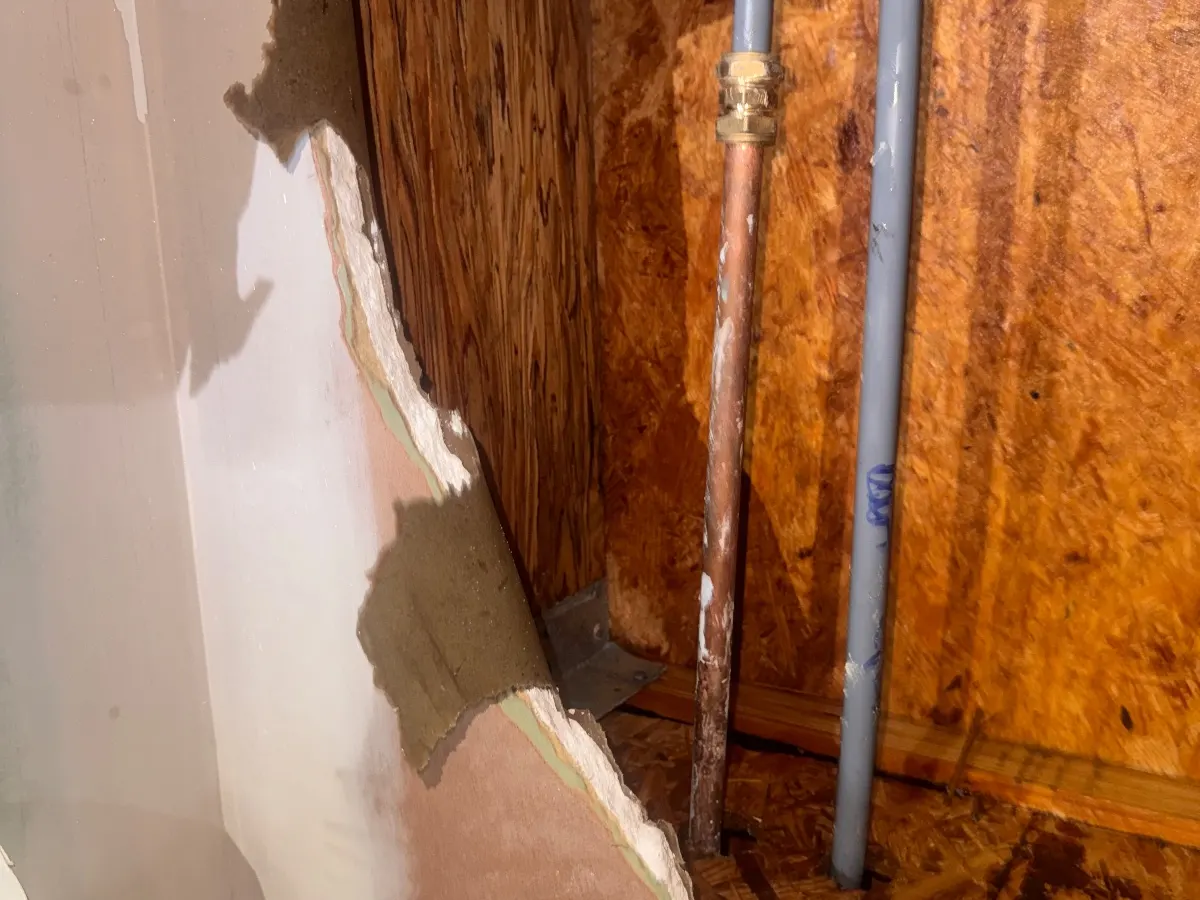
A leaking waste pipe drips only while water is draining, so the fix is usually simple: stop using that sink, basin or bath, find the joint by running water through it, then tighten or reseal it. Most leaks are a loose trap nut, a perished washer or a pushed-apart joint, not a cracked pipe.
Is it the waste or the water supply?
This is the first question, because it decides how urgent the leak is. A waste pipe carries used water away at no pressure. It can only leak when something is draining through it. A supply pipe is under mains pressure all the time, so it drips or sprays whether or not anyone is using the tap.
Dry everything under the sink or around the bath with a towel, lay a sheet of kitchen roll underneath, and wait ten minutes without running any water. If the paper stays dry, the leak is on the waste side and you can stop it simply by not using that outlet. If the paper gets wet with nothing draining, you have a supply leak: close the isolating valve on the pipe or the main stopcock and read our guide to a pipe leak under the sink.
Two things fool people. Condensation on a cold supply pipe in summer looks like a slow leak but wipes off evenly along the pipe. And a waste can hold a little water in the trap that seeps out for a while after use, so give it the full ten minutes.
Which joint is leaking?
Household wastes are short runs of plastic pipe with several joints in a small space, so the drip usually lands somewhere other than where it starts. Water runs along the underside of the pipe and falls at the lowest point. Work from the plug hole downwards.
Put the plug in, fill the sink or basin, then pull the plug and watch with a torch. A full basin draining puts far more water through the waste than a running tap, and some joints only leak under that load. Wrap a strip of dry kitchen roll around each joint in turn if you cannot see the drip form.
- Plug hole and waste fitting: the rubber or fibre washers under the basin or sink. A leak here wets the underside of the bowl first.
- Overflow: the slot near the top of a basin or the round outlet on a bath. It only leaks when the water level reaches it, so fill right up to test it.
- Trap: the U-bend or bottle trap directly under the outlet. The big plastic nuts and their sealing rings are the most common leak on any waste.
- Joints along the run: compression or push-fit joints where the trap meets the pipe and where pipes change direction.
- Connection to the soil stack or gully: the rubber boss or the point where the pipe leaves the building. A leak here often shows as a damp patch on the wall or ceiling below.
What usually fails, and the fix for each
Most kitchen and bathroom wastes in UK homes are 32mm for basins and 40mm for sinks, baths and showers, in white or grey plastic. The joints are one of three kinds, and each fails in its own way.
Compression joints on traps use a plastic nut that squeezes a tapered rubber or plastic ring onto the pipe. They loosen with vibration, especially under a kitchen sink where pans get pushed against the trap. Undo the nut, check the ring sits square with its taper facing the joint, and tighten by hand until firm. Plastic threads strip easily, so do not use grips. If the ring is split or flattened, a new trap costs a few pounds and is easier than hunting for a matching ring.
Push-fit joints rely on a rubber seal inside the socket. They leak when the pipe has been pulled partly out, often by a cabinet being moved or a trap being taken off to clear a blockage. Push the pipe in until it stops, then ease it back about 10mm to allow for expansion, and clip the run so it cannot pull out. If it still leaks, the ring seal is dislodged or damaged and the fitting needs replacing.
Solvent-weld joints are glued and cannot be tightened. A leak at a glued joint means cutting it out and fitting a new section. One trap: push-fit waste is usually polypropylene, which solvent cement does not bond to. Gluing it gives a joint that looks fine and leaks within days.
Leaks at the plug hole or bath overflow mean the waste fitting itself needs remaking with new washers or a new fitting. On a bath that usually means lifting the bath panel and working in a tight space, and our page on a leak under the bath covers that job.
Silicone around a leaking joint, tape wrapped over a trap nut or filler squeezed into a crack will not last. Waste water is warm, soapy and moving, and it gets under all of them within weeks.
When a waste leak cannot wait
A waste leak stops when you stop draining, which makes most of them a next-day job. A few are not:
- Water is coming through a ceiling below. Stop using every outlet upstairs, and if it is near a light or switch, turn the power off at the consumer unit, then see our advice on a ceiling leak below a bathroom.
- The leak is from a shared pipe in a block of flats. Other people will keep draining into it, so you cannot stop it yourself.
- The only toilet or the only kitchen sink is out of use and you have children or someone vulnerable at home.
- The leak is inside a wall, under a floor or behind boxing, where water can soak into timber and plaster for days before it shows.
- Waste water is backing up as well as leaking, which points to a blockage further down forcing water out of the weakest joint.
Leaks you cannot see: boxed-in and under-floor wastes
Bath, shower and en-suite wastes often run under the floor or inside boxing to reach the stack. A leak there shows as a stain on the ceiling below, loose floor tiles, skirting that swells, or a musty smell in the room that is easy to mistake for a smelly shower drain. Shower trays are a common culprit because the waste sits underneath with no access panel, and a tray that flexes slightly under someone’s weight will eventually work the waste seal loose.
Run each outlet on its own for a few minutes, with everything else off, and check the ceiling or wall below after each. A stain that grows only when the shower is used points to the shower waste or the tray seal, not the pipework feeding it. If the leak only appears when someone is standing in the shower, suspect the tray movement or the silicone rather than the waste pipe itself; our guide to a leaking shower goes through that.
Finding a hidden waste leak means taking off a bath panel, lifting a floorboard or opening boxing. A plumber will try to open the smallest area needed and leave access for a future repair where possible.
What a plumber does and what it typically costs
On a visible waste under a sink or basin, the usual job is to drain down, remove the trap and any damaged section, fit new parts and test with a full basin. On a kitchen sink the plumber will also check whether a washing machine or dishwasher hose is connected to the trap, since a washing machine that leaks while draining often traces back there, and whether a blockage is putting pressure on the joints. A plastic trap is a cheap part, typically under £15, and a full waste kit for a bath is commonly £10 to £40, so most of the bill is labour and access.
Wastes under a bath, in a shower tray or under a floor take longer because of the access, and may need a tiler or joiner to finish afterwards. For a leak that has run into the structure, leak repairs cover finding it and making the pipe right.
Our £60 call-out covers getting someone to you at any hour, and the repair price is agreed with you on site before any work starts, so you know the cost of the fix before a trap nut is touched.
Questions people ask
Why does my waste pipe only leak sometimes?
Because a waste pipe only carries water while something drains. A joint may hold with a trickle from the tap but leak when a full sink or bath empties, or only when water reaches the overflow. Test with a full basin to reproduce it.
Can I use silicone to stop a leaking waste pipe?
Not as a repair. Warm, soapy water gets behind silicone quickly and the leak returns. Reseat or replace the washer, ring or trap instead. Silicone belongs on the outside of a basin or tray edge, not on pipe joints.
Is a leaking waste pipe an emergency?
Usually not, because the leak stops when you stop draining that outlet. It becomes urgent if water is coming through a ceiling, the pipe is shared with neighbours, or it is hidden in a floor or wall where it can soak the structure.
How do I tell a waste leak from a supply leak?
Dry the area, put kitchen roll underneath and leave it ten minutes without using any water. If it stays dry, the leak is on the waste. If it gets wet with nothing draining, the leak is on a pressurised supply pipe and you should isolate it.