Water supply problems
Airlock in Water Pipes: How to Clear It
Published
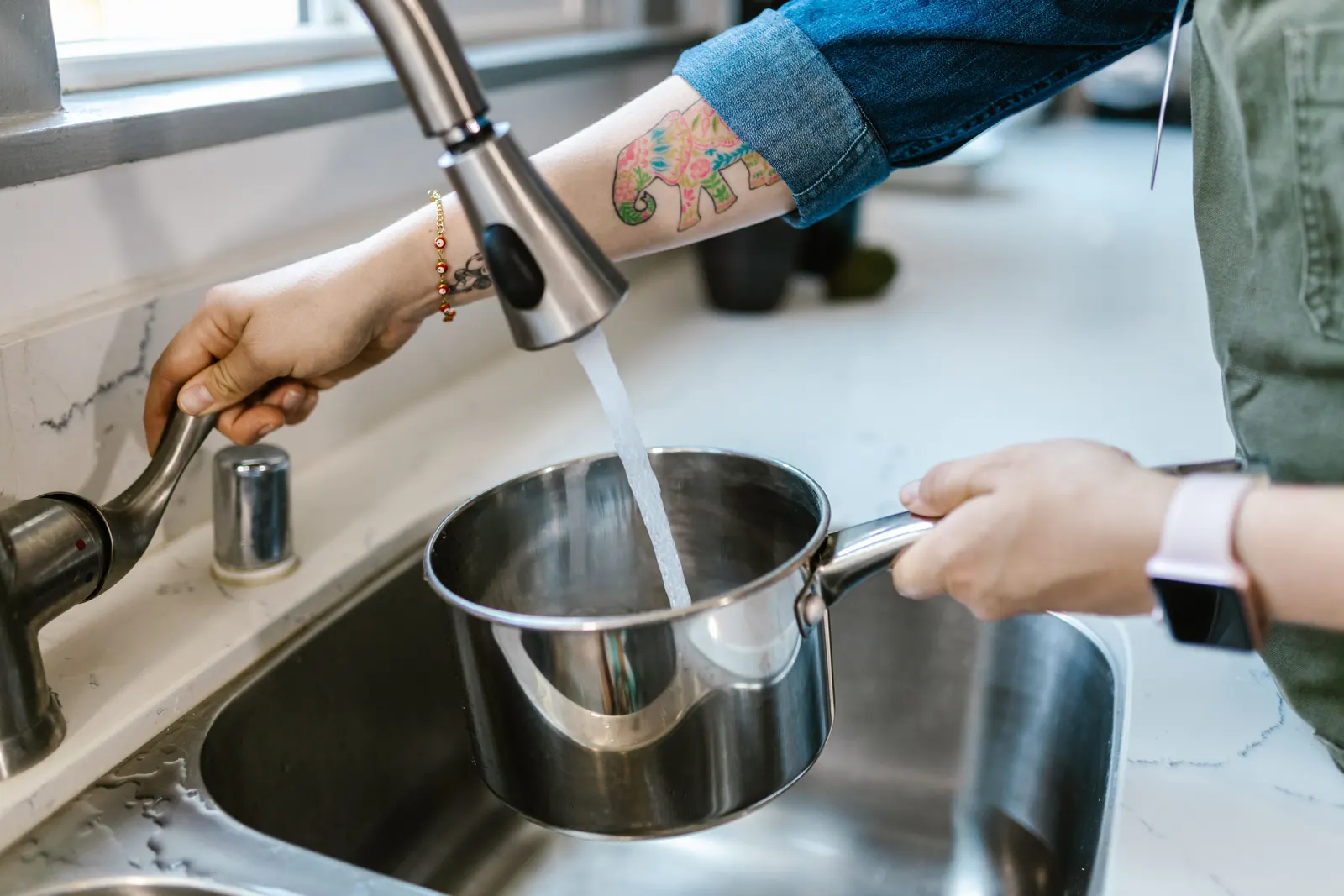
Most airlocks in water pipes clear by opening every tap, lowest first, and letting them run until the spluttering stops. If one hot tap stays dead, push mains pressure back through it with a short hose from the kitchen cold tap for a few seconds. If that fails, the tank may be empty or the pipe badly laid.
Is it really an airlock?
An airlock is a bubble of air trapped at a high point in a pipe, holding back water that does not have enough pressure to push it through. The signs are a tap that coughs, spits and hisses before giving a weak or broken flow, or one tap that gives nothing at all while others in the house work. It almost always follows something: the water being turned off for a repair, a tank being drained, or works in the street.
Airlocks are mostly a problem on tank-fed hot water, the older setup with a cold tank in the loft and a hot water cylinder in an airing cupboard. That water is pushed round by gravity alone, often with less than a few metres of height behind it, which is too weak to shift trapped air. Mains-fed cold taps rarely airlock for long, because mains pressure simply forces the air out of the nearest open tap.
If you have a combi boiler and the hot tap gives nothing, it is not an airlock on the hot side. A combi heats mains water as it passes, so air would be pushed straight through. Low or no hot water from a combi points to the boiler, a blocked filter or a failed flow sensor instead.
How to clear an airlock, step by step
Start with the gentle method. It works for most airlocks after the water has been off.
- Check the stopcock is fully open, turning it anticlockwise until it stops
- Open every cold tap in the house, starting with the lowest one and working upwards, and leave them running
- Then do the same with every hot tap, lowest first, including the bath and any basin in a loft conversion
- Flush each toilet two or three times
- Let everything run until the flow is steady and the spluttering stops, then close the taps from the top floor down
If you have a hot water cylinder heated by an immersion or boiler, switch the heat off before running hot taps for a long time, and leave it off until the cylinder is running water normally again.
The hose method for a stubborn hot tap
When one tap on the tank-fed side still will not run, use mains pressure to push the air back up and out through the tank. You need a short length of hose and two tap connectors, or a washing-machine hose that fits your taps.
Connect one end to the kitchen cold tap, which is on the mains, and the other to the airlocked tap. On a mixer tap you can sometimes get the same effect by holding a cloth tightly over the spout while opening both hot and cold together, because the mixer body links the two. Open the airlocked tap first, then open the mains tap for a few seconds and close it again. You may hear the air gurgle back up the pipe. Remove the hose and run the airlocked tap. Repeat two or three times if needed.
Do not leave the hose connected and never leave it with both taps open. Joining mains water to stored water is only acceptable for these few seconds; left in place it risks pushing tank water back into the drinking supply, which the Water Supply (Water Fittings) Regulations 1999 exist to prevent. Mains pressure can also overfill the loft tank if you overdo it, so have someone listen at the tank overflow.
When it is not an airlock at all
If the hot taps give nothing, or keep going weak after a burst of flow, check the cold tank in the loft before anything else. A float valve that has stuck shut means the tank has run dry, and no amount of tap-running will help. Lift the lid with a torch: if the tank is low or empty, the fault is the float valve, not air. Our guide on the loft tank ballcock covers freeing and replacing it.
Air that keeps coming back is a sign of a design fault rather than bad luck. Common causes are a pipe that runs up and over a doorway or joist before dropping again, a cold feed to the cylinder that is too small, a tank that sits too low above the highest tap. On a pumped shower, air can also collect in the pump itself. An engineer will look at the pipe runs, the tank height and the vent arrangement, and correct the layout rather than bleeding the air each time.
Banging and juddering when a tap shuts off is usually water hammer, not air; see water hammer and banging pipes. Cloudy or milky water after the supply comes back is fine air bubbles in the mains water and clears in a glass from the bottom up within a few minutes; our page on cloudy water after the supply returns explains when it is not just air.
Airlocks in central heating radiators
Air in a heating system is a different problem with a different fix. Radiators that are cold at the top and warm at the bottom need bleeding, and a sealed system then needs topping back up to about 1 to 1.5 bar on the boiler gauge when cold. The guide on bleeding radiators with the heating on or off walks through it. On an older open-vented system, air that keeps returning can come from the pump pushing water up and over the vent pipe into the small loft tank, which is a layout fault. A boiler that keeps locking out after bleeding, or a pump that gurgles, needs an engineer rather than more bleeding.
When to call someone out
Get help if you have followed the steps and a tap is still dead, if the loft tank will not refill, if air returns every time the water is used, or if no water at all is coming into the house. An engineer will check the float valve and tank, trace the pipe from the tank to the dead tap for high points, clear the lock under pressure and, where the pipework is at fault, reroute the section causing it.
For a supply that is weak rather than blocked by air, the low water pressure repair service is the right starting point. The £60 call-out applies at any hour, and the repair price is agreed with you on site before any work starts.
Questions people ask
Will an airlock clear by itself?
Sometimes, if it is small and on the mains side. On tank-fed hot water it usually needs help, because gravity pressure is too low to push the air out. Running the taps lowest first is the first step.
Can an airlock damage my boiler or cylinder?
An airlock in the hot water supply stops water reaching the tap but does not usually damage the cylinder. If the tank feeding it has run dry, switching the heat off until the flow is back is a sensible precaution.
Why do I keep getting airlocks after the water has been off?
Air enters every time the pipes are drained. If one tap airlocks each time, the pipe to it probably rises and falls over an obstacle, trapping air at the high point. That section needs rerouting.
Is it safe to connect a hose between my hot and cold taps?
Only for a few seconds to clear the lock, with the hose removed afterwards. Leaving mains water connected to stored water risks backflow into the drinking supply.