Water supply problems
Water Back On but Cloudy or Discoloured
Published
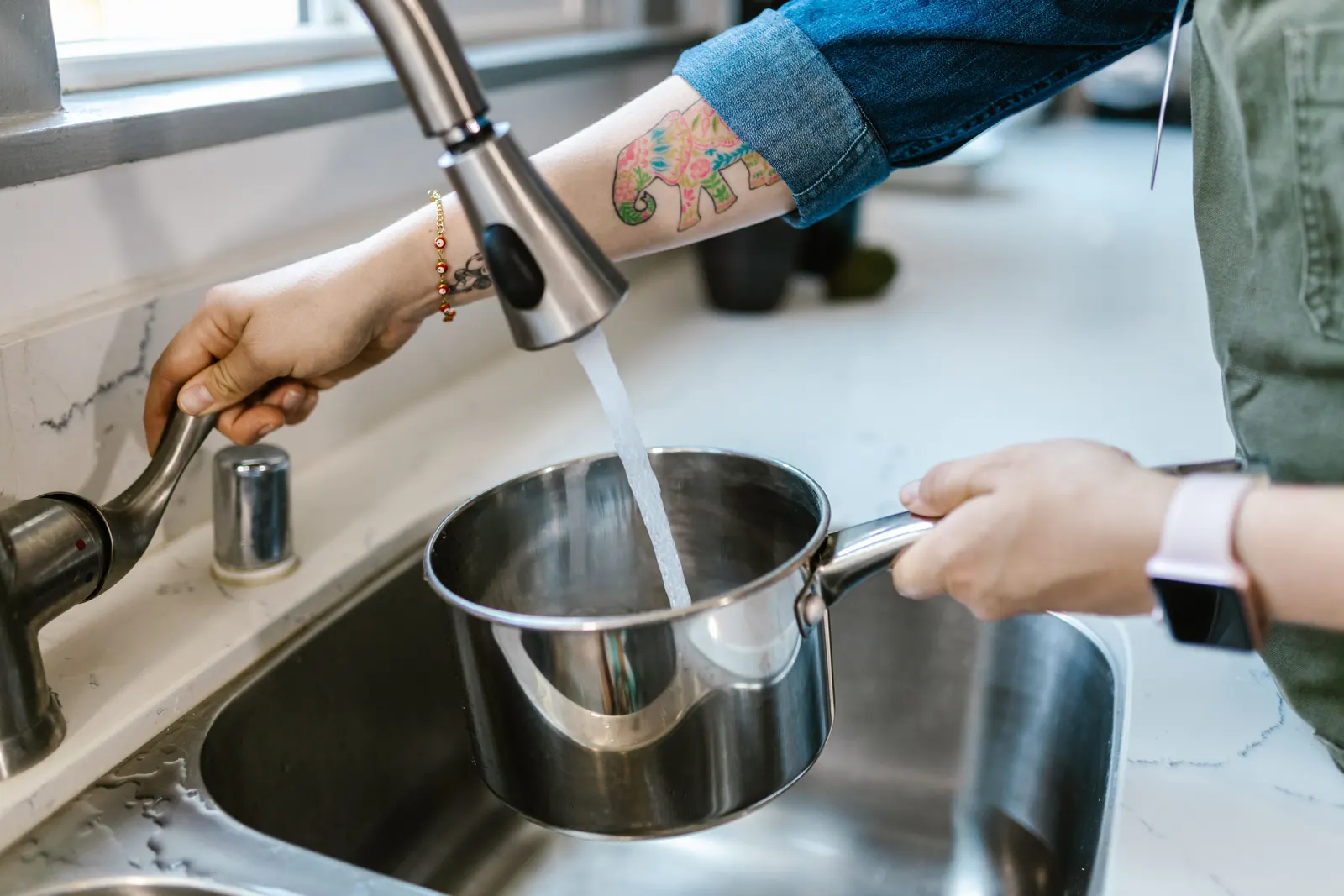
Cloudy white water after the supply comes back is almost always air, and a glass left to stand clears from the bottom up within a few minutes. Brown, orange or yellow water is iron sediment stirred up in the main. Run the cold kitchen tap at full flow for a few minutes and it normally clears.
Is it air or is it dirt? The glass test
Before you worry about what is in the water, find out what colour of problem you have. Fill a clear glass from the cold kitchen tap and put it on the side where you can see it against a white background. Then watch it for a few minutes.
If the cloudiness lifts from the bottom of the glass upwards and the water ends up clear, it is air. When a main is refilled after a repair, air is pushed along the pipes under pressure and dissolves into the water as millions of tiny bubbles. Once it leaves the tap and the pressure drops, the bubbles rise and escape. Air in the water is harmless to drink and to wash in.
If the glass stays cloudy, or clears from the top down with a fine white layer settling at the bottom, you are looking at chalk rather than air. London water is hard, and a burst or a flow reversal can shake loose scale from inside old mains. It is unpleasant but not a health risk. A white film also turns up if you have a water softener that has been disturbed by the pressure change, which is worth checking if you have one under the sink.
If the water is yellow, orange or brown, it is iron. Old cast iron mains build up a layer of rust on the inside wall that sits quietly until the flow in the pipe changes direction or speed. A burst, a valve being opened by a repair crew or a fire hydrant being used is enough to lift it.
- Clears bottom to top within a few minutes: air, safe, will stop on its own
- Clears top to bottom with white sediment: chalk or scale, usually clears with flushing
- Yellow, orange or brown: iron from the main, flush the cold kitchen tap
- Black specks or grit: sediment from the main or a perished washer in your own fittings, not harmful but can stain fabric
- Blue or green tint: copper pipework, rare, get it looked at
How long to run the tap, and which one
Use the cold tap at the kitchen sink. In almost every home it is fed straight from the mains, so it flushes the pipe from the street in, and it is the one you drink from. Thames Water’s own advice for brown or orange water is to run the cold tap at its highest flow for two to three minutes. For white or cloudy water, it says any air in the main should clear within two to three hours, after which you run the tap for two to three minutes to check.
If the colour is lighter after the first flush but not gone, leave it twenty minutes and flush again rather than leaving the tap running for an hour. Sediment keeps arriving from the main while the network settles, so a long continuous run mostly pours away water you pay for if you are on a meter.
Do not run the hot taps to clear discoloured water. The hot side is fed from your boiler, cylinder or loft tank, and pulling dirty water through it just carries the sediment somewhere harder to get out. If you have a loft tank, iron that gets into it can settle at the bottom and keep appearing in the bath for weeks.
Hold off on the washing machine and dishwasher until the kitchen cold runs clear. Iron sediment stains white laundry and the rust marks rarely wash out. If a load has already gone through, keep it wet and rewash it once the water is clear rather than letting it dry.
When the problem is your pipes, not the street
Knock next door. Thames Water’s rule of thumb is simple: if neighbours have the same discoloured water, the cause is in the main and it is theirs to deal with. If only your house is affected, the cause is almost certainly your own plumbing.
The most common inside-the-house causes after a supply interruption are a galvanised steel or old iron section somewhere in the rising main, a lead supply pipe that has shed scale, a corroded stopcock, and a loft tank that has picked up sediment. You can narrow it down yourself. If the cold kitchen tap runs clear but the bathroom is still brown, the dirt is on the tank-fed side. If every tap is brown including the kitchen, and neighbours are fine, the fault is most likely between the boundary stop tap and your kitchen, though the water company’s own stop tap or pipe can also be the cause.
Remember that the pipe from your boundary to the house is the owner’s responsibility, not the water company’s. Our guide to who owns the mains water pipe sets out where that line sits. If your supply was off because of work in the street, the water company will normally flush the main, but it will not flush your pipework for you.
Air that spits and bangs after the water comes back
Cloudy water often arrives with noise. Taps cough, sputter and spit for the first few seconds, and you may hear a knock in the pipes when you turn a tap off. That is trapped air working its way out and it usually settles after every tap in the house has been run for a minute. Open each tap in turn, starting with the one nearest the stopcock and finishing with the highest and furthest one, and let each run until the flow is smooth.
If a tap still gives a weak dribble or nothing at all after that, the air is trapped at a high point and is holding back the flow. This is most common on tank-fed hot taps and showers. Our guide to clearing an airlock in pipes walks through the hose trick that forces it out with mains pressure. Knocking that continues after the air has cleared is different: that is water hammer, and it usually means a loose pipe or a valve shutting too quickly.
Combi boilers, cylinders and loft tanks after an outage
A combi boiler draws its hot water straight off the mains, so dirty mains water goes straight through its plate heat exchanger. That is one more reason to flush the cold kitchen tap first and only then run a hot tap. If the combi will not fire for hot water once the supply is back, open a hot tap fully and let any trapped air spit through before assuming a fault, because a combi needs a steady minimum flow to fire. The heating pressure gauge should not have changed, since the heating is a separate sealed circuit. If it shows a fault code, see boiler repairs and do not open the casing.
A hot water cylinder normally stays full during an outage, because hot water is drawn from the top. If it was drained, or the loft tank ran dry and a hot tap now only splutters, leave the immersion heater off until a hot tap runs steadily again. An element that heats in air burns out.
Loft tanks refill through the float valve, and a surge of sediment can lodge in the valve seat and stop it closing. If you hear water trickling in the loft for hours after the supply returns, or water appears from the overflow pipe outside, see our guide to a cold water tank that keeps overflowing.
When to stop flushing and get help
Discoloured water is not normally an emergency, but a few signs mean flushing alone will not fix it.
- The water smells of petrol, solvents or anything chemical. Do not drink it and call your water company’s 24-hour line.
- Neighbours have clear water and yours is still brown after several short flushes over an hour. That points to your own pipes.
- Pressure dropped at the same time as the colour changed and has not come back. A partly blocked stopcock or strainer is likely, see low water pressure repair.
- Water is appearing somewhere it should not, such as a damp patch or a drip from the ceiling, after the supply came back. A joint may have given way under the pressure surge.
- You have no water at all from the kitchen cold tap once the street is back on.
Discoloured water from the main is the water company’s job and costs you nothing. Rust from your own rising main, a failed stopcock or sediment in a loft tank is plumbing work. An engineer’s visit is the £60 call-out, and the repair price is agreed with you on site before any work starts.
Questions people ask
Is cloudy water safe to drink after the water comes back on?
If the glass clears from the bottom up within a few minutes, yes. That is dissolved air and it is harmless. If it stays cloudy or leaves a white layer at the bottom, it is chalk, which is not a health risk but is best flushed out before drinking.
Can I drink brown water from the tap?
Iron sediment is not generally a health risk at the levels stirred up by a burst, but it looks and tastes unpleasant and there is no reason to drink it. Run the cold kitchen tap at full flow for a few minutes until it is clear. For babies’ feeds, wait for clear tap water; if you must use bottled water, check the label is low in sodium and sulphate and boil it first.
Why is only my hot water brown?
Because the hot side is fed from a cylinder, a loft tank or a boiler rather than straight off the mains. Sediment that reached the tank or cylinder settles there and keeps coming out. If it persists for more than a day, the tank or cylinder may need draining down and flushing.
Will the water company pay for my ruined washing?
Ask your water supplier, since the discolouration came from its main. Keep the stained items, take photographs and note the date and time. Rewash them first while still wet, because iron stains that dry in are much harder to shift. Rust from your own pipework is not the supplier’s responsibility.