Water supply problems
No Water After Roadworks in the Street
Published
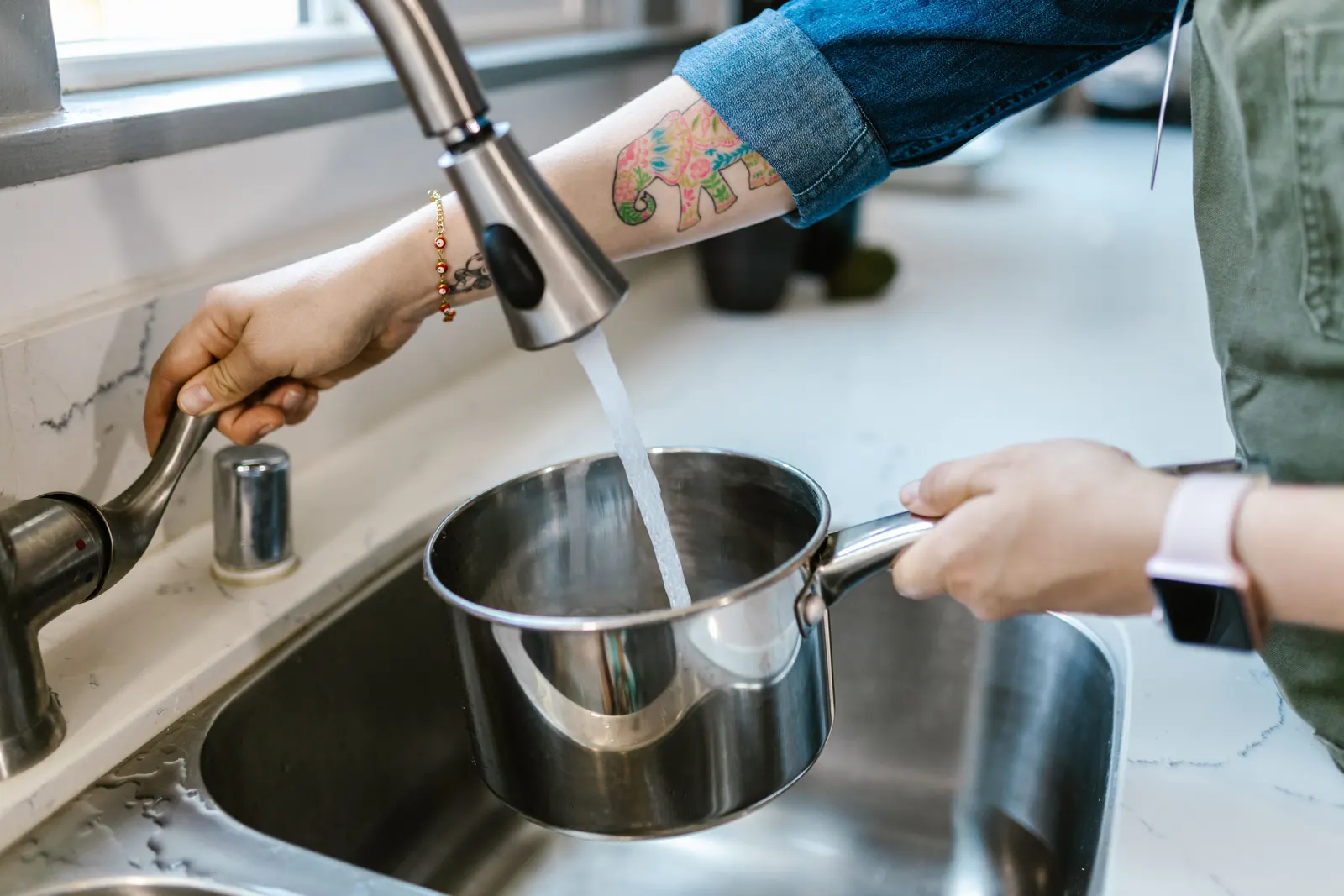
No water after roadworks? If the whole street is off, the work is still going on and the water company will restore it. If neighbours have water and you do not, suspect a pavement stop tap left shut, grit blocking a valve or strainer, or a struck service pipe. Report outside faults to the water company.
Is it just you, or the whole street?
Ask a neighbour on each side, or check a tap in a shared hallway if you are in flats. Then check your water company’s service updates page or in-your-area checker by postcode, which lists planned work and reported bursts. If the street is off, the problem is on the main and there is nothing for you or a plumber to fix; our guide to no water in my area covers what to expect.
For planned work, water companies must give at least 48 hours’ notice when the supply will be off for more than four hours, under the Guaranteed Standards Scheme set out in the Water Supply and Sewerage Services (Customer Service Standards) Regulations 2008. If they did not, you are owed a fixed payment, which in England the company should pay without you having to claim; keep a note of when the water went off and when it came back.
If everyone else has water and you do not, the fault is almost always between the main and your taps, and the rest of this page is for you.
Checks you can do yourself
Work from inside out. None of these needs tools beyond a torch and, for the outside tap, a stop tap key.
- Try the kitchen cold tap first; it is on the mains and is the truest test of whether water is reaching the house
- Check the internal stopcock is fully open by turning it anticlockwise; someone may have closed it when the water went off
- Unscrew the aerator on the end of a weak tap and rinse out any grit or sand washed through by the works
- Check the stop tap in the pavement: lift the cover and see whether the contractors left it closed, buried or damaged
- Look for wet ground, a new puddle or water bubbling up near your boundary, which points to a damaged service pipe
The stop tap in the pavement is normally the water company’s. If the water company closed it, do not reopen it yourself: under the Water Industry Act 1991 only the company should reopen a stop tap it shut. Report it instead, and do the same if it is broken, buried under new tarmac or its chamber is full of rubble.
Why only your house lost water
When a main is shut down and recharged, the rush of water can carry sand, rust and grit. Old brass stopcocks with a loose jumper, the part that carries the washer, are the classic casualty. After a pressure change the jumper can stick down on its seat, so the valve looks open but lets little or nothing through. Tapping the valve body lightly or opening and closing it once can free it, but if it stays blocked the valve needs replacing.
Grit also lodges in pressure reducing valves, which have a small mesh strainer, in the filters on combi boiler cold inlets, and in the strainers of washing machines and showers. A house that gets a trickle at the kitchen tap but no water coming out of the shower often has one of these partly blocked.
The other possibility is physical damage. Utility contractors laying cables, gas mains or fibre sometimes strike the small service pipe that runs from the main to a property. Old lead and early black polythene pipes are easily split or crushed. If a trench runs past your frontage and your water stopped the same day, mention that when you report it.
If only one or two taps are weak and spluttering rather than dead, air has got into the pipes. Our page on clearing an airlock in pipes shows how to run the taps in the right order.
Who fixes which part of the pipe
The water company owns the main and the communication pipe, the short length from the main to the boundary stop tap or meter. If the fault is there, including a stop tap they left closed or damaged, they repair it at no charge to you. Report it by phone and give the date of the roadworks.
From the boundary to your house is your supply pipe, and repairs on that length are normally the owner’s responsibility. If a third party’s contractor damaged it, the repair is still yours to arrange, but you may be able to claim the cost back from whoever carried out the work; photograph the trench, note the contractor’s name from the barriers or signs, and keep the invoice. Our guide to mains water pipe responsibility explains the boundary in detail.
Inside the house, a stuck stopcock, blocked strainer or failed pressure reducing valve is a plumbing job.
What an engineer does on a no-water call
An engineer first checks whether water is reaching the boundary, by checking the outside stop tap is open and, where there is a meter, watching whether the flow indicator turns when a tap is open. That single check shows whose side the fault is on. If water arrives at the boundary but not the kitchen tap, they work inward: the internal stopcock, then any pressure reducing valve, then the pipe itself.
Typical fixes are freeing or replacing a stopcock with a stuck jumper, cleaning a pressure reducing valve strainer, clearing grit from a combi inlet filter, and repairing a supply pipe damaged near the boundary. As a market guide, a stopcock replacement on accessible pipe often costs around £100 to £250, while supply pipe repairs vary with depth and surface. The no water emergency service starts with a £60 call-out at any hour, and the repair price is agreed with you on site before any work starts.
While you wait for water
Turn off the boiler and any immersion heater if the hot water cylinder may be emptying, so it is not heating an empty tank. If someone is at home, leave the kitchen cold tap slightly open, with the plug out, so you hear the water come back. When it returns, run the kitchen cold tap until the water is clear; cloudy water that clears from the bottom of a glass is just air. If you need to use the toilet meanwhile, a bucket of water poured into the pan will flush it; see how to flush without water.
If anyone in the household depends on water for medical reasons, or you are on your water company’s Priority Services Register, tell them when you report the fault; they may deliver bottled water while the supply is off.
Questions people ask
How long after roadworks should water come back?
For planned work, the notice you received gives the latest expected restoration time. For emergency repairs the water company should normally restore supply within 12 hours, tell you when it expects the water back and give a number to call.
Is the water safe to drink after the supply comes back?
Usually yes. Run the kitchen cold tap until it is clear. Cloudiness that clears from the bottom of the glass is air. Brown or discoloured water that does not clear after a few minutes at full flow should be reported to the water company if neighbours have it too; if only you do, the cause is more likely your own pipework.
Can I get compensation for losing water?
Under the Guaranteed Standards Scheme, you are due a payment if a planned interruption of more than four hours happened without 48 hours’ notice, and in some cases if supply is not restored in time. Check your water company’s guaranteed standards page for current amounts.
The contractors were not from the water company. Who do I call?
Call your water company first. They will confirm whether their pipe or stop tap is affected. If the damage is on your side of the boundary, have it repaired and ask the contractor who dug the trench to cover the cost.