Boiler & heating breakdowns
Boiler Expansion Vessel: Signs It Has Lost Its Charge and What to Do
Published
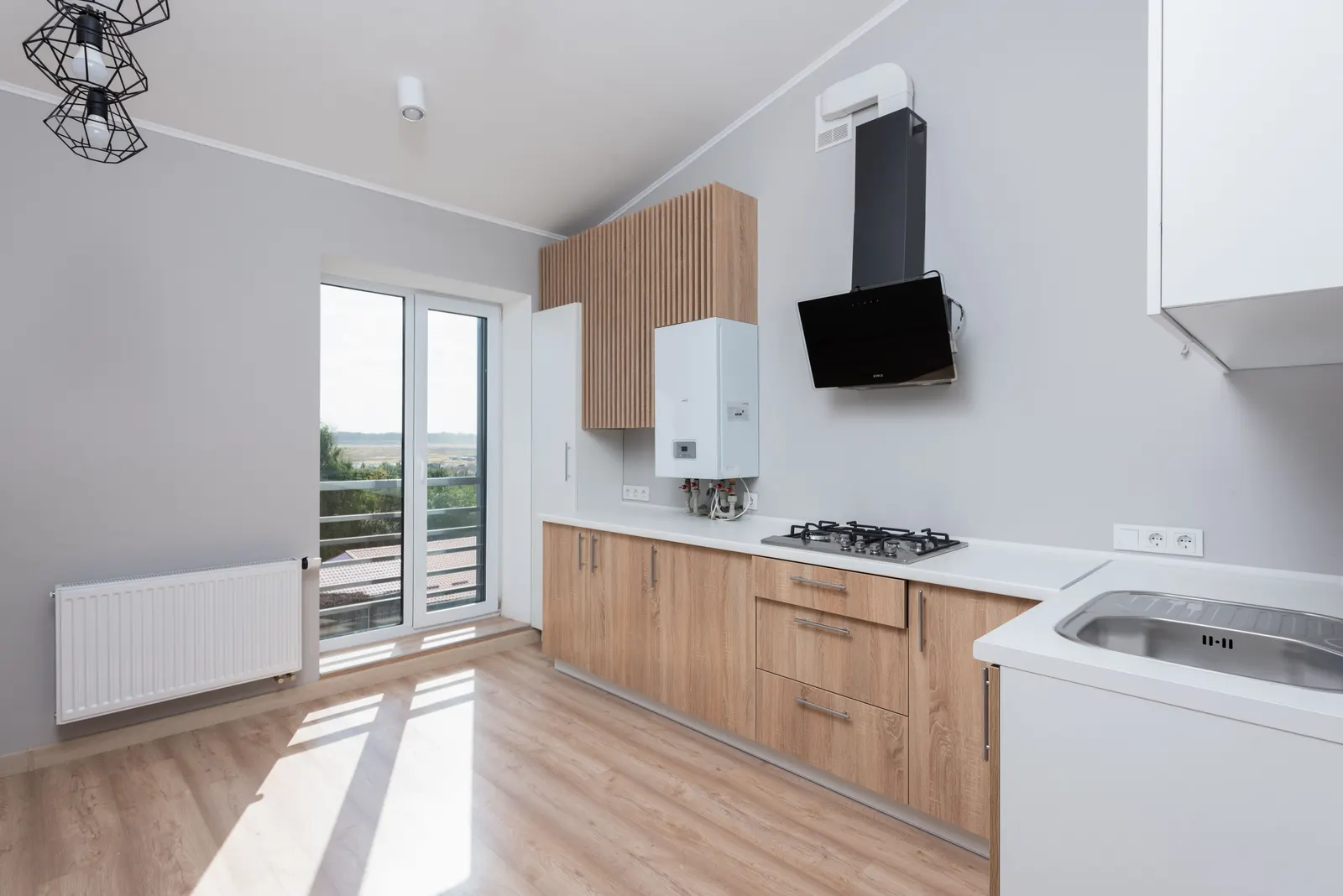
The expansion vessel is a small air-cushioned tank that soaks up the extra volume of heating water as it warms. When its air charge leaks away, the gauge jumps high with the heating on and sinks low once it cools, and the relief pipe outside starts to drip. Recharging or replacing it is engineer work.
What does the expansion vessel on a boiler actually do?
A combi or system boiler runs a sealed heating circuit. Nothing tops it up from a tank in the loft, so the same water goes round and round at a pressure you can read on the front of the boiler. Heat that water from cold to running temperature and it takes up noticeably more room. In a sealed pipe run it cannot go anywhere, so something has to give.
That something is the expansion vessel. Picture a flattened steel drum, usually red, with a rubber diaphragm across the middle. Heating water sits on one side. On the other side is air or nitrogen, pumped in at the factory to a set pressure. As the water swells, it pushes the diaphragm back and squeezes the gas. When the system cools, the gas pushes the water back out. The gauge barely notices.
On most wall-hung combis the vessel is inside the boiler casing, often tucked behind the heat exchanger, with a tyre-style valve on the top or underside. A heat-only boiler on a sealed system, and some older installations, have a separate vessel on the pipework instead, often in an airing cupboard. Either way, it does the same job, and it only works while that gas side still holds its charge.
Signs the expansion vessel has lost its charge
The gas does not stay in forever. It seeps out slowly through the valve core, and over the years through the diaphragm itself. A vessel that has lost most of its charge gives a fairly recognisable set of symptoms, and they usually arrive together rather than one at a time.
- The pressure swings hard: around 1 bar cold, then 2.5 bar or more within half an hour of the heating coming on
- The relief pipe, usually a small copper pipe through the outside wall, drips or spurts when the heating is running, because the relief valve is opening at 3 bar
- After a few of those cycles the cold reading has fallen, and the boiler wants topping up every week or so
- The boiler locks out on a low-pressure or high-pressure fault, depending on which end of the swing it catches
- Radiator valves or old joints start weeping only when the system is hot and pressure is at its peak
The swing is the tell. A boiler that loses pressure steadily without ever running high points to a leak or a passing valve, not the vessel.
What should the expansion vessel pressure be?
Two different pressures get mixed up here. The system pressure is what the gauge on the boiler shows: the water side. The charge pressure is the gas side of the vessel, and it can only be measured at the vessel valve with the heating water drained off the boiler. You cannot read the charge from the front of the boiler.
Manufacturers set the charge to suit their own boilers, and it is printed on the vessel or in the installation manual. Worcester Bosch pre-charges the built-in vessel on the Greenstar 4000 combi to 0.75 bar, asks for the system to be filled to between 1 and 1.5 bar, and says the charge can be raised to suit the height of the system, at 0.1 bar per metre from the vessel to the top of the highest radiator. Vaillant has engineers top up the ecoTEC plus vessel if it reads below 0.75 bar, ideally with nitrogen rather than air. Baxi pre-charges the 800 Combi 2 vessel to 1 bar, which it says makes 1 bar the minimum cold fill. Worcester and Baxi both size their built-in vessels for systems of up to about 100 litres of water.
The rule that ties these together is simple. The cold system pressure should sit a little above the vessel charge: Worcester says 0.1 to 0.25 bar higher, Vaillant at least 0.2 bar higher. Fill below the charge and the vessel is empty of water before the heating even starts. Fill well above it and there is little room left to absorb expansion. That is why the figure on the front of your boiler matters, and why a relief valve set at 3 bar keeps lifting when the gas side has gone.
For a view of the gauge side of this, our guide to boiler pressure with the heating on versus off shows what a normal rise looks like.
What can I check myself, and what should I leave alone?
Your job is to gather evidence from the outside of the boiler. The most useful thing you can do is keep a short log of the gauge: a cold reading before the heating comes on, a hot reading after an hour, and a cold reading again once it has sat off for a few hours. Two days of that tells an engineer more than any description.
If the reading reaches 2.5 bar or more when hot, turn the heating down or off and let it cool. Once cold, you can bring it back to the bottom of the fill range for your boiler by bleeding a radiator, as covered in how to reduce boiler pressure. Starting low gives a weak vessel the most headroom and keeps the relief valve shut for longer while you arrange a visit.
If the pipe outside has already been dripping, the relief valve may not seat properly again even after the vessel is sorted. Our page on a boiler pressure relief valve leaking explains how to tell.
Do not take the casing off to reach the vessel valve, and do not pump air into any vessel with the system still under pressure. Nothing inside the boiler casing is a householder job. Do not open the relief valve by hand either; it often fails to close again.
Recharge or replace: what the engineer does
On a boiler pressure repair visit, the engineer isolates the boiler from the heating circuit, drains the boiler side to zero, and puts a gauge on the vessel valve. A healthy vessel should read close to the figure on its label, which is 0.75 bar on many Worcester and Vaillant combis. Reading well below it confirms the diagnosis.
A recharge is the first attempt. The engineer pumps the gas side back to the manufacturer figure with the boiler drain open, so the diaphragm can move fully, then refills the system to the right cold pressure and runs the heating to watch the rise. If the gauge now climbs by a few tenths of a bar and comes back down, the job is done.
Replacement is needed when the charge will not hold, or when water comes out of the vessel valve. Vaillant is explicit on this point: water at the test point means the diaphragm has failed and the vessel must be changed. On some combis the vessel comes out through the front. On others it sits behind the heat exchanger and a fair amount has to be stripped out to reach it. In those cases many engineers fit a separate vessel on the return pipework under the boiler instead, which is an accepted fix and is also the answer when a larger house has more water than the built-in vessel was sized for.
Gas work is carried out by Gas Safe registered engineers. Once the sealed case of a gas boiler has been opened, the case seal and combustion should be checked before it goes back into use.
What it costs and how urgent it is
A flat vessel is rarely an emergency on its own. The heating will usually keep running for days or weeks. The damage comes from what it sets off: a relief valve that opens every heating cycle, pressure falling until the boiler locks out, and the added strain on old joints at the peak. If the boiler has stopped on a pressure fault, or the pressure is sitting near 3 bar, it is worth getting it seen the same day. Our page on boiler pressure that is too high covers the high end in more detail.
The £60 call-out gets an engineer to you, and the repair price is agreed with you on site before any work starts. Full details are on our page of emergency plumber prices. As typical UK market ranges, a recharge alone is a short job, and Baxi asks for the charge to be checked at every annual service. A replacement vessel is commonly quoted at about £150 to £450 fitted, with an external vessel on the pipework usually at the lower end and an internal one that needs the boiler stripping down at the top or beyond. A relief valve that has been lifting for weeks may need replacing at the same visit.
Questions people ask
How do I know if my boiler expansion vessel is faulty?
Watch the gauge. If it climbs from around 1 bar cold to 2.5 bar or more once the heating is on, then drops back as it cools, and the pipe outside drips while it is hot, the vessel has almost certainly lost its charge. Only an engineer can confirm it by measuring the charge with the boiler drained.
Can I recharge a boiler expansion vessel with a bike pump?
The valve is the same type as a car or bike tyre, but the charge only reads correctly with the heating water drained off the boiler, and on most combis the vessel is inside the casing. Pumping it up with the system pressurised gives a false reading and can overcharge it. Leave it to an engineer.
How often does an expansion vessel need recharging?
There is no fixed interval. Many hold their charge for years. Baxi asks for the charge to be checked every year and Vaillant at regular intervals, so it belongs on the annual service. One that goes flat again within months usually has a failing diaphragm or valve and needs replacing.
Is a flat expansion vessel dangerous?
Not in itself. The relief valve is there to stop the system going above 3 bar, so the pressure is kept in check. The risk is water damage from weeping joints and a relief pipe that keeps discharging hot water outside, so it should not be left for long.