Boiler & heating breakdowns
Water Leaking From the Boiler Flue
Published
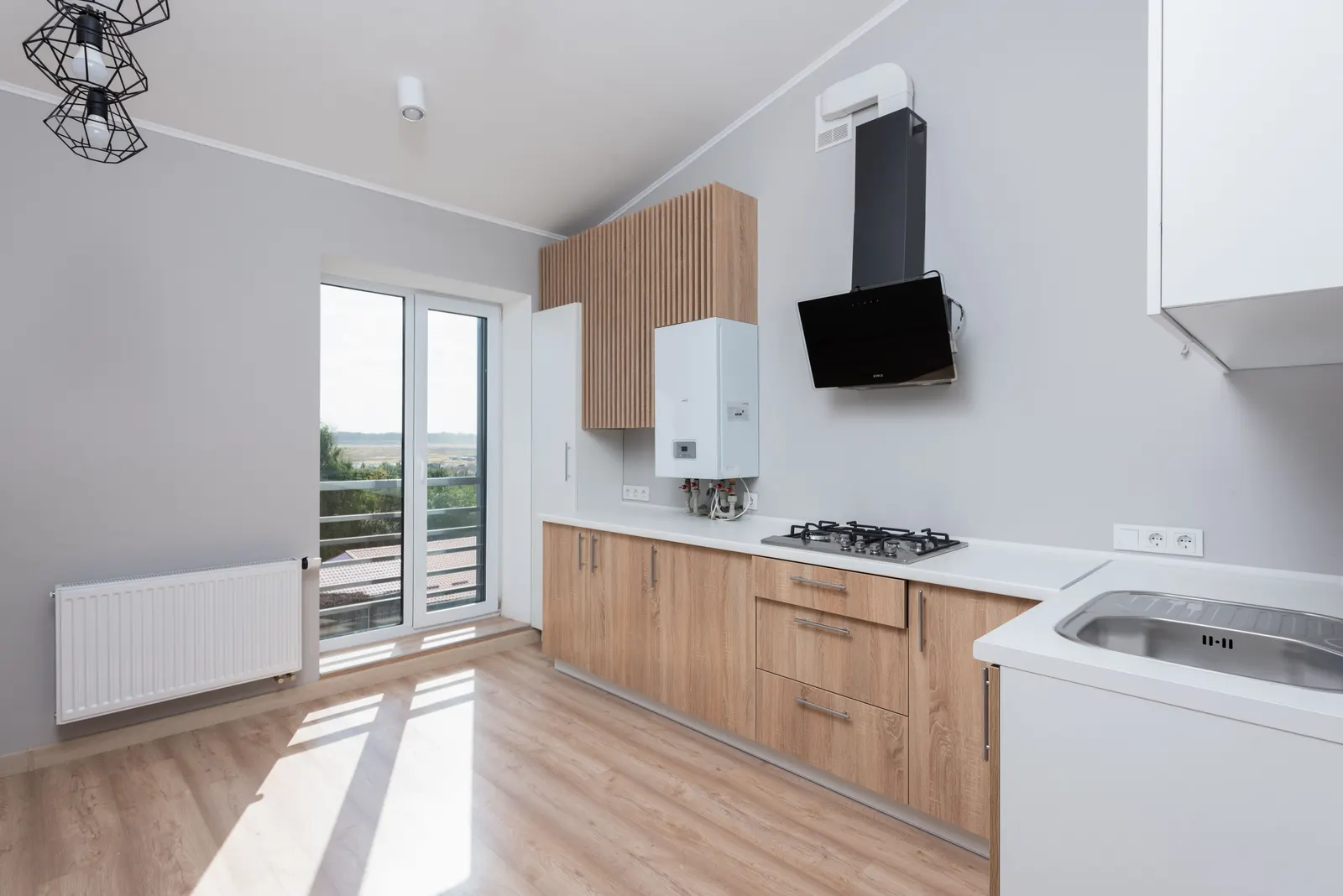
A few drips from the flue terminal outside are normal on a condensing boiler. Water running down the flue indoors, dripping from a flue joint, or staining a ceiling under a roof flue is not. It means condensate is escaping or rain is getting in, and a joint that leaks water can leak fumes, so stop using the boiler.
Is it normal for a boiler flue to drip?
Modern condensing boilers cool their exhaust gases enough to turn the water vapour in them back into liquid. That is why they have a condensate pipe, and why you see a white plume from the terminal on a cold day. Most of the condensate forming in the flue is meant to run back down into the boiler, where it is collected by the trap and sent to the drain.
An occasional drip from the terminal on a cold, damp morning is not a fault. A steady stream, icicles forming on the terminal, or water staining the wall below it suggests the flue is not falling back toward the boiler as it should. Many manufacturers specify a fall of around 3 degrees, roughly 50mm per metre, back to the boiler on a horizontal run; check the installation manual for your model. It is not dangerous in itself, but it is a sign the flue was fitted outside the manufacturer’s instructions and is worth having checked at the next service.
Where is the water actually showing up?
Where you see the water is the quickest way to tell a harmless drip from a real fault. Work out which of these matches what you are seeing.
- Dripping from the terminal outside only: usually condensate. Normal in small amounts, a fall problem if heavy.
- Water at a joint in the flue indoors, in a cupboard, loft or boxing: a flue seal has failed or a section has pulled apart. Treat as urgent.
- Water running down the outside of the flue into the top of the boiler casing: often rain on a vertical flue, or condensate escaping at a joint above.
- Damp or staining on a ceiling around a flue that goes through the roof: the roof flashing or the weather collar round the flue has failed.
- Water only after heavy rain, never on dry days: rain ingress, not condensate.
- Water inside the boiler case below the flue connection: could be the flue, but could equally be a leak inside the boiler.
Why a leaking flue joint matters more than the water
The flue carries the products of combustion out of your home. Inside it, the joints are sealed so that neither condensate nor exhaust gases escape. If one of those seals has failed badly enough to let liquid out, it may also be letting exhaust gas out, and that can contain carbon monoxide.
This is why an indoor flue leak is not a job to leave until the weekend. The water itself does little harm. The gap it came through is the concern.
Plenty of London flats and conversions have long flue runs hidden in ceilings and boxing. Industry guidance required inspection hatches to be fitted to concealed flues so an engineer can see the joints, with a deadline of 31 December 2012. If your flue runs through a void with no hatch, an engineer who finds it will class the installation as At Risk and, with your permission, turn the boiler off until access is provided. Knowing that before the visit saves a surprise.
If a carbon monoxide alarm sounds, or anyone has headaches, dizziness or nausea that ease when they go outside, open windows, turn the boiler off, get everyone out and call the National Gas Emergency Service on 0800 111 999. Then get medical advice from NHS 111, or 999 if symptoms are severe.
What you can safely check
You can look, but not take anything apart. The flue, its joints and its seals are part of the gas appliance, and any work on them is gas work. Gas work is carried out by Gas Safe registered engineers.
With a torch, follow the flue from the top of the boiler to where it leaves the building. Note where the water is forming and whether the joints have clips or screws that look loose or missing. A photo of each joint helps the engineer.
Check whether the leak lines up with rain. If the water appears only during or after a downpour, especially with a flue that goes up through a pitched or flat roof, the roof flashing is the likely cause, and a roofer may be needed alongside a heating engineer.
Make sure you have a working carbon monoxide alarm in the room with the boiler, and test it. If you do not have one, buy one before you run the boiler again.
Look at the condensate pipe and the pressure gauge too. If water is also collecting under the boiler, or the pressure is dropping, the flue may be a red herring. Our guide to a boiler leaking from underneath helps separate the two.
When to switch the boiler off
Switch the boiler off at the fused spur and leave it off if water is dripping from a flue joint inside the property, if a flue section looks disconnected or sagging, if there is any soot or discolouration around a joint, or if the carbon monoxide alarm has gone off. Do the same if water from the flue is running into the boiler casing, as long as the spur is not wet.
A drip from the terminal outside, with everything indoors dry, does not need the boiler turning off. Book it in rather than calling out at night.
Without heating in winter, an emergency boiler repair visit is the right call, because the engineer can make the flue safe or confirm it is safe to run the same night.
What the engineer does
The first job is a safety check. The engineer inspects every visible joint, checks the flue for correct support and fall, and uses a flue gas analyser at the test points on the boiler. One reading is a flue integrity check: the analyser samples the incoming air, and if its oxygen level is below normal, exhaust is leaking into the air duct somewhere along the flue.
Common fixes are remaking a flue joint with a new seal, replacing a damaged section or the terminal, re-clipping and re-supporting a run that has dropped, and correcting the fall so condensate runs back into the boiler. Flue parts are specific to each boiler make, so a genuine part may need ordering, and the boiler stays off in the meantime if the flue is not safe.
If the cause is rain getting in round a roof flue, the engineer can confirm the flue itself is sound and tell you it is a roofing job. On a vertical flue, the weather collar sometimes needs refitting as part of the heating work.
As a typical market guide, remaking a flue joint or replacing a short section often costs from about £100 to £300 including labour, depending on the make and how easy the flue is to reach. For us, the £60 call-out gets an engineer to you, and the repair price is agreed with you on site before any work starts. More on leaking boiler repair.
Questions people ask
Why is water dripping from my boiler flue outside?
On a condensing boiler, some condensate forms in the flue and a little may drip from the terminal, especially in cold weather. Heavy dripping usually means the flue is not falling back toward the boiler as the manufacturer specifies, so condensate runs outward instead of back to the trap.
Can rain get into a boiler flue?
A correctly fitted wall terminal should keep rain out. Vertical flues through a roof rely on flashing and a weather collar, and when those fail rainwater can run down the outside of the flue into the loft or onto the boiler. If the leak only appears after rain, suspect the roof seal.
Is a leaking boiler flue dangerous?
A drip at the outside terminal is not. A leak from a flue joint inside the home can be, because a gap that lets condensate out may also let exhaust gases, including carbon monoxide, escape. Turn the boiler off and have it checked.
Who fixes a leaking flue, a plumber or a gas engineer?
The flue is part of the gas appliance, so work on it is gas work. If the leak is rain coming in round a roof flue, a roofer may also be needed to renew the flashing once the flue is confirmed sound.