Leaks & burst pipes
Central Heating Pipe Leak Under the Floor
Published
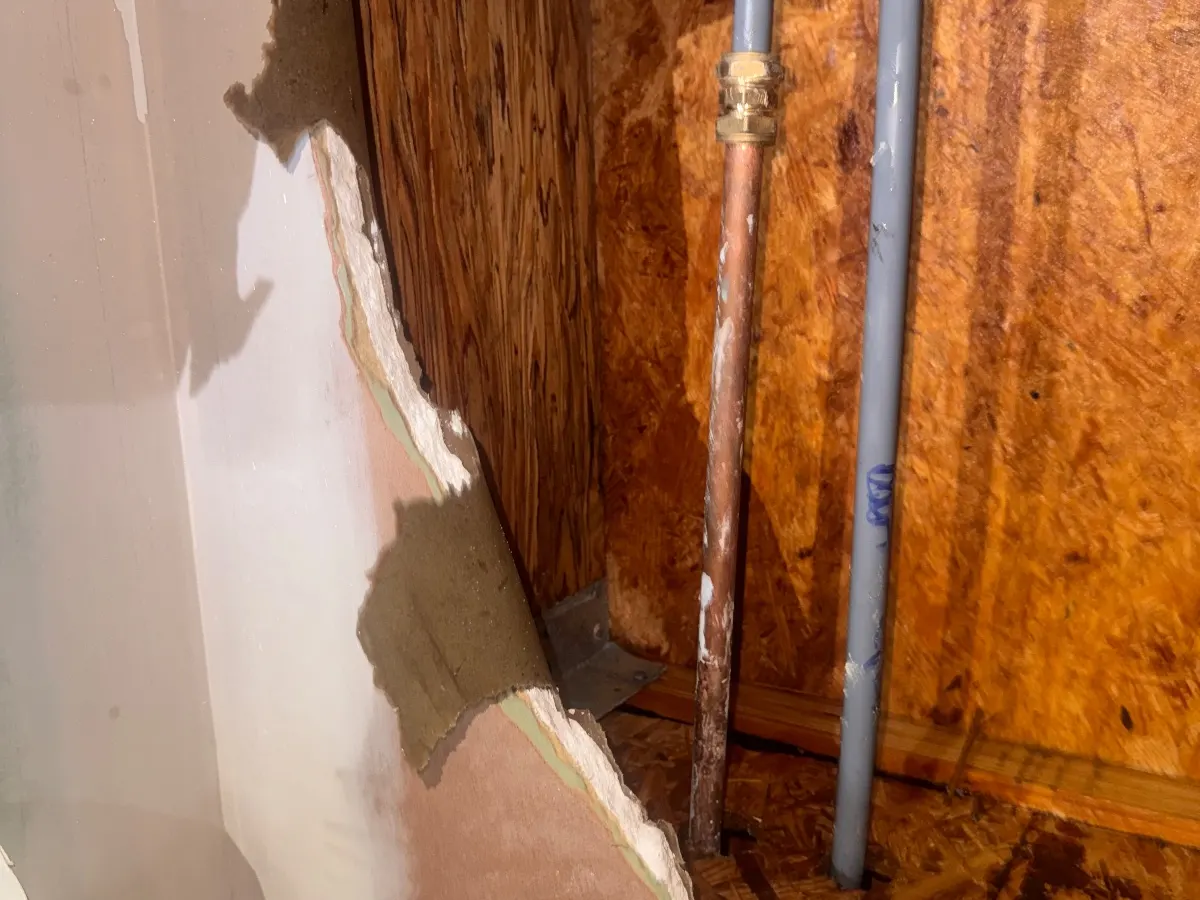
A heating pipe leaking under the floor usually shows as a boiler that keeps losing pressure, a warm or damp patch on the floor, or lifting laminate. Turn the heating off and stop topping up the pressure until the leak is found. Under timber floors it is often quick to reach; under a concrete screed it takes detection first.
Signs the leak is under your floor
Heating pipes are hidden for most of their length, so an under-floor leak is often noticed through the boiler before anything shows in the room. On a sealed system, the kind with a pressure gauge on the boiler, the classic sign is pressure that falls back below 1 bar a day or two after you top it up, with no drips at the boiler, radiators or valves.
On an older open-vented system, with a small feed and expansion tank in the loft, there is no pressure gauge to watch. The tank quietly refills itself, so a leak can run for months. A ball valve in that tank that you hear filling when nobody has used any water is the giveaway.
- Pressure dropping steadily with no visible drip, see boiler losing pressure with no leaks
- A warm spot on a solid floor, often a line running from the boiler towards a radiator
- Laminate or engineered boards cupping or lifting, or carpet damp at one edge
- A dark tide mark at the bottom of a wall or on skirting (more hidden leak signs)
- A stain on the ceiling below, in a house with suspended upstairs floors
- Black or brown water, which is heating water carrying magnetite sludge, rather than clear mains water
What to do tonight
Turn the heating off at the programmer or thermostat and let the system cool. Heating water can run at 70°C or hotter, so a leak is also a scald risk if you start lifting boards straight away. Cooling also drops the system pressure a little and slows the leak.
Do not keep topping the pressure up through the filling loop to keep the heating going. Each top-up pushes more water, and fresh oxygen, into the floor. If you need heat overnight, a portable electric heater is safer. On a combi boiler you can usually still have hot water with the heating off, because the hot water comes straight from the mains, but if the boiler has locked out on low pressure it will not fire for either.
If water is visible, catch it, lift rugs and move furniture. If it is near sockets or floor-level electrics, switch that circuit off at the consumer unit, but only from dry ground, and do not touch the consumer unit if it is wet itself. Closing the mains stopcock will not stop a heating leak on a sealed system, because heating water is a closed loop, but on an open-vented system closing the valve feeding the loft tank does stop the tank refilling into the leak.
Do not add a leak sealer to a system with a leak you can see or a floor that is wet. Sealers are designed for small weeps, not open leaks, and some boiler guarantees exclude damage from system additives. Read central heating leak sealer before trying one.
Timber floor or concrete screed: why it matters
Upstairs floors and many ground floors in older London houses are suspended timber, with pipes clipped between the joists. A leak here is usually at a joint, often a compression fitting that has been knocked or a soldered joint that has failed, or where a pipe rubs on a notched joist and wears through. Lifting a board or two over the wet area usually finds it, and the repair is a normal plumbing job.
Many post-war houses with solid ground floors, and plenty of ground-floor flats and extensions, have heating pipes laid in a concrete screed. Copper pipes buried directly in screed without a protective sleeve can corrode from the outside over the years, and the result is a pinhole somewhere along a run you cannot see. Microbore systems, with thin 8mm or 10mm copper pipes to each radiator, are particularly prone because the pipe wall is thin.
That difference is why the first question a plumber will ask is what the floor is made of and what is on top of it.
How a buried leak is found
Guessing and digging is the expensive way to do it. The usual order is to confirm the leak is on the heating and not the mains, then narrow down which circuit it is on, then pinpoint it.
- Pressure test: isolate the boiler and sections of pipework with their valves and watch which section loses pressure. This alone often narrows the leak to one radiator run.
- Thermal imaging: with the heating running, a camera shows hot water spreading from the pipe route under the screed. It works best on solid floors and is less clear under thick carpets.
- Acoustic detection: a ground microphone picks up the hiss of water escaping under pressure, useful where the pipes are cold or the thermal image is unclear.
- Tracer gas: the system is drained and filled with a hydrogen and nitrogen mix, which escapes through the floor at the leak and is picked up by a detector. It is used for small leaks that the other methods miss.
Repair or reroute?
Once the leak is pinpointed, there are two options. On a timber floor the pipe is simply repaired, either by cutting out the damaged length and jointing in a new piece or by remaking the failed joint, and the board goes back down.
On a screed floor, the engineer can break out a small area of concrete over the leak, repair the pipe and make good. That works if the pipe is otherwise sound. But if the leak is from corrosion, the rest of the buried run is likely to be in similar condition, and a second leak a metre along is common. In that case rerouting the flow and return pipes to that radiator, along skirting, through a wall or under a suspended floor elsewhere, is often the better long-term fix, and it avoids breaking up tiled or finished floors.
After any repair, the system is refilled, vented and pressurised, and a good engineer will add inhibitor to replace what was lost, then check the pressure holds over the next day. For work on the heating circuit itself, central heating repair covers the visit.
What it typically costs
Costs depend on access far more than on the leak. As a rough guide from typical UK market prices:
- Leak under a timber floor, found by lifting boards: often a short job, in the same range as a normal accessible pipe repair, commonly a few hundred pounds including making the floor good.
- Leak detection survey on a solid floor: commonly a few hundred pounds as a separate charge, before any repair.
- Breaking out screed, repairing and reinstating: several hundred pounds upwards, more if tiles or wood flooring have to be lifted and relaid.
- Rerouting a radiator circuit: depends on the length of the run and how it is hidden, and may be cheaper than repeated repairs on corroded pipe.
Questions people ask
Can I still use my boiler with a leak under the floor?
Only for hot water on a combi, and only if it has not locked out on low pressure. Leave the heating off and do not keep topping up the pressure, because each top-up pushes more water into the floor.
Will home insurance pay to find a heating leak under the floor?
Many buildings policies include trace and access cover, which pays for finding the leak and opening up the floor. The repair to the pipe itself is often not covered. Check your policy wording and tell your insurer before work starts where you can.
Why does my boiler lose pressure but I cannot see a leak?
Common hidden causes are a pipe leak under a floor or in a wall, a pressure relief valve discharging outside, or a failing expansion vessel. Checking the relief valve pipe outside is the easy first step before assuming the floor.
Is it normal for copper pipes in concrete to leak?
It is a well-known problem in older solid floors where copper was laid directly in screed without a sleeve. The pipe can corrode from the outside over decades, so a first leak is often followed by others on the same run.