Leaks & burst pipes
Dishwasher Leaking: Checking the Plumbing Side
Published
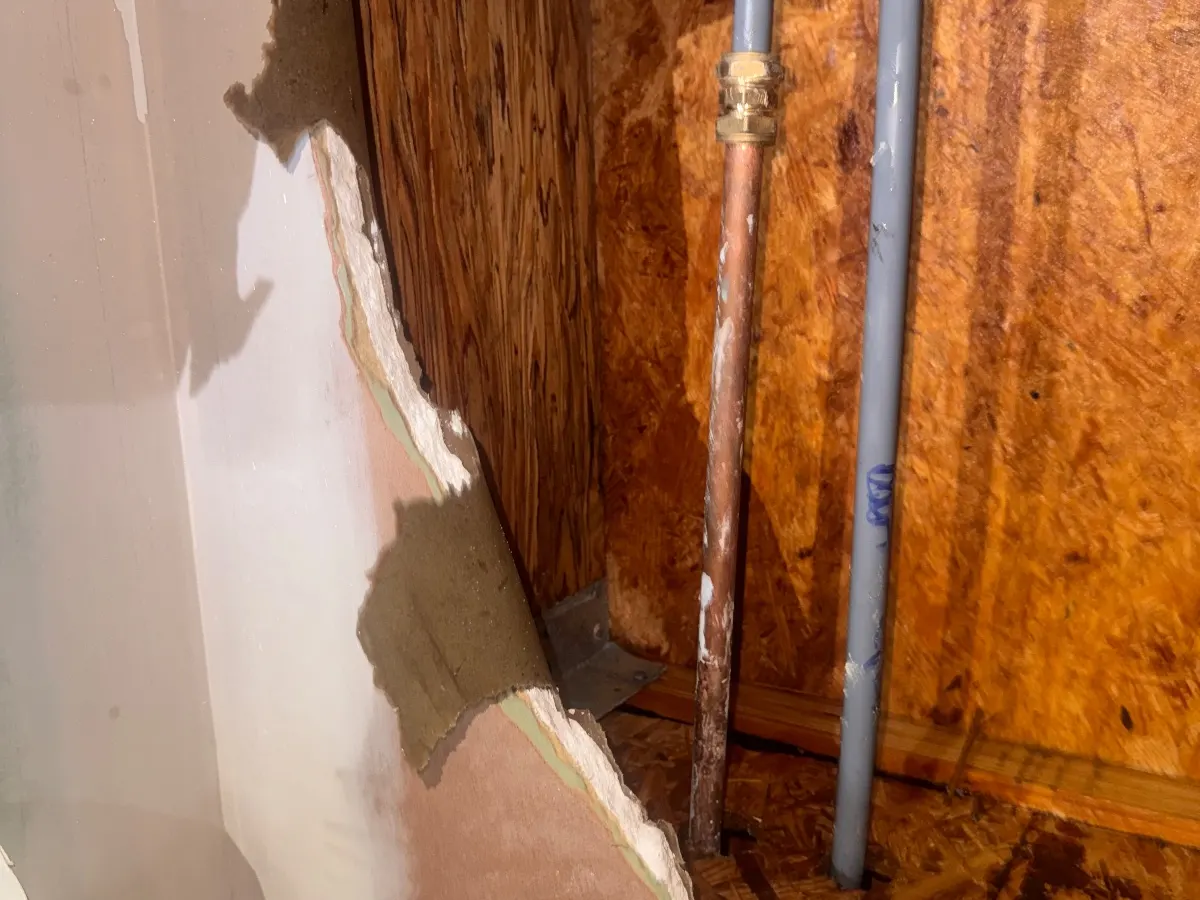
A dishwasher that leaks onto the floor is often leaking from the plumbing under the sink rather than the machine. Check the supply valve and the fill hose washer, then the drain hose clip on the sink trap spigot, then the trap itself. If those are dry and water still appears, the door seal, sump or pump inside the machine is at fault.
Make it safe, then look under the sink
Switch the dishwasher off at its socket or the switched spur above the worktop, and if the plug is behind the machine and the floor is wet, turn off the kitchen circuit at the consumer unit instead, as long as you can reach the unit on a dry floor. Shut the valve that feeds the machine, usually a small lever valve under the sink or behind the adjacent unit, by turning the lever across the pipe.
Most dishwashers are plumbed through the sink cupboard: the fill hose to a valve on the cold (sometimes hot) pipe, and the drain hose to a spigot on the side of the sink trap. So the first place to look is inside that cupboard with a torch and a dry sheet of kitchen roll. Wipe every joint dry, then run a short programme and watch which one wets the paper first.
If water has been reaching the floor under the kitchen units for some time, the chipboard plinth and cabinet bases swell. That is damage, not the leak, and it does not need to be fixed tonight.
Leaking from the supply: valve and fill hose
The fill hose screws onto a 3/4 inch threaded outlet on the valve and seals on a rubber washer inside the hose nut. A missing, flattened or split washer causes a drip that runs down the pipe to the cupboard floor. With the valve shut, unscrew the hose, check the washer and replace it if needed. Hand-tight plus a quarter turn with grips is enough; overtightening splits the plastic nut.
Many Bosch, Siemens and Neff dishwashers have an Aquastop fill hose, a thicker hose with a plastic box at the valve end containing a safety valve. If the inner hose splits, the outer sleeve catches the water and the safety valve shuts. These hoses are sold as a complete part and are replaced as a unit, not repaired.
The valve itself can weep at the spindle or where a self-cutting valve clamps onto the pipe. That leaks whether or not the dishwasher is running, and the only fix is to turn the water off at the main stopcock and replace the valve. An isolation valve that is leaking explains the types you are likely to find.
Leaking while it drains: hose, spigot and sink trap
If the puddle appears only towards the end of a programme, look at the drain side. The drain hose pushes onto a spigot on the sink trap and is held by a jubilee clip or a spring clip. A loose clip, a hose that has split at the end, or a cracked spigot lets water spray under the sink every time the pump runs.
A part-blocked sink trap or waste pipe causes the same symptom from further along. The machine pumps out faster than the blocked waste can clear, the water backs up and escapes at the weakest joint in the trap, usually a compression nut or the spigot seal. If the sink also drains slowly or gurgles, clear the trap first. Our guide to a pipe leak under the sink covers the trap joints and how to reseat their washers.
The drain hose should rise in a loop as high as the underside of the worktop before it drops to the trap. Without that loop, dirty sink water can run back into the machine, and some installations leak or smell because of it. Most manufacturers show the required loop height in the installation guide.
New sink or new dishwasher? Check this first
Leaks and flooding straight after a kitchen job usually trace back to the fitting, not a faulty part.
- A new sink trap with a dishwasher spigot is supplied with a blanking disc inside the spigot. If it was not cut out, the machine cannot drain and water can back up out of the door seal
- A drain hose pushed only halfway onto the spigot, or without its clip
- A fill hose reused from the old machine with its washer lost or the thread cross-threaded on the valve
- A machine not level, so water pools against one side of the door seal and weeps out at the corner
When the leak is inside the dishwasher
If the plumbing is dry and the floor is still wet, the water is coming from the machine. Look at the door seal for food debris or splits, check the filter in the base is clean and seated, and make sure you are using dishwasher detergent only; washing-up liquid in a dishwasher foams enough to push water out past the door.
On many Bosch, Siemens and Neff machines an E15 code, usually with the drain pump running non-stop, means water has collected in the base tray and triggered the float switch. It confirms an internal leak rather than a plumbing one. The machine needs an appliance engineer to find the split hose, sump seal or pump; tilting it to drain the base only resets the symptom.
What a plumber does and what it typically costs
A plumber deals with the valve, the pipe it sits on, the sink trap and the waste run. Typical market ranges in London, as a guide rather than our price: a replacement appliance valve, around £80 to £150; replacing a sink trap with a dishwasher spigot, around £90 to £160; unblocking the kitchen waste run, around £90 to £200 depending on how far along the blockage is.
A leak repairs visit starts with the £60 call-out at any hour. The engineer tests the supply and drain side, fixes the plumbing and tells you if the leak is inside the appliance. The repair price is agreed with you on site before any work starts. If the washing machine shares the same waste, a washing machine leaking underneath is worth reading alongside this.
Questions people ask
Why is my dishwasher leaking from the bottom of the door?
Usually a dirty or damaged door seal, the wrong detergent causing foam, or a machine that is not level. It can also be water backing up from a blocked filter or drain. Clean the filter and seal and check the level first.
Is it safe to use a leaking dishwasher?
No. Water under a kitchen worktop is close to sockets and spurs. Switch it off, shut its valve and find the source before using it again. Wash up by hand in the meantime.
Can a blocked sink make a dishwasher leak?
Yes. The dishwasher drains into the sink trap, so a blockage there makes the waste water back up and escape at the trap joints or the hose spigot. Clearing the trap often stops the leak.