Hot water problems
How to Turn Off the Hot Water Supply From a Cylinder
Published
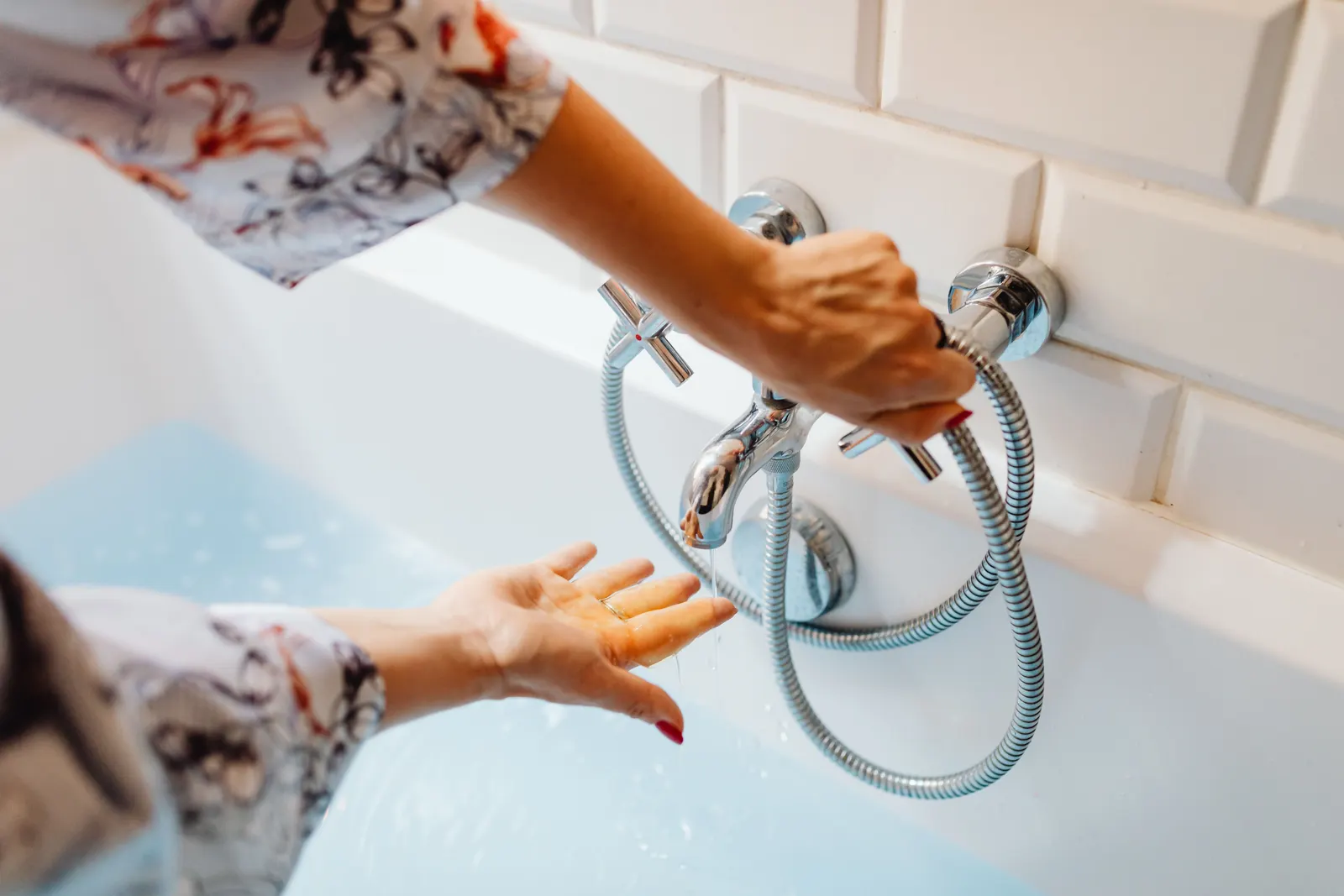
To turn off the hot water from a cylinder, switch off the immersion heater and set the boiler hot water to off, then close the valve on the cold pipe that feeds the cylinder. On a vented cylinder that is a gate valve on the pipe into the bottom. On an unvented cylinder it is the isolating valve on the incoming mains.
First, which kind of cylinder do you have?
Hot water comes out of a cylinder because cold water is pushing in at the bottom. Turn off the cold coming in and the hot stops coming out. The valve that does that is in a different place depending on how your cylinder is fed, so identify it before you start turning handles.
- Vented: a copper cylinder, often lagged with green or yellow foam, with a cold water tank in the loft above it and a pipe going up from the top of the cylinder. Water pressure at the taps is modest.
- Unvented: a larger white or steel cylinder with a manufacturer’s label, no loft tank, usually a small expansion vessel nearby (some models hold an air gap inside the cylinder instead), a brass valve group on the cold pipe and a tundish on the discharge pipe. It runs at mains pressure.
- Combi boiler with no cylinder at all: the hot water is heated on demand, so the only way to stop it is the boiler’s cold inlet valve or the main stopcock.
Step 1: switch off everything that heats the water
Do this before you touch any valve. Switch the immersion heater off at its double-pole wall switch, usually in or near the airing cupboard with a red neon. On the boiler programmer or controller, set hot water to off. If you have a solar thermal panel or a heat pump feeding the cylinder, switch its controller off too.
If you later drain the cylinder, an immersion element left on in air burns out very quickly, and a boiler firing into a coil in an empty tank does nothing useful. With the heat off, the water in the cylinder also starts cooling, which matters if you end up draining it or opening a joint.
Step 2 on a vented cylinder: close the cold feed gate valve
Follow the pipe that comes down from the loft tank. It enters the cylinder low down on the side, near the bottom. Somewhere on that pipe, usually in the airing cupboard, is a gate valve: a brass valve with a round wheel handle, often red. Turn it clockwise until it stops. That cuts the flow into the cylinder, and hot taps will slow to a stop within a minute as the pipes empty.
Gate valves are often left untouched for decades. If the wheel will not move with firm hand pressure, do not use a wrench on it. The spindle is brass and snaps easily, and a broken valve with the loft tank still full above it is worse than the leak you started with. Some also spin freely without closing, because the gate inside has come away from the spindle.
If the gate valve will not close, the fallback is to stop the loft tank itself. Turn off the main stopcock so the tank stops refilling, or tie the float arm in the loft up to a batten. Then run the cold bath tap, which on many vented systems is fed from the loft tank, until the tank empties. Our guide on how to turn off a stopcock helps if that is stiff too.
Closing the main stopcock alone does not stop a vented cylinder. The loft tank typically holds a hundred litres or more and keeps feeding it until it runs dry.
Step 2 on an unvented cylinder: isolate the incoming mains
An unvented cylinder is fed directly from the cold mains, so there is no loft tank to worry about. On the cold pipe coming into the cylinder there is a brass valve group, which usually combines the pressure reducing valve, a strainer, a check valve and an expansion relief valve. Just before it is an isolating valve, sometimes a lever and sometimes a slotted quarter-turn valve you turn with a flat screwdriver until the slot runs across the pipe.
If there is no isolating valve, or it will not move, turn off the main stopcock for the property. Our guide to where to find your stopcock covers the usual places in houses and flats. In a flat, the stopcock is often in the kitchen, the airing cupboard or a riser cupboard in the communal corridor.
Do not touch the temperature and pressure relief valve on top of the cylinder, the one with a small lever and a pipe running to the tundish. It is a safety device, not a shut-off, and lifting it releases very hot water.
Work on the safety devices of an unvented cylinder is for a competent installer, in practice an engineer with an unvented hot water (G3) qualification. Closing the supply valve and switching off the heat sources is fine for a householder.
Checking it has worked, and turning it back on
Open a hot tap upstairs. It should run for a few seconds as the pipework empties, then stop. On a vented system the cylinder is still full of hot water; you have only stopped it from being pushed out. If the hot tap keeps running at full flow, the valve you closed is not the one feeding the cylinder, or it is not sealing.
To turn it back on, open the valve slowly, then open a hot tap and let it run until the spluttering stops and you get a steady flow. That clears air from the pipes. Only once water runs steadily from the hot tap should you switch the immersion or the boiler hot water back on. If you drained the tank, that step matters even more, because the element must be fully under water before it is powered.
If you need the cylinder empty, for example to change an immersion element or to stop a leak from its lower half, that is a separate job covered in how to drain a hot water tank.
When to call someone instead
Call for help if the valve will not close and water is still escaping, if you can see hot water or steam coming out of the tundish on an unvented cylinder, or if water is coming through a ceiling near a light fitting. A seized gate valve can be replaced, and a plumber can fit a quarter-turn isolating valve that will actually work next time.
For a cylinder that is leaking, hot water tank dripping helps you work out where from. Getting the cylinder looked at has the £60 call-out at any hour, and the repair price is agreed with you on site before any work starts. If the problem is a seized main stopcock, see the stopcock repair service.
Questions people ask
Where is the hot water shut-off valve on a cylinder?
It is on the cold pipe feeding the cylinder, not on the hot pipe. On a vented cylinder it is a gate valve on the pipe from the loft tank, near the bottom of the cylinder. On an unvented cylinder it is the isolating valve on the incoming mains before the brass valve group.
Does turning off the stopcock turn off the hot water?
On an unvented cylinder or a combi, yes. On a vented cylinder fed from a loft tank, not straight away: the tank keeps feeding the cylinder until it runs dry. Close the cylinder’s cold feed gate valve instead.
Should I turn off the immersion heater when the water is off?
Yes. Switch off the immersion and set the boiler hot water to off before you isolate the cylinder, and leave them off until water is running steadily from a hot tap again.
Can I turn off the hot water and still use the cold taps?
Yes. Closing the cylinder’s cold feed valve only stops the hot. The kitchen cold tap runs straight off the mains, and other cold taps either do the same or come from the loft tank.