Leaks & burst pipes
Leak Under the Bath: Finding the Source
Published
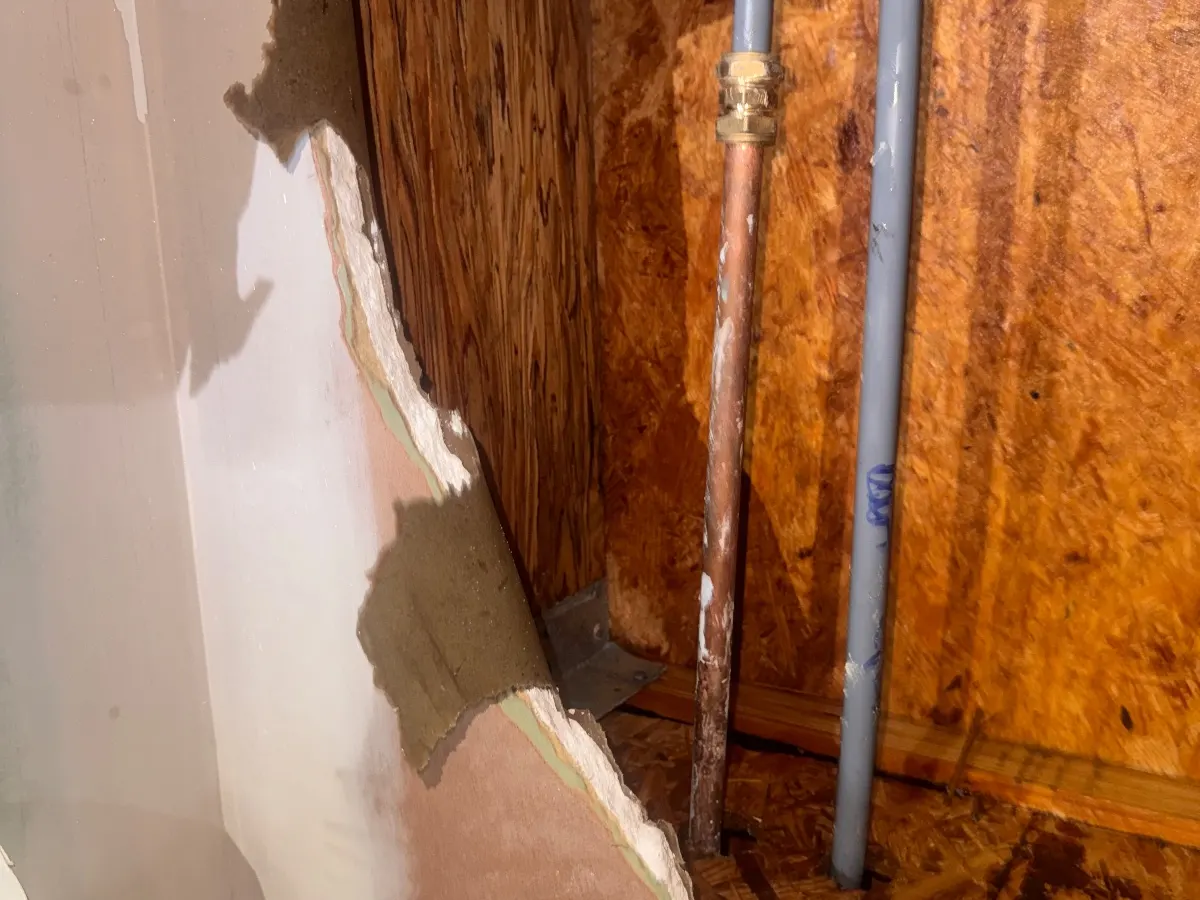
A leak under the bath usually comes from one of five places: the silicone seal along the wall, the overflow gasket, the waste and trap, the tap or shower connections, or a crack in the bath itself. Take the panel off and test each with water in a set order. Only the tap connections leak when nothing is being used.
Signs the water is coming from under the bath
Water under a bath rarely shows itself in the bathroom. The usual signs are a brown ring on the ceiling of the room below, a damp patch on a wall next to the bath, a musty smell when the panel is warm, loose or hollow-sounding floor tiles near the bath, or a floor that feels soft underfoot. If the stain below is directly under the bath rather than under the toilet or basin, it is a good first sign. Our page on a ceiling leak below the bathroom helps separate the bath from the other fittings.
A stain that grows only after someone has showered points to the seal or the shower. One that grows slowly whether or not anyone has used the bath points to a pressurised pipe.
If water is coming through a light fitting in the room below, keep that switch off and turn the lighting circuit off at the consumer unit, as long as you can reach it standing on dry floor.
Getting the bath panel off
Most bath panels are held by screws along the top edge under a trim, by push-in clips, or simply wedged under the rim and held at the foot by a plinth. Acrylic panels flex, so ease them out from one end rather than pulling from the middle. If the panel has been sealed with silicone along the top, cut the bead with a sharp knife first.
With the panel off, dry everything you can reach, put a torch under the bath and lay sheets of dry kitchen roll on the floor under the waste, the taps and along the wall side. You are looking for where the paper gets wet first, not where the puddle has spread to.
Test in this order
Each test adds one more thing to the water path, so the first test that wets the paper tells you where the leak is.
- Leave everything off for half an hour. Wet paper under the tap end with nothing running means a supply pipe, a tap connector or a valve is leaking. This one does not wait: it runs day and night.
- Fill the bath to just below the overflow and leave it. Wet paper at the plug end means the seal between the plughole waste and the bath is leaking.
- Pull the plug. A drip that appears only while the bath empties is the trap joints or the waste pipe run.
- Fill the bath until water runs into the overflow. A drip from behind the overflow plate is the overflow gasket or the overflow hose.
- Run the shower over the bath, aiming at the walls and the corners. Water that appears along the wall side is getting through the seal or the grout, not out of a pipe.
The seal: the most common cause with a shower over the bath
The silicone bead between the bath and the tiles moves every time someone gets in. Acrylic and steel baths drop slightly under the weight of water and a person, and a bead that has cured with the bath empty tears at the corners. Look for black mould under the bead, gaps you can slide a fingernail into, or silicone that lifts off in strips. Water from the shower then runs down the wall behind the bath and soaks the floor.
Resealing is a DIY job if you are patient. Cut and pull out all the old silicone, clean off every trace with a scraper and a silicone remover, wipe down with methylated spirit, and let the surfaces dry completely. Fill the bath with water before you apply the new bead, so the bath is at its lowest when the silicone sets, and leave the water in until it has cured according to the tube. Cracked grout above the bath needs the same attention, because water behind the tiles ends up in the same place.
The waste, overflow and trap
The plughole waste seals to the bath with a rubber or plastic washer under the flange, tightened by a central screw or a large nut underneath. The overflow does the same with a gasket behind the plate, joined to the waste by a flexible hose. Both washers harden with age and hot water, and the overflow one only gets tested when someone fills the bath to the brim.
Plastic trap nuts are hand-tight. If one drips, unscrew it, check the washer is seated flat and not split, and refit. A new bath trap or a full waste and overflow kit is a typical DIY store part costing roughly £10 to £40. Refitting the waste means working lying on the floor with limited room, and many baths are boxed in so tightly that the only access is by lifting the bath. If that is your situation, a leaking bath waste covers the job in more detail.
Tap and shower connections, and cracks in the bath
Bath taps have 3/4 inch threaded tails and connect to the supply pipes, which may be 22mm or 15mm, by tap connectors or flexible hoses. A weep from a tap connector nut or a corroded flexible hose leaks all the time, which is why it tends to cause the most damage below. Many baths have isolation valves on these pipes; if yours do, close them. If not, the main stopcock is the way to stop it.
A bath shower mixer adds a diverter and a hose that can drip back behind the taps when the shower is on, which is a different fault from a shower head dripping into the bath after use. On acrylic baths, look along the underside for a hairline crack, often near the waste or where the bath sits on its cradle; those appear when the feet or cradle have worked loose and the bath flexes more than it should. A cracked bath can sometimes be repaired, but it needs its support fixing first or it will crack again.
When to get a plumber in, and what they do
Call someone if the leak is on a pressurised pipe or connector, if the bath is boxed in so you cannot reach the waste, or if the room below has a stain that is spreading. A plumber will run the same tests quickly, isolate the supply, and replace the worn connector, waste or trap. If the floor under the bath has been wet for a long time, they will also check whether the joists or boards need a builder before the bath goes back.
Our leak repairs service covers this, and a ceiling water leak repair visit handles it from the room below if that is where you have noticed it. The £60 call-out applies at any hour, and the repair price is agreed with you on site before any work starts.
Questions people ask
Why is my bath leaking only when I shower?
Almost always the silicone seal or the grout along the wall. Shower water runs down behind the bath through a gap and onto the floor. Reseal with the bath full of water so the bead sets at the bath’s lowest position.
Why does the bath leak only when it is full?
That points to the overflow gasket or the overflow hose. They only carry water when the level reaches the overflow plate, so the leak shows up after a deep bath.
Can I use the bath if it is leaking underneath?
If the leak is the seal or the overflow, you can usually use it carefully with short showers or a shallower bath until it is fixed. If the supply connections are leaking, isolate them, because they leak whether or not the bath is in use.
How do I get the bath panel off?
Look for screws under a trim along the top, or clips. Many panels simply slot under the rim and are held at the bottom by a plinth. Cut any silicone along the top and ease it out from one end.