Leaks & burst pipes
Thames Water Burst Pipe or Leak: Whose Side Is It On and Who Pays?
Published
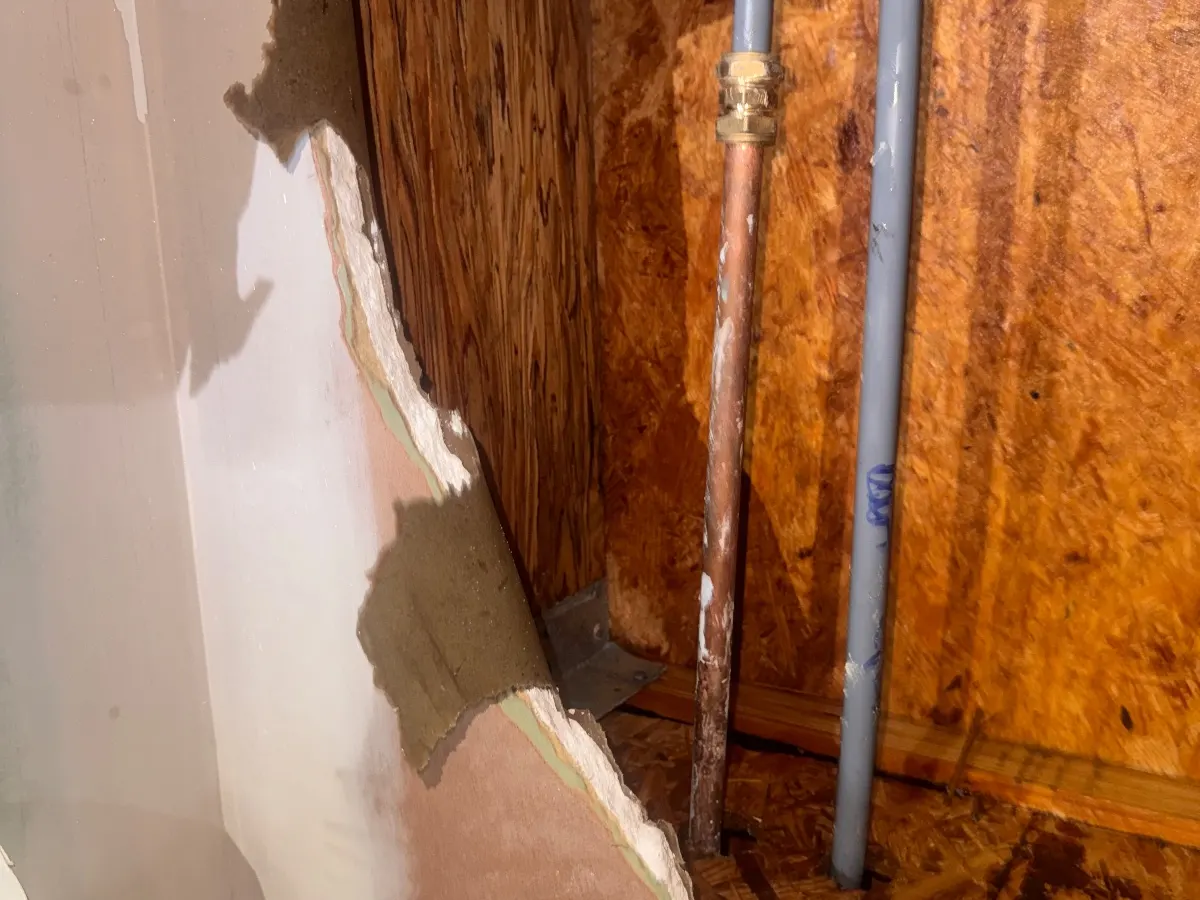
Responsibility for a Thames Water leak or burst depends on its location. Thames Water repairs the main and communication pipe up to your property boundary, where the boundary stop tap usually sits. The supply pipe from there to your house is yours, as is every pipe indoors. Their side costs you nothing; yours is your repair, usually within four weeks.
Who is responsible for a Thames Water leak on each pipe?
Picture the water travelling from the street to your kitchen tap. It passes through five pieces of pipework, and ownership changes once, at your property boundary, which is normally where the boundary stop tap is.
- The water main under the road: Thames Water
- The communication pipe, a short branch from the main to your boundary: Thames Water
- The boundary stop tap, usually under a small cover in the pavement or just inside the front garden: normally the handover point
- The supply pipe, from your property boundary to where it enters your home: you, the owner
- Everything inside, from the internal stopcock onwards, including tanks, cylinders, taps and appliances: you, the owner
If you rent, Thames Water’s position is that your landlord is responsible for fixing leaks, even where the tenancy says you pay the water bill.
How to tell which side a burst is on
Location is the first clue. Water surfacing in the road or the far side of the pavement is almost always Thames Water’s, so report the leak in the road to them rather than calling a plumber. Water in your front garden, under your path or coming up inside the house is almost always yours. The awkward zone is the strip of pavement between the kerb and your wall, where the communication pipe and the start of your supply pipe sit close together.
The second clue is the stop tap itself. Lift the cover and look. If water is pooling in the chamber and flowing from the street side, the leak is probably on the communication pipe. If the chamber is dry but the ground between it and the house is soaked, suspect your supply pipe.
The third clue is the meter, if you have one. Turn off every tap, the washing machine and dishwasher, and any outside tap. Read the meter, use no water for half an hour, and read it again. A moving dial with everything off means water is escaping after the meter. Meters in the pavement measure what passes into your supply pipe, so a moving dial points at your side. Our guides to finding your water meter and a meter running with no taps on cover the details.
If you still cannot tell, report it. Thames Water will send someone to assess it and tell you whose pipe it is. That visit is free. Ask for the outcome in writing, because your insurer or landlord may want it later.
The cases that cause arguments
No boundary stop tap. Plenty of older London terraces have no visible stop tap, or one buried under a front wall or paving. Thames Water’s own wording places your responsibility from the boundary of your property, so without a stop tap the property line is the handover.
Shared supply pipes. Victorian and Edwardian terraces often have one supply pipe feeding several houses, branching off inside a garden or under the back alley. Thames Water treats the shared section as the joint responsibility of every owner on it and does not step into disputes between neighbours. A leak on a shared run needs an agreement on who pays what, ideally before the digger arrives.
Flats. In a converted house or a purpose-built block, the pipe from the boundary to the building is usually the freeholder’s, and the pipes rising through the building are shared. The pipes inside your flat after its own stopcock are yours. Check the lease, which normally sets out who maintains what. For water coming through from above, see a leak from the upstairs flat.
A stop tap in an odd place. Thames Water says it looks after the pipes under roads and pavements, and that your supply pipe runs from the boundary of your property. If your stop tap sits well away from the boundary, in the middle of the front garden or right out at the kerb, do not assume it moves the line. Ask Thames Water to confirm in writing whose the leaking section is before anyone digs.
Who pays, and the four-week rule
On Thames Water’s side, you pay nothing. They find it, dig it, repair it and reinstate the surface.
On your side, the repair cost is yours, but two things soften it. First, if you are billed on a meter, Thames Water offers a leak allowance for the water lost, as long as you get the leak repaired within four weeks of it being confirmed and tell them once it is done. If you have no past meter readings to compare against, the allowance is worked out from the typical use of a similar sized property. Second, many buildings insurance policies include trace and access cover, which pays to find a hidden leak and open up the ground or floor to reach it. The repair of the pipe itself is sometimes excluded, so read the wording.
If you leave a confirmed leak unrepaired beyond four weeks, Thames Water can step in, carry out the work and charge you for it, and in an emergency they can shut off the supply. The water leak costs and your bill guide explains how the allowance claim works.
Before any digging, ask Thames Water whether they currently offer any help with customer supply pipe repairs or lead pipe replacement. Offers like these have changed over the years, so get the current position from them rather than relying on what a neighbour was told.
Getting your side repaired
For a burst on your supply pipe or anywhere indoors, the first job is to stop the water. Close the internal stopcock, usually under the kitchen sink or where the pipe comes up through the floor. If that does not stop it, the leak is before the stopcock and you need the boundary stop tap, which takes a long-handled stop tap key. See how to turn off a stopcock.
An engineer then confirms the leak position, often by closing valves in turn and watching the meter, or by listening along the pipe run. Many older London supply pipes are lead or galvanised iron. A single failed joint can be cut out and joined with a coupling rated for burial; a corroded or lead pipe is better replaced in blue polyethylene (MDPE), usually by digging a trench or moling under the path.
With us, the visit is the £60 call-out and the repair price is agreed with you on site before any work starts. Our emergency burst pipe repair page explains the visit. As a typical market range, a single underground joint repair is often a few hundred pounds, and a full supply pipe replacement across a front garden commonly costs more than a thousand, depending on length, depth and surface.
Questions people ask
Does Thames Water fix burst pipes for free?
Only on their own pipework: the main and the communication pipe up to your boundary stop tap. A burst on your supply pipe or inside your home is yours to repair, though you may be able to claim a leak allowance on your bill.
How long do I have to fix a leak on my supply pipe?
Thames Water asks for the repair within four weeks of the leak being confirmed. Meeting that deadline is also a condition of the leak allowance.
Is the water meter in the pavement mine or Thames Water’s?
The meter belongs to Thames Water. What matters for a leak is which side of the boundary stop tap the pipe is on, not who owns the meter.
Who pays if a burst on Thames Water’s side floods my home?
Take photographs, report it straight away and claim from Thames Water on 0800 316 9800, which is liable for escapes from its pipes whether or not it was at fault. Your home insurer can also handle it and recover the cost from them.