Leaks & burst pipes
Water Leak at the Meter
Published
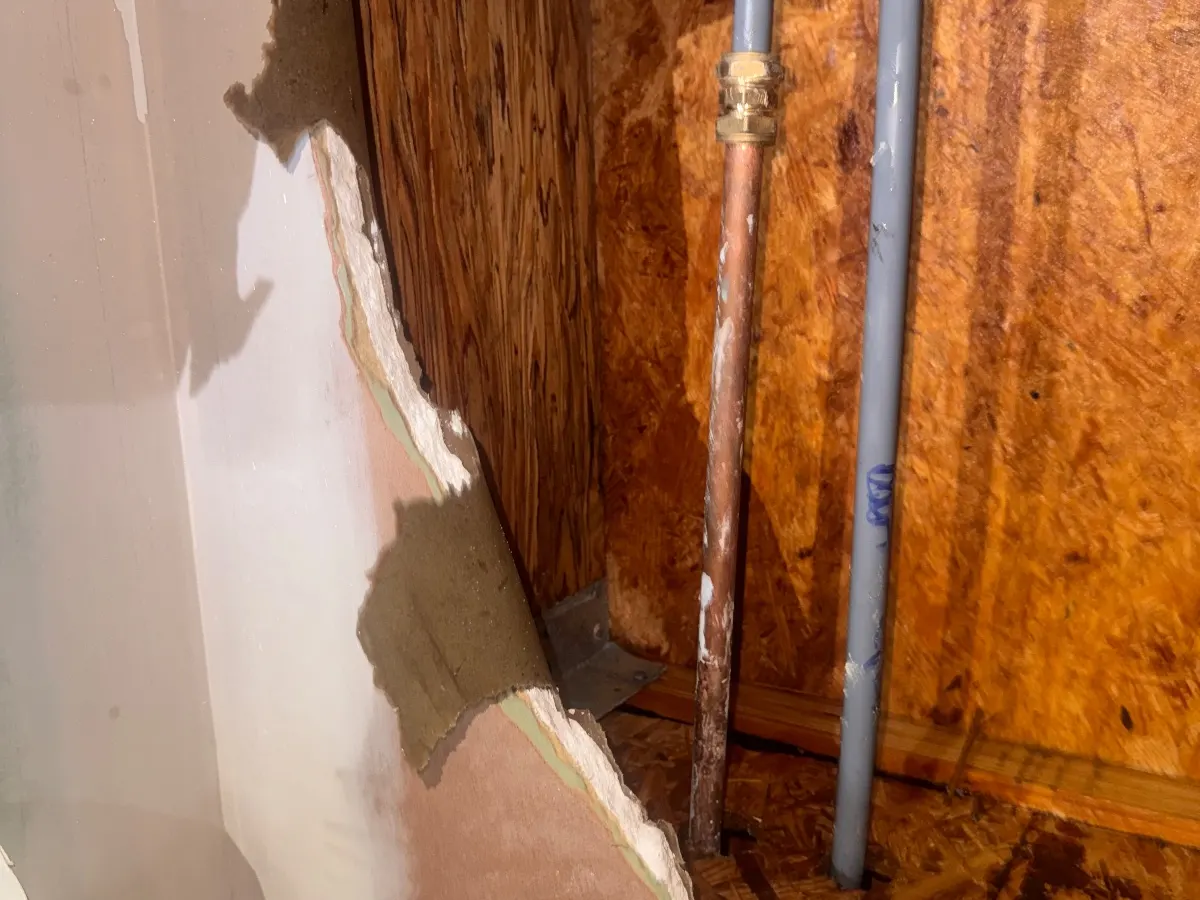
A leak from the meter itself, or from the stop tap and fittings in the same chamber, is normally the water company’s to fix, because the meter and outside stop tap are their equipment. A leak on the pipe running from the chamber towards your house is your supply pipe, and that repair is yours.
Who owns the meter, and why it matters
Thames Water describes both the external stop tap and the meter as its own apparatus. The meter usually sits in the same small chamber as the outside stop tap, under a metal or plastic cover in the footpath, the driveway or the front garden. When the leak is on that equipment, it is theirs to repair.
The catch is that the meter’s position does not decide who owns the pipe. Thames Water says so plainly in its leakage code of practice. The company owns the main and the communication pipe up to the boundary. From the boundary into the house, the supply pipe is yours, even when the meter sits a few feet inside your garden. So a wet meter pit can be a company leak, your leak, or just rainwater, and it is worth ten minutes to find out which before you phone anyone.
Find out where the water in the meter pit comes from
Most meter chambers have some water in them after rain, and that on its own is not a leak. What you are looking for is water that keeps coming back in dry weather, or a meter that records flow when nothing in the house is running. Work through it in this order.
- Turn off every tap and appliance, check no cistern is filling, and look at the meter’s small flow indicator (a star, cog or triangle). If it turns, water is passing through the meter
- Close your inside stopcock and look again. If it still turns, the leak is between the meter and the stopcock, on your supply pipe
- If the chamber is full, bail it out with a cup and sponge and watch where fresh water appears: from the meter body or its nuts, from the stop tap spindle, or from the pipe entering the side of the pit
- Clear water rising steadily while the meter stays still points to a leak on the company side, before the meter
- Muddy water that seeps in slowly and stops after a dry day is usually ground water
Do not undo, tighten or lever the meter or its fittings. It belongs to the water company and many carry a tamper seal. Lifting the lid and looking is fine.
Leak on the meter or stop tap: report it, and what you will be asked
If the water is coming from the meter body, the joints either side of it or the stop tap spindle, report it to Thames Water, or whichever company supplies you, as a leak on their equipment. Thames Water’s code of practice says leaks on the meter and the connections from the pipe to the meter are its responsibility to repair, unless there is evidence of wilful damage. If the meter went in only a few weeks ago, say so: a weeping joint on a new meter points straight back at the installation. Take a photo into the open chamber, with the meter face visible, and you will not need to describe it twice.
There is nothing to pay for a repair on their apparatus. If the leak was on their side of the meter, it has not been recorded on your bill either. If it was on the meter’s outlet side and your meter has been counting the lost water, ask for the bill to be looked at once it is fixed.
Meanwhile, you can keep using your water as normal unless the leak is heavy. If the stop tap in the chamber is the part leaking, do not try to turn it off yourself: old stop taps often start leaking more once disturbed.
Leak on the pipe after the meter: your supply pipe
If the meter spins with the stopcock closed, or water is visibly coming from the pipe leaving the house side of the chamber, the problem is your supply pipe. You are responsible for having it repaired, and Thames Water expects it done within four weeks of the leak being confirmed. If a formal notice is served under Section 75 of the Water Industry Act 1991 and the deadline passes, they can do the work and recover the cost. Where one pipe feeds a row of terraced houses, each owner is responsible for the part serving only their home, and the neighbours share responsibility for the shared section.
A plumber will usually close the outside stop tap for a short time, open the ground next to the chamber and look at the first joint. On older London properties the weak point is often where a newer plastic pipe was joined to an old lead or iron one when the meter went in. A single failed joint near the pit can often be cut out and remade the same day. A split running the length of an old lead pipe is a replacement job. See underground water leaks for what the bigger version involves.
For a leak you cannot stop, book an emergency leak repair: you pay the £60 call-out and the repair price is agreed with you on site before work starts. Typical market prices for a single joint repair beside a meter chamber run from around £150 to a few hundred pounds depending on how deep the pipe is and what surface has to be lifted.
A leak at an indoor meter
Some meters are fitted inside, usually under the kitchen sink next to the inside stopcock, or in a basement or garage. A drip from one of the nuts either side of an indoor meter is still worth reporting to the water company first, since the meter is theirs. Put a container underneath and dry the cupboard base so the chipboard does not swell.
Closing the inside stopcock only stops a leak on the house side of the stopcock. If the drip is on a meter or joint before the stopcock, only the outside stop tap will stop it. Our guide to finding your water meter shows the usual indoor positions, and stopcock repair covers a stopcock that is weeping or seized.
Getting the lost water taken off your bill
If your meter recorded water lost through a leak on your supply pipe, Thames Water offers a leak allowance once the repair is done. They compare your normal use for a similar period with what the meter recorded and credit the difference. For a leak on your own pipework the adjustment covers the period of abnormal use back to when the leak started, up to a maximum of two years. You need proof of repair, such as the plumber’s invoice.
For supply pipe leaks you can claim each time it happens. For leaks on internal pipework, the allowance is given once, and Thames Water does not usually allow for leaks beyond the inside stopcock unless you could not reasonably have known about them. No allowance is made where a Section 75 notice had to be served. The conditions are strict on timing: the repair must be done within four weeks of the leak being confirmed, and the claim made within three months of the repair date, even if no bill has arrived yet. Getting a leak taken off your water bill goes through the claim step by step.
Questions people ask
Is a leak at the water meter my responsibility?
Not if the water is coming from the meter itself or the stop tap beside it: that equipment belongs to the water company. If it is coming from the pipe on the house side of the chamber, that is your supply pipe and the repair is yours.
Is it normal for a water meter chamber to have water in it?
A little water after rain is normal. A chamber that refills in dry weather, or water flowing in while the meter records use with everything turned off, is a leak.
Can I turn off the water at the meter?
The stop tap is usually in the same chamber, but it belongs to the water company and older ones can start leaking or break when turned. Use your inside stopcock first. If you must use the outside one, turn it gently and never force it.
Will I be charged for water lost through a leak before the meter?
No. Water lost before it reaches the meter is not recorded, so it never reaches your bill. Only water that passes through the meter is charged.