Leaks & burst pipes
Water Leak in a Flat: First Steps for Tenants and Owners
Published
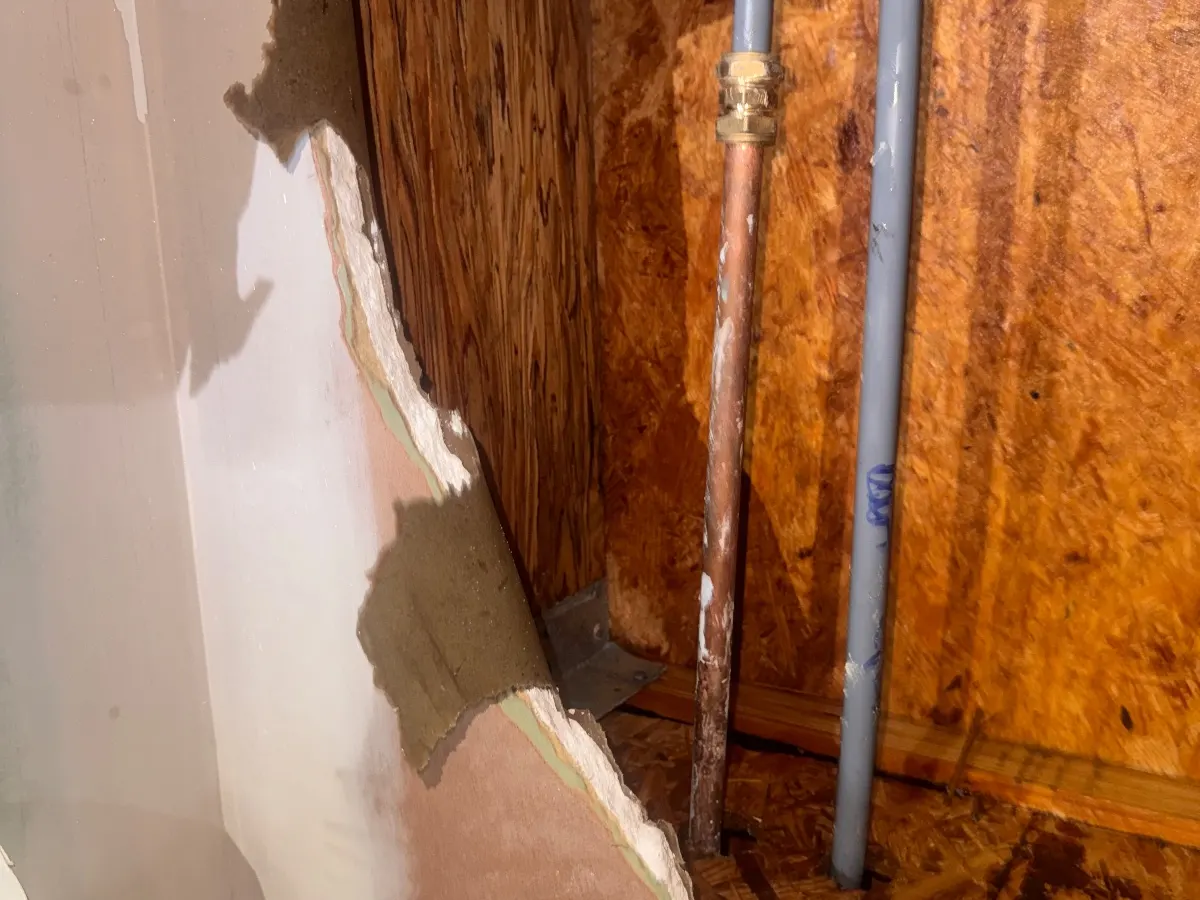
In a flat, stop the water first: close your stopcock, often under the kitchen sink, in an airing cupboard or in a riser cupboard in the corridor. Make electrics safe, then warn the flat below. Tenants report to the landlord in writing; owners contact the managing agent if shared pipes or the building are involved.
Is the water coming from your flat or from above?
Flats are stacked, so the first job is to work out which way the water is travelling. Water dripping from your ceiling is almost always from the flat above or a shared pipe in the floor between. Water pooling on your floor, under your sink, around your toilet or near your boiler is almost always yours.
If it is coming from above, go upstairs and knock. The quickest fix is usually theirs: a stopcock, an appliance valve or simply turning off a bath tap. The detailed question of who pays is in leak from the upstairs flat. Tonight, the only aim is to get the water stopped and protect your own flat.
If the leak is yours, remember the flat below. Water finds its way through floors quickly, and your neighbour may not notice until their ceiling stains. Knocking on their door early is both courteous and useful, because they can tell you where water is appearing, which helps pinpoint the leak.
Where the stopcock is in most flats
Flats are harder than houses because the stopcock is often not where people expect. Check these in order:
- Under the kitchen sink, the most common spot, sometimes behind the back panel of the cupboard
- In the airing cupboard or boiler cupboard, near where the cold main comes up
- Beside or behind the toilet or bath panel in the bathroom
- In a riser or service cupboard in the communal corridor, often locked or behind a panel with a meter
- In a purpose-built block, sometimes a valve on each flat’s supply in a basement or ground-floor plant room
The first ten minutes, in order
Close your stopcock clockwise until it stops. If it will not turn, or you cannot find it, the isolating valve on the leaking appliance or pipe may be enough; it is the small valve with a screwdriver slot or lever near toilets, taps and washing machines. Our guide to a stopcock in a flat goes into the less obvious locations.
Then make the electrics safe. If water is near sockets, light fittings or the consumer unit, switch off at the consumer unit only if you can reach it from dry ground. If the consumer unit itself is wet, do not touch it.
Open the hot and cold taps to drain the pipes once the water is off. Catch what is dripping, lift rugs, move electronics, and photograph and film the damage before you start cleaning. Those photos are what the insurer, landlord or freeholder will ask for later.
If water is coming through a ceiling light or the ceiling is bulging, keep everyone out of that room and turn off the lighting circuit, provided the consumer unit is dry. A saturated plasterboard ceiling can fall.
If you rent: who to tell and what the landlord must do
Report the leak to your landlord or letting agent in writing as soon as you can, even if you have already phoned. A text or email with photos and the time you found it creates a record. In England, the Landlord and Tenant Act 1985 puts the repair of pipes, water installations and the structure on the landlord, and their duty is triggered once they know.
If you rent from a council or housing association, Awaab’s Law has applied since 27 October 2025. Government guidance lists significant leaks as an example of an emergency hazard, and for emergency hazards the landlord must both investigate and complete the work needed to make the home safe within 24 hours of becoming aware of the hazard. Say clearly in your report that water is escaping and where.
If the water is still running and you cannot reach the landlord or the out-of-hours number, getting a plumber to stop it is reasonable. Tell the landlord straight away that you have, keep the invoice, and let them arrange any further repair. Your tenancy agreement may say more about emergency repairs.
If you own the flat: what is yours and what is the building’s
Leaseholders need their lease. It sets out the demise, meaning which parts belong to your flat. As a rule of thumb, pipes, wastes and appliances that serve only your flat are yours to repair, while shared supply risers, soil stacks, the roof and the main structure are usually the freeholder’s.
If the leak is in anything shared, call the managing agent’s emergency line. They usually hold the block buildings insurance, have access to riser cupboards and plant rooms, and may have keys to other flats for emergencies. If the leak is in your own pipework, fixing it is your job, but the damage to the building, including the flat below, will often go through the block policy.
Either way, tell the managing agent in writing. Block insurers want early notice, and a leak that is reported late can complicate a claim.
Getting a plumber in, and what they will do
Once the water is off, you have a little time. Check whether the leak can wait until the morning: if you still have a working toilet, the leak is isolated at an appliance valve and nobody below is affected, it may. If the stopcock is the only way to stop it and that leaves you with no water, or it will not close, or water is still coming through from a shared pipe, it cannot.
On the visit, the plumber confirms the source, including whether it is yours, the flat above or a shared pipe, then repairs or isolates it and restores the water where possible. In a flat with limited access this may mean opening a bath panel, a ceiling hatch or boxing. For water coming through a ceiling, ceiling water leak repair explains that visit, and for other leaks leak repairs covers what is included.
The £60 call-out applies at any hour, and the repair price is agreed with you on site before any work starts. Ask for a written invoice naming the cause of the leak; your landlord, freeholder or insurer will want it.
Questions people ask
Who do I call first if my flat is leaking?
Stop the water yourself first at your stopcock or the appliance valve. Then call your landlord or letting agent if you rent, or the managing agent if you own and the leak involves shared pipes. Warn the flat below.
Can I call a plumber myself if I rent?
If water is escaping and you cannot reach the landlord or their emergency contact, getting it stopped is reasonable. Tell the landlord straight away, keep the invoice and let them arrange any permanent repair.
What if I cannot find the stopcock in my flat?
Check under the kitchen sink, the airing cupboard, the bathroom and the corridor riser cupboard. If none works, close the isolating valve on the leaking fitting, or call the managing agent, who may control a valve for your flat in a plant room.
Does Awaab’s Law cover leaks in private rented flats?
At the moment Awaab’s Law applies to social housing, meaning councils and housing associations. The Renters’ Rights Act 2025 allows the government to extend it to private renting, but no start date has been set. Until then, private tenants rely on the landlord’s repairing duties under the Landlord and Tenant Act 1985 and their tenancy agreement.