Leaks & burst pipes
Water Spots on the Ceiling but No Leak?
Published
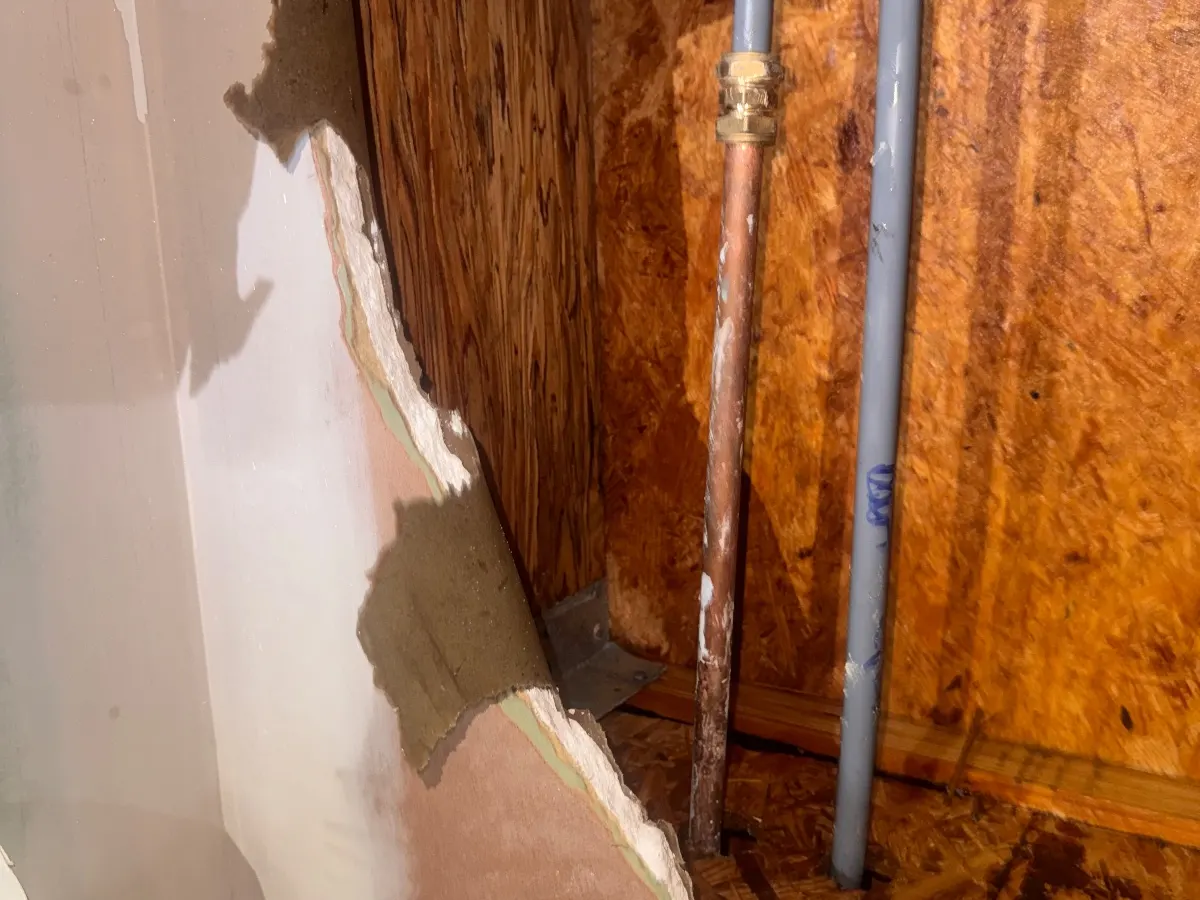
Water spots on a ceiling with no visible leak usually mean condensation on a cold patch of ceiling or pipe, an old stain bleeding back through fresh paint, or a leak that only runs sometimes, such as in heavy rain or when one shower is used. A spot that keeps growing is being fed by water.
Is the spot wet now, or just stained?
Start by touching it. Press the centre of the mark with the back of your fingers, then press a patch of dry ceiling nearby. A wet or active spot feels cold and slightly soft and may leave damp on your skin. An old stain feels exactly like the rest of the ceiling.
A cheap pin moisture meter makes this less of a guess. Readings on plasterboard are relative rather than exact, so compare the spot with clean ceiling in the same room. A spot that reads well above the surrounding ceiling is holding water now.
Then draw round the edge of the mark lightly in pencil and date it. Check it again after a few days, after a shower, and after the next heavy rain. A stain that stays inside the line is old. One that spreads past it is being fed.
The causes when there is no obvious leak
Once you know whether it is live or old, the cause usually becomes clear. These are the common ones, roughly in the order they turn up.
- Condensation on a cold spot: patches that appear in cold weather on ceilings under a loft, or near an outside wall, where insulation is thin or missing. Often grey or speckled with mould rather than a brown ring.
- Bathroom condensation: spots or a cloud of small marks over the shower, worse in winter and when the extractor fan is weak or switched off.
- An old stain bleeding through: a previous leak was fixed and painted over with ordinary emulsion, and the dissolved residue in the stain slowly works back through.
- An intermittent plumbing leak: a shower seal, a bath waste or a toilet connection that only leaks in use, so it is dry when you look.
- A roof or gutter leak: marks on a top-floor ceiling that appear or grow after wind-driven rain, often near a chimney, a valley or a flat-roof edge.
- Sweating cold pipes: uninsulated cold water pipes or a cold water tank in the loft collecting condensation in humid weather and dripping onto the ceiling below.
- An air conditioning or boiler condensate line: a slow drip from a blocked or disconnected condensate pipe running above the ceiling.
Match the spot to the pattern
The timing of the spot usually gives the cause away, so note when it gets worse.
Worse on cold mornings and in winter, better in summer, and no plumbing directly above: condensation. It forms where warm, moist room air meets a surface colder than the air’s dew point. The classic places are the ceiling edge along an outside wall, the corner above a window, and patches under gaps in loft insulation. You will often see the joist lines as darker stripes, because the timber and the insulated gaps between the joists lose heat at different rates.
Worse after showers: bathroom steam or a leak in the bathroom itself. If the spot is on the bathroom ceiling, it is usually steam, unless there is a bathroom, tank or roof directly above it. If it is on the ceiling of the room below, it is almost certainly water escaping from the bathroom; see a ceiling leak below the bathroom for the test order.
Worse after heavy rain: the roof, a gutter, flashing or a blocked hopper head. That is a roofer’s job, not a plumber’s, although you can check from the ground for a blocked gutter or a gutter joint that drips in rain.
Worse in warm, humid weather in a room under the loft: cold pipes or the loft tank sweating, or, where one runs above the ceiling, an air conditioning unit whose condensate cannot drain. Lift the loft hatch on a muggy day and feel the pipes. Beads of water on them confirm it, and foam pipe lagging solves it.
No pattern, and slowly spreading: a small, constant plumbing leak. A pinhole in a pipe or a weeping compression joint can take weeks to show and never drips visibly. Your water meter can prove this; see a meter running with no taps on.
Checks you can do yourself
Most of these need only a torch and a chair.
Look in the loft above the spot if there is one. Check the tank, the pipes and the underside of the roof for drips, tide marks on timbers or wet insulation. Move insulation carefully and put it back.
Run the bathroom tests. Use the shower, bath, basin and toilet above the spot one at a time, with a gap between each, and check the ceiling after each one.
Check the extractor fan. Hold a sheet of toilet paper against the grille with the fan on. If it is not pulled flat against the grille, the fan is not moving enough air. Approved Document F expects an intermittent bathroom extractor to move 15 litres per second.
Do the meter test. Turn off every tap and appliance, note the meter reading, use no water for half an hour and read it again. Any movement means water is escaping somewhere in the house.
If a spot is near a light fitting and feels wet, switch off the lighting circuit at the consumer unit, if it is dry and safe to reach, before you investigate further.
When to call a plumber, and what they do
Call a plumber if the spot is growing, if the meter moves with everything off, if a combi boiler is losing pressure at the same time, or if the ceiling feels soft. Those point to a pipe leak rather than condensation, and a hidden pipe leak does more damage the longer it runs.
The engineer confirms the moisture level with a meter, uses a thermal camera to follow warm or cold tracks in the ceiling and walls, and runs the fittings above in turn. Where needed, they lift one floorboard or panel above the spot instead of cutting into the ceiling, because the fix is made from above. For water already coming through, see emergency ceiling leak repair. You pay the £60 call-out, and the repair price is agreed with you on site before any work starts.
If the cause turns out to be condensation, the fix is better ventilation and insulation, not plumbing. If it is an old stain, wait until it has been dry for a couple of weeks, seal it with a stain-blocking primer, then repaint. Ordinary emulsion alone will let it come back. For other signs worth checking, read our guide to hidden leak signs.
Questions people ask
Can condensation cause water spots on a ceiling?
Yes. It is the most common cause of spots with no leak, especially on ceilings under a loft and in bathrooms. The marks are often speckled or mouldy and get worse in cold weather.
Why does a water stain keep coming back after painting?
The stain contains water-soluble residue that bleeds through ordinary emulsion. Make sure the area has been dry for a couple of weeks, seal it with a stain-blocking primer, then repaint.
How can I tell if a ceiling stain is old or new?
Mark the edge in pencil and date it. If it spreads past the line, or feels cold and soft, or a moisture meter reads high compared with nearby ceiling, it is active.
Could a water spot on the ceiling be a roof leak?
On a top-floor ceiling, yes, particularly if it appears after wind-driven rain. Check the loft and the gutters. Roof leaks need a roofer rather than a plumber.