Boiler fault codes
Potterton E1 Fault Code: Read the Digits After It
Published
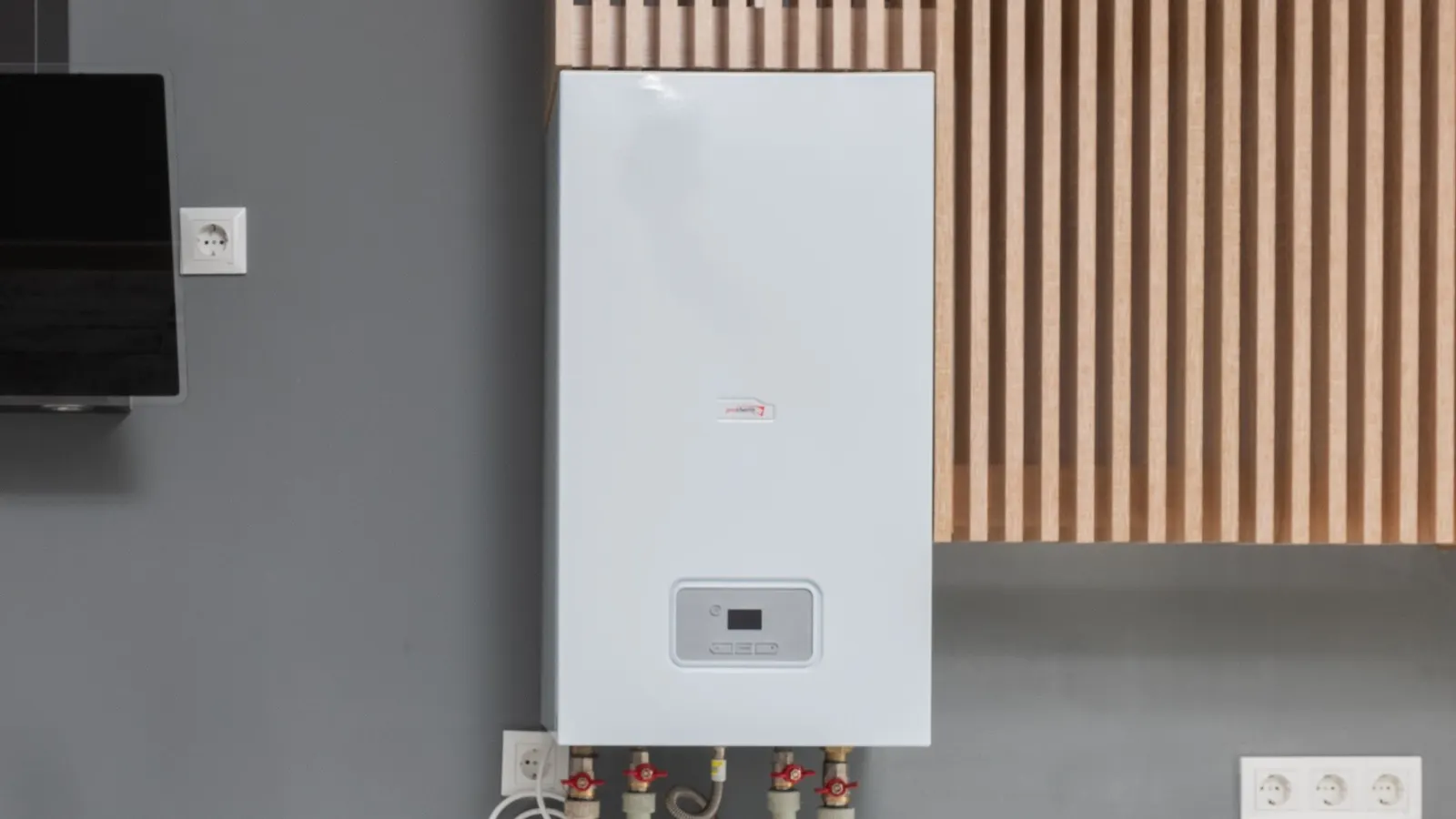
Potterton display
E1
What it means
On a Potterton Promax, E1 is the first half of a three-digit fault code. The display shows E1, then two more digits, and it is those digits that say whether the problem is low pressure, a failed ignition or a faulty part.
Safe to check yourself
- Watch the display and note the two digits that flash after E1
- Check the pressure gauge: it should sit between 1 and 1.5 bar when cold
- Check the gas is on and the meter has credit
- Look at the condensate pipe outside for ice in cold weather
- Hold the selector in the reset position for at least five seconds, once
Call an engineer if
- The code is E125 or E160, or E20, E28 or E50 on the two-digit side (after a frozen condensate pipe has been ruled out for E28)
- E133 or E110 returns after one reset
- You have to top up the pressure more than a couple of times a year
- You smell gas: open windows, shut the gas off at the meter if you can reach it safely, avoid switches, and call the National Gas Emergency Service on 0800 111 999 from outside
E1 on a Potterton boiler is rarely the whole code. The Promax user guide explains that three-digit codes are split, so E133 shows as "E1" alternating with "33". Read the second pair of digits: 19 means low pressure you can top up, 33 means the boiler failed to light, and several others need an engineer.
Which Potterton code is hiding behind E1?
The Promax Combi user guide sets out how the display works. Two-digit codes show as E then the number, so E50 appears as E followed by 50. Three-digit codes do not fit, so the boiler shows E1 and then the last two digits in turn. Stand in front of it for ten seconds with your phone camera running and you will catch both halves.
- E119, water pressure switch not operated: the system pressure is under 0.5 bar.
- E133, interruption of gas supply or flame failure: the boiler tried to light and could not see a flame.
- E110, safety thermostat operated: the heating water overheated.
- E130, flue sensor operated: the flue got too hot.
- E125, circulation fault on the primary circuit: water is not moving through the boiler.
- E160, fan or fan wiring fault.
E1 then 19: topping up a Promax
The Promax user guide describes a filling loop under the right-hand side of the boiler with two blue-handled taps and a separate filling pipe. With the boiler cold, check both blue handles are off, take off the blanking caps, fit the pipe with its washers and hand-tighten the wing nuts. Open one tap fully, then open the second slowly while you watch the gauge. The guide says to close both once the gauge reads between 1 and 2 bar; stopping at 1 to 1.5 bar keeps you in the normal range. Remove the pipe and refit the caps.
The boiler should start without a reset once the pressure is back. If you find yourself doing this every week or two, the water is going somewhere; our guide to a boiler that keeps losing pressure shows where to look, and a leaking pressure relief valve is one of the most common culprits.
E1 then 33, 10 or 30: the reset, and its limit
For these three, Potterton allows a reset: turn the selector fully to the reset position and hold it for at least five seconds. For E133, first confirm the gas supply is on, the cooker or hob lights, and a prepayment meter has credit. For E110 and E130, which mean the heating water or the flue has overheated, give the boiler time to cool and check the radiator valves are open before you reset.
One reset, then stop. The guide itself says to contact an engineer if the boiler does not relight or the code keeps appearing. Repeated resets on an ignition lockout keep sending gas to a burner that is not lighting reliably. More on why in our piece on boiler ignition lockout.
Nothing inside the casing is a householder check. Leave the front cover on, and if you ever smell gas, open windows, turn off the meter if it is safe to reach, avoid switches, get out and call 0800 111 999.
Frozen condensate and E28 in winter
Potterton’s table describes E28 as a flue sensor fault that can also mean a blocked flue or blocked condensate drain. In a hard frost the plastic condensate pipe outside can freeze, and Baxi, which makes Potterton boilers, lists E133 among the codes that can appear when it does. Pour warm water, never boiling, along the outside section of the pipe until it runs clear, then reset once. If the pipe is fine and the code stays, it is a sensor or wiring fault for an engineer.
What happens when an engineer comes out
The engineer reads the code history, then tests the part it points to: the fan and its wiring for E160, the pump and valves for E125, the ignition electrode, flame sensing and gas pressure for a recurring E133. For low pressure that keeps returning they check the expansion vessel charge and the relief valve. Sensors and relief valves are smaller repairs than a fan or pump, and the price depends on the part confirmed faulty.
Our visit starts with the £60 call-out, and the repair price is agreed with you on site before any work starts. Gas work is carried out by Gas Safe registered engineers. Book through emergency boiler repair.
Questions people ask
What does E1 19 mean on a Potterton Promax?
It is code E119: the heating system pressure has dropped below 0.5 bar. Top it up to 1 to 1.5 bar with the filling loop under the boiler and it should restart by itself.
Can I reset E1 on a Potterton boiler?
Only for E110, E130 and E133, by holding the selector in the reset position for at least five seconds. E119 clears once pressure is restored. The other codes point to a failed part and a reset will not fix them.
Does every Potterton boiler use this display?
No. The split E1 display applies to the Promax range. Other Potterton models use different displays and code lists, so check the user guide that came with your boiler if the code on screen does not match this page.